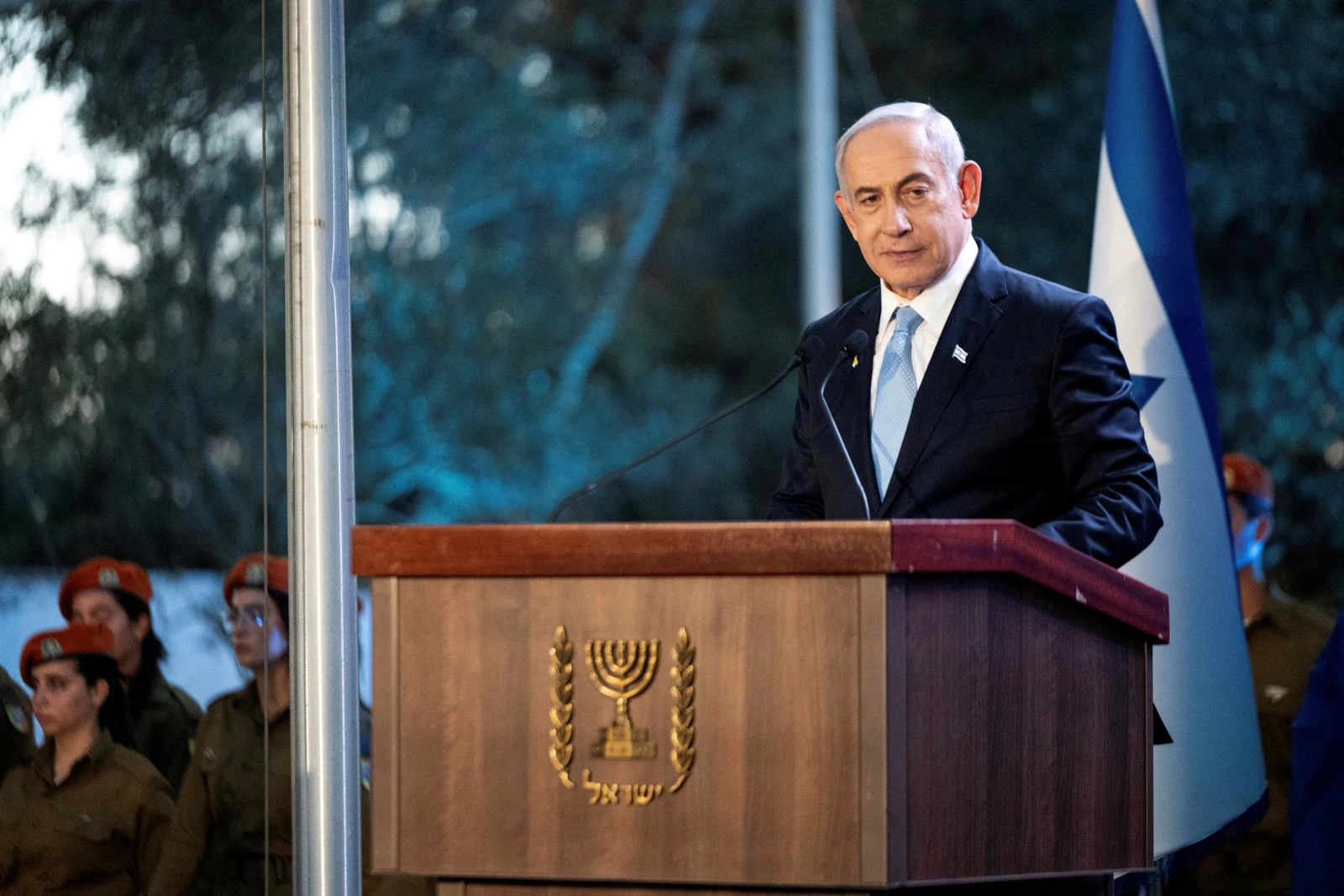
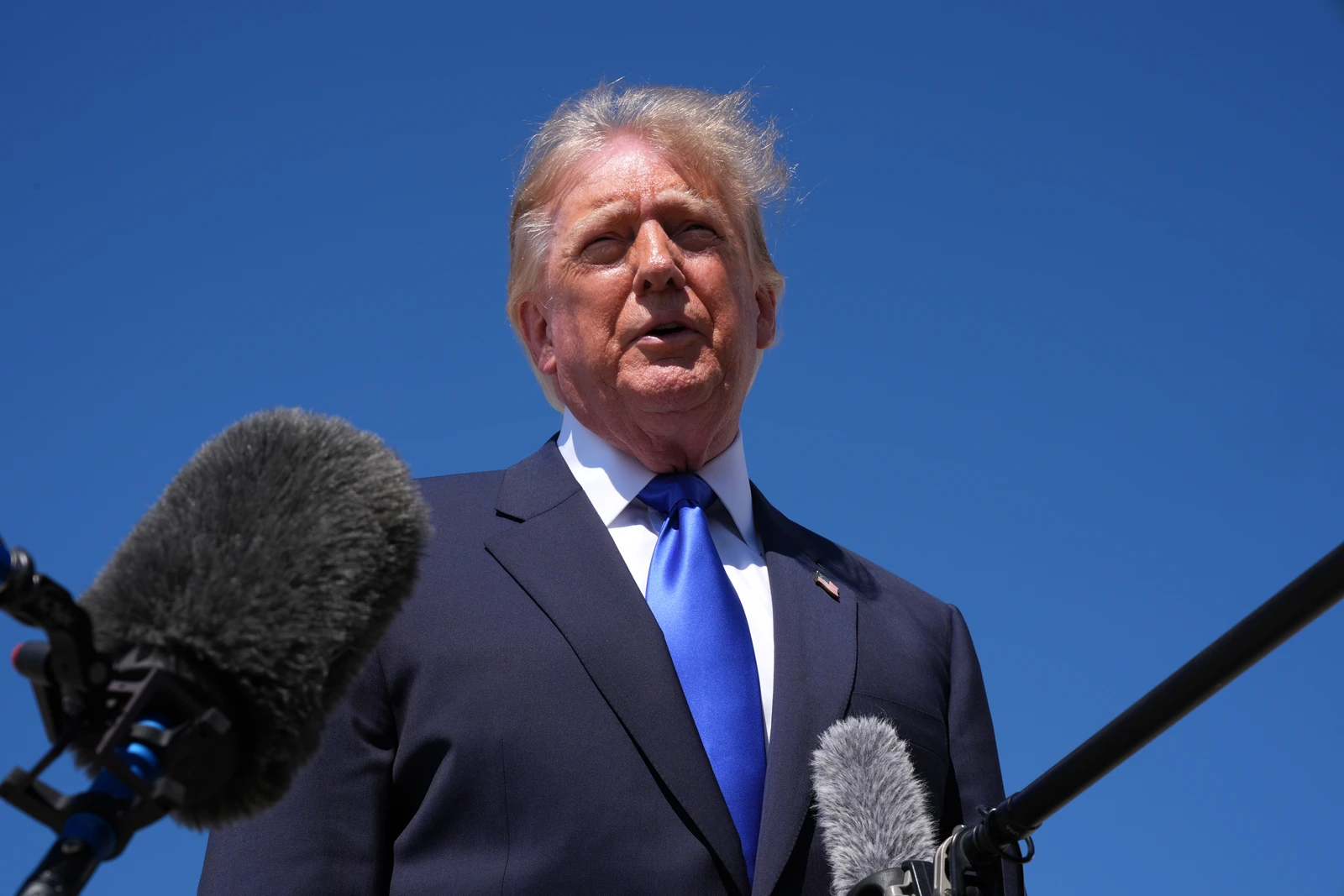
This is not the first time that Benjamin Netanyahu, Israel’s longest-serving prime minister, has faced significant political pressure.
First elected as prime minister in 1996, he has been swept in and out of office a total of three times, returning to power in 2009 and 2022 and serving a total of 18 years in the role.
This time, however, with mounting international condemnation of his government’s actions in the West Bank and Gaza and the latest in a series of allegations about his handling of the Oct. 7, 2023, attack, Netanyahu faces another serious political challenge.
As he confronts growing controversy at home, there are also signs that US President Donald Trump, his and Israel’s principal ally, may be less willing to support him.
On Sept. 6, a poll by public broadcaster Kan found that although the bloc of parties supporting Netanyahu was ahead of its rival coalition, it led by only the narrowest of margins — 52 seats to 51 — leaving it well short of the 61-seat majority needed to govern.
Netanyahu approaches next month’s elections facing a series of political and legal challenges. In 2019, he became the first sitting Israeli prime minister to be indicted on criminal charges relating to allegations of corruption.
His trial, which began in 2020, has been repeatedly interrupted by legal challenges and suspended during states of emergency, including the ongoing conflicts in Gaza, Lebanon and Iran.
Netanyahu has denied all charges, but four cases continue to hang over him, which he would have to face if he is ousted from office.
In 2023, Netanyahu’s government proposed sweeping judicial reforms that opponents argued would concentrate too much power in the hands of the government. The proposals prompted some of the largest demonstrations in Israeli history.
In May 2024, the International Criminal Court issued an arrest warrant for Netanyahu and his former defense minister, Yoav Gallant, accusing them both of responsibility for alleged war crimes committed in Gaza.
On Tuesday, the UK announced that it was banning trade with Israeli settlers in the West Bank, whom British Foreign Secretary Ed Miliband described as “terrorists” guilty of “ethnic cleansing.” The move built on London’s official recognition of Palestinian statehood in September 2025.
Gideon Saar, Israel’s foreign minister, accused Miliband of spreading “outrageous lies,” announced that Britain’s consulate in East Jerusalem would be closed, and suggested that the UK could be barred from further participation in the US-led coordination mission for Gaza in Israel.
There was no immediate public reaction from Netanyahu, even though he had only last month referred to the UK as “the Islamic Republic of Britain.”
The White House has also yet to comment — a silence that some commentators have interpreted as a possible sign that President Trump is becoming less willing to shield Netanyahu and Israel from international pressure.
On Wednesday, it emerged that UK Prime Minister Andy Burnham had briefed President Trump ahead of Miliband’s announcement in the House of Commons on Tuesday.
Exactly what was said between the two is unknown. But US news site Axios reported that “two sources with knowledge of the call said Trump didn’t push back or ask Burnham to change course.”
Furthermore, the sources said, “US officials told their British counterparts they shared their concerns about the Netanyahu government’s West Bank policy, even if they disagreed with these specific sanctions.”
The president and his administration remain focused on implementing Trump’s Gaza peace plan, while members of Netanyahu’s right-wing coalition, including settler leader and National Security Minister Itamar Ben-Gvir, have opposed the proposal.
Facing increasingly challenging electoral math, Netanyahu cannot risk alienating parties such as Ben-Gvir’s far-right Otzma Yehudit, or “Jewish Power,” party.
It is not the first time that Netanyahu’s behavior has irked the US president. In June, reports circulated that during a tense, expletive-laden phone call, President Trump swore at Netanyahu, calling him “crazy” for escalating Israeli attacks on Lebanon.
“Everybody hates you now,” Trump was reported to have said, and “everybody hates Israel because of this.” Netanyahu, he added, would be in prison if it were not for Trump’s support.
The UK is far from alone in its criticism of the settler movement. On Tuesday, in a further challenge to Netanyahu’s government, 11 countries backed the British position.
“The government of Israel’s actions in the West Bank are undermining the possibility of a two-state solution,” read a statement signed by the foreign ministers of Canada, Denmark, Finland, France, Iceland, Ireland, Norway, Poland, Portugal, Spain and Sweden.
The situation, the statement added, “is rapidly deteriorating amid unprecedented levels of settler violence and settlement expansion, including the unacceptable decision to publish tenders for the E1 settlement project.”
The 11 ministers confirmed their intention “to introduce national and/or support European restrictions on trade in goods with settlements which are illegal under international law.”
The long-planned E1, or East 1, project envisages the creation of a large settlement east of Jerusalem that would significantly divide the West Bank, potentially complicating the establishment of a future Palestinian state.
It has been repeatedly put on hold by successive Israeli governments, but last month Netanyahu’s administration published tenders for the construction of the first of thousands of homes.
At home, the October election is likely to focus heavily on Netanyahu’s handling of Oct. 7 and its aftermath, which has prompted numerous calls for investigations and public inquiries.
Over the past three years, he has sought to distance himself from responsibility for the security failures that preceded the attack. Last week, he drew criticism after suggesting that senior security officials had deliberately failed to wake him on the morning of the attack.
Had he been alerted, he said on Instagram, he would have canceled the Nova music festival, at which hundreds of Israelis were killed or abducted, and “woken up all the communities, woken up all the security coordinators and told the air force to be ready to strike and kill anyone approaching the fence.”
His wife, Sara, also alleged that opposition politician Yair Golan had been aware of Hamas’ plans before the attack.
Gadi Eisenkot, likely to be Netanyahu’s main rival in the elections, accused her of promoting a “mad conspiracy of betrayal.”
But on Tuesday, that episode was overshadowed by fresh allegations in a new book, which claimed that Netanyahu had received a personal warning about an impending attack just days before Oct. 7 from the president of the UAE, Sheikh Mohamed bin Zayed, but had failed to alert Israel’s security chiefs.
The authors of the book, “Hostages: 843 Days of Abandonment,” published an exclusive account of their investigation in the Israeli newspaper Haaretz.
Netanyahu has dismissed the allegation as “an absolute lie” and on Wednesday said he had instructed lawyers to sue Haaretz and its reporter, Shlomi Eldar.
Taking to social media, he said the story was “a sinister libel with clear political timing, as part of the left’s election campaign.”
His political rivals have nevertheless responded.
“Netanyahu received dozens of warnings ... and ignored them all,” Eisenkot posted on X, while Yair Golan, the leader of the center-left Democrats, accused Netanyahu of “endangering Israel.”
Naftali Bennett, a former prime minister, said Netanyahu “bears personal and direct responsibility” for the deaths on Oct. 7 and “cannot continue to serve in his position for even one more minute.”
Critics say Netanyahu’s reputation as “Mr. Security” was irrevocably damaged by Oct. 7, while some Israeli voters believe that the continuing wars in Gaza, Lebanon and Iran are being pursued in part for Netanyahu’s political benefit.
A poll on Tuesday showed declining support for Netanyahu and found that, if an election were held now, the largest party in the Knesset would be the centrist Yashar, led by former Israeli military chief of staff Eisenkot.
“He’s never faced anything like what he faces now,” Amotz Asa-El, a political analyst with the Shalom Hartman Institute in Jerusalem, told Reuters.
“Everyone in Israel shares a sense of historical crisis, and his name is all over it. And he knows this.”
Analysis: How Netanyahu led Israel to isolation