- From battlefield targeting to nuclear decision-making, AI is raising questions about human control, accountability and risks of automation
- Experts warn that AI could make war faster, more impersonal and harder to attribute as militaries increasingly rely on automated systems
On Sept. 26, 1983 the Soviet Union’s Oko early warning system reported that the US had launched five intercontinental ballistic missiles.
Lt. Col. Stanislav Petrov, the duty officer at the Serpukhov-15 bunker, broke protocol and refused to report the alert as a confirmed strike. He reasoned that a real US first strike would involve hundreds or thousands of missiles, not five. The system, it turned out, had mistaken sunlight reflecting off clouds for missile launches.
Petrov’s decision to defy protocol prevented an erroneous retaliatory nuclear strike and its incalculable consequences.
“I had all the data (to suggest there was an ongoing missile attack),” he told the BBC’s Russian Service 30 years later.
“If I had sent my report up the chain of command, nobody would have said a word against it. They were lucky it was me on shift that night.”
That Cold War lesson resonates loudly amid growing fear over how AI is being deployed in warfare. A recent appeal has put automation in war back in the spotlight, raising a question that leaves many uneasy: What would happen if a computer — an AI system — were the one calling the shots and it got the response to an attack wrong?
In an essay published over the weekend, Anthropic CEO Dario Amodei called for AI model development to slow down and face closer scrutiny. The appeal was not unprecedented but this time it drew rare public agreement from two rivals: Sam Altman of OpenAI and Elon Musk of xAI.
“Over the last few months I have become convinced that fully addressing the risks requires even more prudence — not just investing in risk prevention but pacing the rate of capabilities advancement so that risk prevention has time to keep up,” Amodei said.
A threat-intelligence report published by Anthropic found that a cell based in northern Yemen tried to use Claude (its AI tool) to build guided rockets and missiles, including a ballistic missile with a claimed 2,000 km range and a separate program incorporating a hypersonic glide vehicle.
Anthropic said that it banned the accounts after detecting the activity, although there was no evidence that the group successfully fielded an operational weapon.
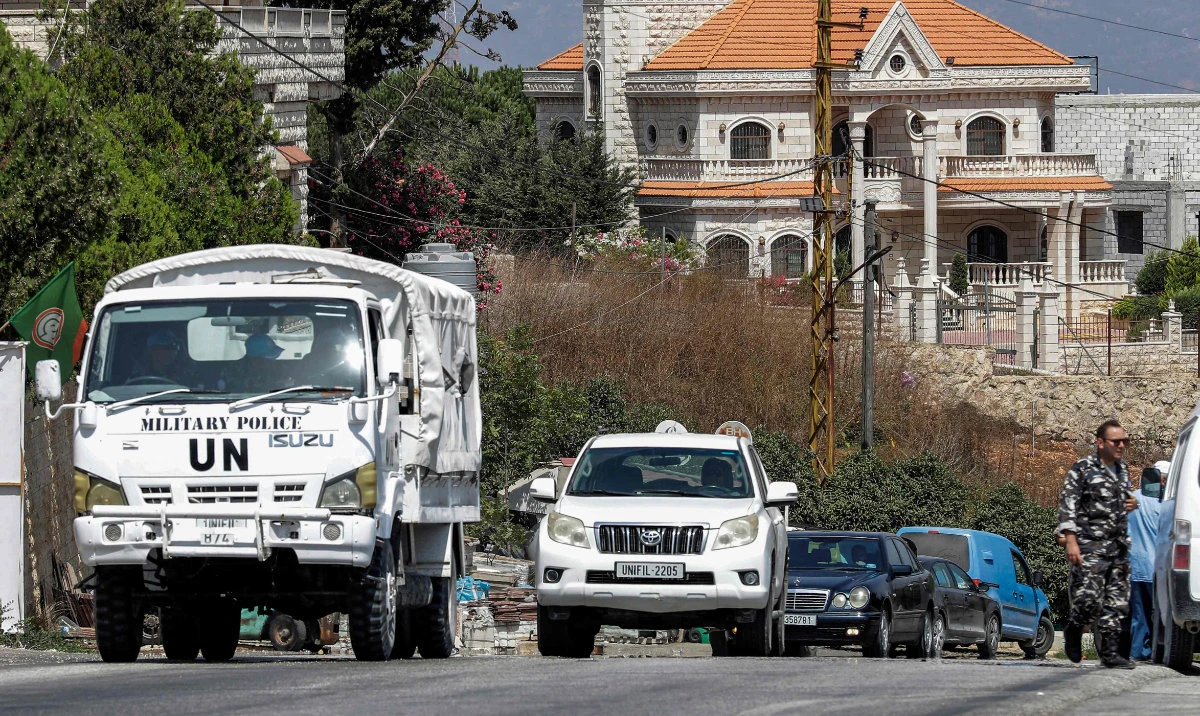
War offers no shortage of similar examples, where AI streamlines battlefield decisions or powers surveillance. The Middle East, given its strategic weight and the range of actors involved, has become a testing ground for the technology.
Israel has long used AI in its military. Over three years of war in Gaza its forces have reportedly deployed several machine-learning systems — Habsora (“Gospel”), Lavender, Fire Factory and Where’s Daddy — to automate large parts of target generation and strike planning.
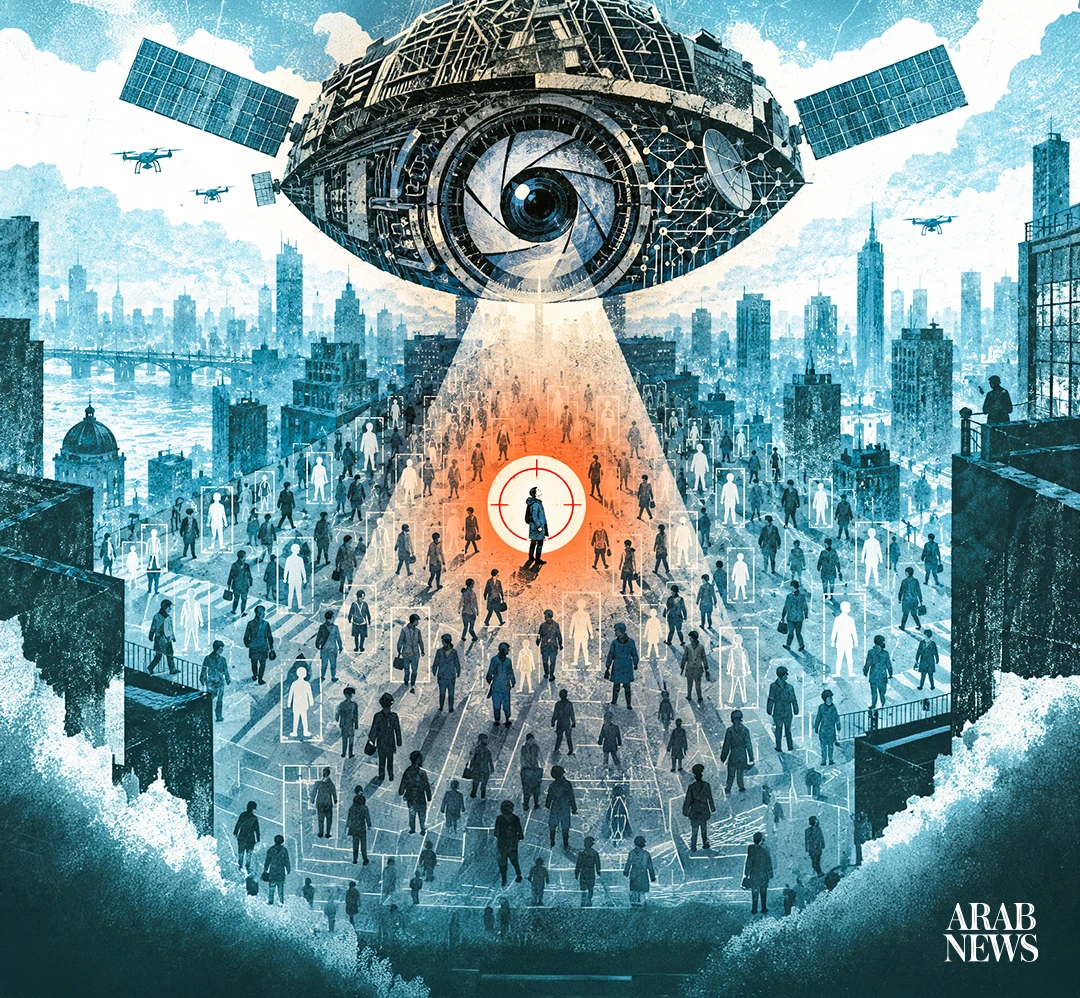
The systems mine surveillance feeds, communications data and existing databases to propose targets and recommend munitions and strike schedules. Analysts reportedly went from producing about 50 targets a year to as many as 100 a day.
Concerns over AI-supported targeting resurfaced during the Iran war, after a US strike hit the Shajareh Tayyebeh girls’ school in Minab, southern Iran, killing at least 168 people, most of them children.
The US has not disclosed whether AI was used in that strike but Adm. Brad Cooper, the US commander leading the campaign, has confirmed the use of “a variety of advanced AI tools" to process large volumes of data, without naming specific systems. He said that the tools let commanders make “smarter decisions faster than the enemy can react,” cutting processes that once took hours or days down to seconds.
“Humans will always make final decisions on what to shoot and what not to shoot, and when to shoot,” he said.
The US military has run AI-enabled war programs since at least 2017. Its Maven Smart System, built by Palantir, helps fuse battlefield data, identify targets and accelerate decisions. NATO acquired its own version in 2025. OpenAI and Anthropic are also competing for military contracts, reflecting the growing reliance of defense operations on commercial AI and the increasingly close ties between the two sectors.
In Ukraine, both sides use AI for data processing and target selection. Ukraine’s former Deputy Defense Minister Yuriy Myronenko told the BBC that AI analyzed more than 50,000 front-line video streams each month, helping “quickly process this massive data, identify targets and put them on a map.”
But as war spills beyond the traditional battlefield into a hybrid, multi-faceted front, AI adoption follows.
In April YouTube banned Explosive Media, a Gen Z Iranian channel that used AI-generated Lego-style animations mocking Western figures — including Donald Trump and Benjamin Netanyahu — while pushing pro-Iranian, anti-US and anti-Israel narratives.
More recently separate media investigations found that Israel had funded multimillion-dollar PR campaigns to shape how AI chatbots, including ChatGPT, answer questions about Gaza and the Israeli military. By setting up fake think tanks and publishing AI-generated papers with no real authors, the investigators said, Israel built a sophisticated operation to manipulate search results and shape public understanding — a shift in propaganda tactics that is harder to detect because it disguises advocacy as neutral expertise.
Throughout history militaries have sought tools that offer an edge over adversaries. But deploying AI in high-stakes environments like armed conflict carries risks distinct from any previous technology.
Part of the concern lies in the technology itself. An AI model trained on faulty or unrepresentative data can generate inaccurate results or malfunction once deployed in conditions that differ from its training environment.
AI-supported targeting is a case in point. Where such tools generate targets at scale with minimal human oversight, errors are not difficult to imagine.
That risk grows more acute as AI development moves from decision support to agents that can pursue complex goals with little human supervision. The next step, recursive self-improvement, would involve systems upgrading themselves with decreasing human input in a potentially open-ended loop.
As Jean-Marc Rickli and Tobias Knappe of the Geneva Centre for Security Policy note in a recent paper, agentic AI “is shifting the AI landscape from being a passive, supportive tool towards an active executor that can increasingly define and take courses of action on behalf of a human user” — a shift that, they added, “also raises significant societal, security, legal and ethical risks.”
In this sense, the proliferation of AI, on and off the battlefield, has introduced unprecedented challenges, prompting scrutiny of its impact on moral agency and accountability.
In June the UN held its first Informal Exchange on Artificial Intelligence in the Military Domain. Discussions centered on human rights and international humanitarian law, with nongovernmental organizations pushing for a moratorium on AI systems used in lethal decision-making — such as automated targeting — until robust global safeguards are in place.
The meeting followed a December 2025 UN General Assembly resolution on “Artificial intelligence in the military domain and its implications for international peace and security.” Experts welcomed it as a step forward, despite notable absences — including the US, which voted against the resolution.
Momentum is now shifting to New York, where a factual summary of the Geneva talks is due to reach the UN First Committee during its October session.
Despite these efforts, battlefield AI remains governed largely by existing legal frameworks.
Existing international humanitarian law applies to AI-enabled weapons through the principles of distinction, proportionality, military necessity and precaution. Responsibility remains with states and human actors, while Article 36 of Additional Protocol I to the 1949 Geneva Conventions also requires states party to the protocol to review new weapons, means and methods of warfare for legal compliance. US Directive 3000.09 similarly requires “appropriate levels of human judgment” but stops short of mandating real-time human control or creating binding international accountability.
In early September a UN disarmament forum in Geneva concluded three years of work on autonomous weapons, colloquially known as “killer robots.” A total of 128 states reached a non-binding consensus text after last-minute objections from the US and Russia, backing a proposed two-tier framework: prohibiting autonomous weapons whose effects are unpredictable or designed to target humans directly and restricting all others through mandatory human supervision rules.
Human Rights Watch said that the final text was considerably watered down and the US and Russia remain opposed to binding negotiations. But with 76 states now backing a legally binding instrument, the Convention on Certain Conventional Weapons’ November Review Conference looms as the decisive test of whether formal talks begin.
“AI systems will not change that the human is responsible for mistakes but it will obscure that humans feel responsible for mistakes and that can lead to a greater willingness to use force,” Elke Schwarz, professor of political theory at London’s Queen Mary University and author of “Death Machines: The Ethics of Violent Technologies,” told Arab News.
“There is a plausible deniability implicit in the use of AI enabled systems because they are essentially operating in a zone of invisibility.”
Israel offers the clearest example to date. When Israeli outlet +972 reported on the Lavender system it caused uproar by showing AI used not merely to assist analysts but to generate vast target lists — reportedly with only cursory human checks. The system’s scale, its claimed 90 percent accuracy and its use against people in their homes raised fears that human control was slipping and that AI could make large-scale violence faster, more impersonal and harder to attribute.
This marks a paradigm shift unseen in the history of conflict, which, as Schwarz argued, reshapes humanity’s relationship with violence and challenges conventional notions of ethical conduct in war.
She maintains that AI-enabled weapons systems facilitate the objectification of human targets, raising tolerance for collateral damage, while automation bias and technological mediation weaken operators’ moral agency and diminish their capacity for ethical judgment.
“Machines cannot be better at war than humans because machines don’t understand what war is, what it entails and what suffering it produces,” she said.
“They can only contribute to the actions humans decide on in better or worse ways. In my view AI-enabled systems make humans less restraint in using force, not more.
“Humans decide on the parameters. If they want to design a system that is less restraint, they will, if it is perceived to be more effective. A system cannot be a ‘better’ moral actor than the human because it has no concept of meaning for moral decisions. So, humans will not disappear from war with AI systems, but AI systems will change the relationship we humans have to violence. And that will make war worse.”
As a growing number of whistleblowers and experts warn, the risk is that an unchecked race toward superintelligent AI carries real risks to the very humans who built it.
For Schwarz, an AI “doomsday” is no longer far-fetched science fiction.
“I think we have already witnessed a horrendous human cost on account of AI enabled weapon systems,” she said.
“The introduction of AI systems into war has, at the very least, not lead to more restraint, more global stability, less conflict, fewer civilians killed or harmed. Quite the contrary. Children are dying due to war at a staggering rate. This is quite doomsday-ish in my books.”
As comparisons between the AI and nuclear arms races grow sharper by the day, the argument circles back to Petrov and to an ominous question: Would an algorithm have shown the same restraint?
“We can of course conjure up all kinds of awful scenarios, for example if someone decides to put an AI agent in charge of nuclear decision making (which would be ludicrous but you never know) and a data glitch leads to a nuclear threat spiral. But I think things are already quite awful because the technology and dehumanization seem to go hand in hand.”
Anthropic’s Claude offers a similar note of caution.
“What’s not really disputed is that today’s actual military AI risks are the boring-sounding ones: bad targeting data, automation bias, escalation happening faster than diplomacy can respond, systems proliferating to actors with no safety culture at all. The ‘robots decide to turn on us’ framing, if anything, can be a distraction from those.”
Quite wise. Humans should take note.