- UK, Qatar and Jordan lead call to action, warning that levels of assistance promised under US-brokered peace plan a year ago are still not being met
- They also call on Israeli authorities to expedite criminal investigations into attacks against healthcare and humanitarian workers, and to allow journalists into Gaza
NEW YORK CITY: Fifty-three countries and international organizations on Thursday called on Israel’s incoming government to lift restrictions on shelter materials, fuel and medical supplies entering Gaza.
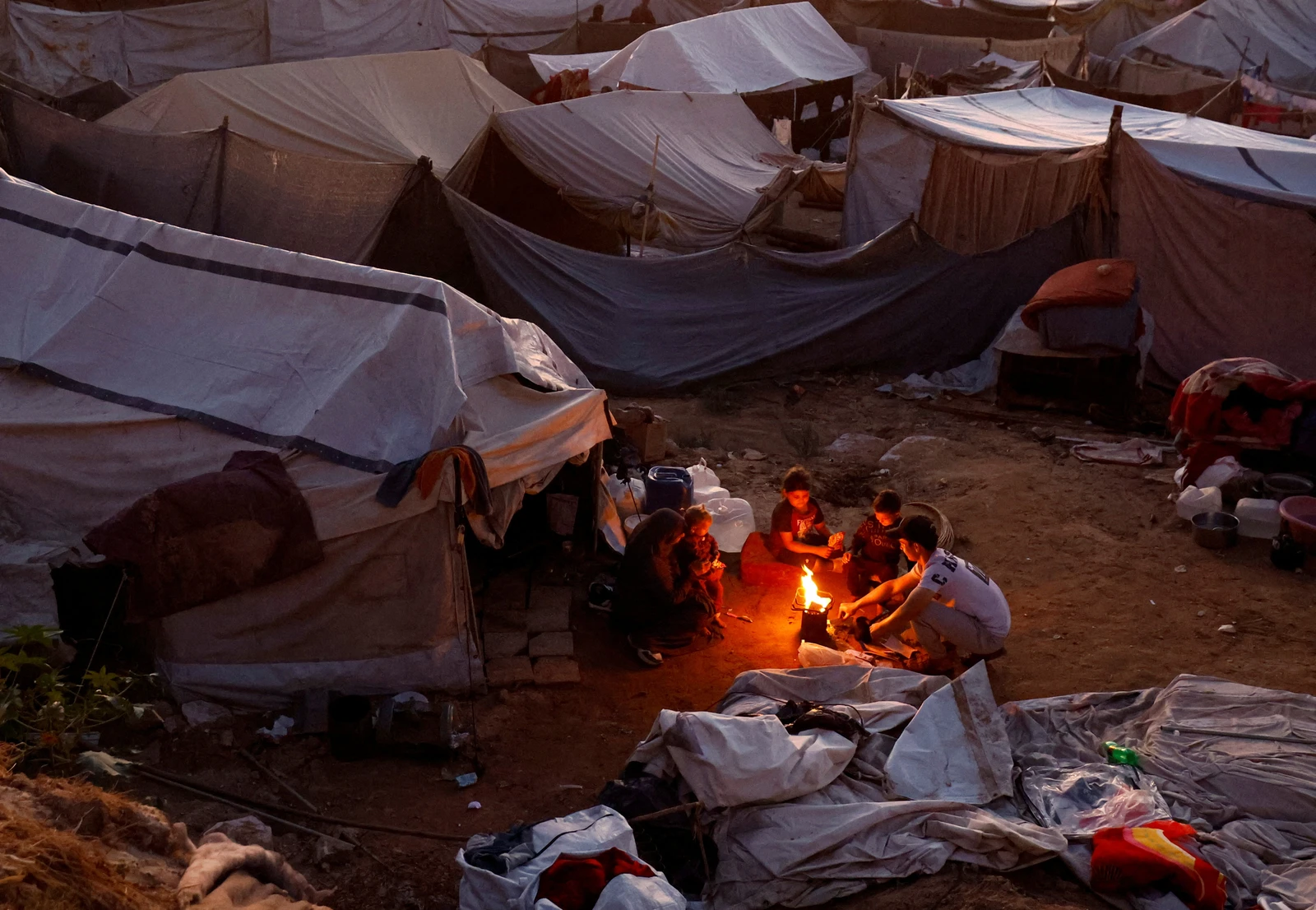
They warned that as winter sets in, displaced Palestinians faced threats such as hypothermia, respiratory infections and waterborne diseases, and that the levels of aid promised under a US-led peace plan endorsed by the UN Security Council a year ago had yet to materialize.
The call to action was led by the UK, Qatar and Jordan. Britain’s permanent representative to the UN, Sarah MacIntosh, announced it alongside representatives of the signatory countries and organizations.
She said the Comprehensive Plan to End the Gaza Conflict, which was endorsed by Security Council Resolution 2803, “provides for the immediate entry into Gaza of full humanitarian assistance at levels no lower than those agreed on Jan. 19, 2025. This has not yet been realized.”
MacIntosh acknowledged that conditions had improved in some parts of Gaza since a ceasefire agreement between Israel and Hamas came into force in October 2025.
“We have seen that progress to improve the humanitarian situation is possible when political will allows,” she said, but cautioned that “as winter sets in, far too many people in Gaza are still without adequate shelter, and risk exposure to hypothermia, respiratory infections, waterborne diseases and other preventable illnesses.”
Limits on deliveries of critical shelter items and other life-saving supplies continued to prevent humanitarian organizations from responding at the scale required, MacIntosh added.
The statement was aimed at the new government that is expected to emerge in Israel in the coming weeks.
“Following elections in Israel, we reiterate our call to the incoming government of Israel to allow and facilitate rapid and unimpeded humanitarian access throughout Gaza and through all available crossings and land routes,” MacIntosh said.
The signatories urged Israeli authorities to allow Egyptian and Jordanian humanitarian corridors to operate fully and predictably. They also asked for approval of a wider range of critical aid items, including those Israel currently classifies as “dual-use” (meaning they have legitimate civilian applications but could also be used in military operations), in particular supplies that can be used to address shelter, fuel, water, sanitation and health issues, “to prevent further deterioration of public health.”
They also called for a medical-referral pathway to hospitals in East Jerusalem and the West Bank to be restored to serve patients whose illnesses or injuries cannot be adequately treated inside Gaza.
MacIntosh said Israel must ensure that healthcare workers, health facilities and medical transports are protected in line with international humanitarian law. It must also protect
humanitarian sites and guarantee the protections owed to humanitarian and civilian personnel and infrastructure, she added.
The statement further called on Israeli authorities “to open and expedite transparent criminal investigations into attacks against healthcare and humanitarian workers.” It also asked for senior international delegations and journalists to be allowed into Gaza.
In return, the signatories made commitments of their own. They pledged to support urgent winterization efforts, including the provision of shelter, water, sanitation and health supplies “to reduce suffering and to mitigate public-health risks.”
They also committed to support the Palestinian Authority, and to work with the committee administering Gaza, the UN and other humanitarian partners to restore essential health services and rebuild health infrastructure.
The signatories reaffirmed “the vital role of the United Nations and its agencies, the International Red Cross and Red Crescent Movement, and other impartial international humanitarian organizations” in delivering aid as set out in Resolution 2803.
The Security Council adopted Resolution 2803, which endorsed US President Donald Trump’s 20-point peace plan for Gaza, on Nov. 17, 2025. It passed with 13 votes in favor; Russia and China abstained.
The ceasefire came into effect a month earlier. However, aid groups say it has not ended the shelter crisis in Gaza. In early October, the Norwegian Refugee Council warned that 1.65 million people in the territory faced a fourth consecutive winter in worn-out tents or war-damaged buildings, and that international donors had provided or pledged only 34 percent of the $283 million needed for the minimum winter shelter response.