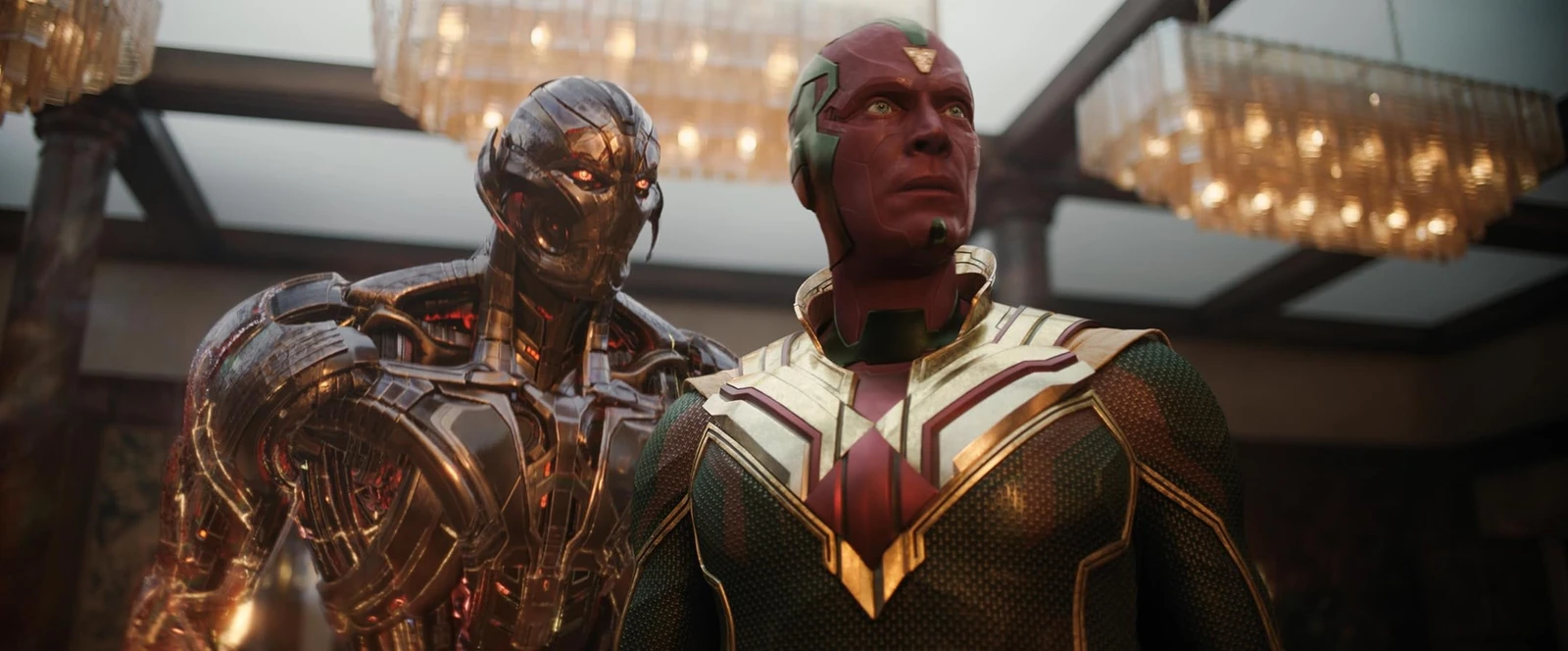
DUBAI: Every so often, Marvel remembers that its best stories are about more than just saving the world; they’re about figuring out your place in it. And beneath the technological wizardry of its latest series, “VisionQuest,” lies a surprisingly tender story about family, particularly the complicated relationships between fathers and sons.
Paul Bettany returns as Vision, or, at least a version of the synthezoid who has inherited his predecessor's memories without quite understanding what they mean. Following the events of “WandaVision,” he has retreated to Edinburgh, where he works in a pub while attempting to make sense of his fractured identity.
It’s a muted starting point, but creator Terry Matalas sets up one of the best opening episodes in Marvel history — funny, introspective, thrilling and mysterious, all at once.
Inside Vision's consciousness, we meet an entire household of artificial intelligences, each with distinct personalities and competing ideas about how he should navigate the world. Among them is Ultron, played with deliciously devilish charm by James Spader, who turns the character from familiar antagonist into something far more interesting.
The arrival of Thomas (Ruaridh Mollica), a teenager with an “impossible” connection to Vision's past, gives the narrative its emotional anchor. Mollica is impressive, bringing vulnerability and unpredictability in equal measure.
Bettany is excellent, as always. His performance balances Vision's inherent awkwardness with a growing emotional curiosity, allowing the character to feel more human even as he struggles to understand what humanity actually means. T'Nia Miller also makes an impression as Jocasta, whose motivations are rarely straightforward.
“VisionQuest” occasionally suffers from Marvel's familiar tendency to overcomplicate things, with mysteries and Easter eggs enough to make even hardcore fans work double time.
But it rarely loses sight of what makes its central premise so compelling. Its exploration of AI feels relevant, but it is the more intimate questions about love, belonging and second chances that stick.
As the concluding chapter of a trilogy that began with “WandaVision” and continued through “Agatha All Along,” “VisionQuest” may not quite match the former's originality. But it offers something increasingly rare in the Marvel universe: a story that allows its characters, rather than its spectacle, to matter.
REVIEW: ‘VisionQuest’ — heartfelt conclusion to inventive Marvel trilogy