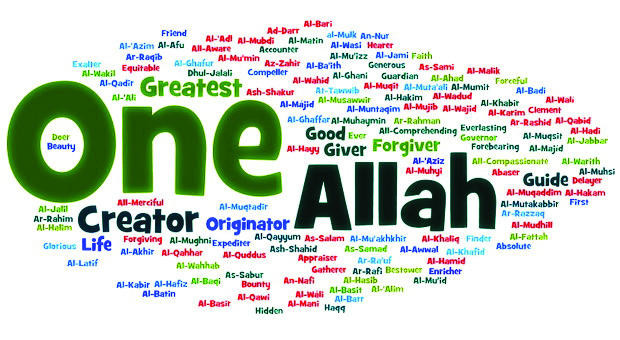
Tawheed (Islamic monotheism) is the greatest foundation of Islamic belief.
In fact, a person is considered as Muslim if he/she accepts that there is no god worthy of worship but Allah and that Muhammad (peace be upon him) is His slave and His messenger to humankind.
Almighty Allah says in the Noble Qur’an: "Allah — there is no deity except Him, the Ever-Living, the Sustainer of (all) existence. Neither drowsiness overtakes Him nor sleep. To Him belongs whatever is in the heavens and whatever is on the earth. Who is it that can intercede with Him except by His permission? He knows what is (presently) before them and what will be after them, and they encompass not a thing of His knowledge except for what He wills. His Kursi extends over the heavens and the earth, and their preservation tires Him not. And He is the Most High, the Most Great." (Qur’an, 2:255)
In these marvelous verses, Allah describes Himself as the only one — most powerful, ever-living Lord of us. Tawheed is the bedrock of Islam and it states that it is Allah Who has created the universe with whatever is in it and administers it.
What we deduce from the operation of the universe and call ‘natural laws’ are, in fact, Allah’s regular ways of creating things and events and administering the universe.
According to Islam, all religions revealed to the prophets (may Allah exalt their mention) have the same essence and knowledge of Tawheed and unity of Allah; but, with the time, their messages were misinterpreted, mixed with superstition, and degenerated into some rituals.
That was the same message with which Adam was sent down to earth, the same knowledge that Allah revealed to Nuh (Noah), Ibrahim (Abraham), Musa (Moses) and Isa (Jesus), may Allah exalt their mention, and the last Prophet sent to humanity, Muhammad (peace be upon him).
Islam rejects characterizing Allah in any human form or depicting Him as favoring certain individuals or nations on the basis of wealth, power or race.
However, our human minds are often in search of understanding the concept of Allah in materialistic ways, although we are not capable to completely comprehend this concept. When Prophet Muhammad’s (peace be upon him) contemporaries asked him about God, Allah revealed the chapter of Ikhlas (Qur’anic chapter no. 112), which is considered as the motto of Tawheed, saying: "Say (O Muhammad), “He is Allah, (who is) One. Allah, the Eternal Refuge. He neither begets nor was He begotten. Nor is there to Him any equivalent." (Qur’an, 112:1-4)
The Creator must be a different nature from the things created, because if He is of the same nature as they are, He will be temporal and will, therefore, need a maker. If the maker is not temporal, He must be eternal. But if He is eternal, He cannot be caused. If nothing apart from Him causes Him to continue to exist, He must be self-sufficient and self-subsistent.
If He does not depend upon anything for the continuance of His own existence, this existence can have no end. The Creator is therefore Eternal and Everlasting. Allah Says (what means): "He is the first and the last." (Qur’an, 57:3)
The Creator does not create only in the sense of bringing things into being, in other words, He is not only a Starter, He also preserves everything, takes them out of the existence, and is the ultimate cause of whatever happens to them.
Ali Ibn Abu Talib, the fourth Muslim Caliph (may Allah bless him), is reported to have said: "He is being but not through the phenomenon of coming into being. He exists but not from non-existence. He is with everything but not physical nearness. He is different from everything but not by physical separation. He acts but without the accompaniment of movements and instruments. He is the One, only such that there is none with whom He keeps company or whom He misses in his absence."
In Islam, Allah is known by His names and attributions and the manifestation of these names in the universe.
Another aspect of Tawheed in Islam is that it implies the equity and unity of all people in their relation with Allah. Thus, people of different social strata were not created by separate deities with varying levels of power, since this would violate Tawheed by putting barriers between them. Instead, social dimension of Tawheed states that the same Allah created everyone, and so all people have the same fundamental essence. In fact, the noblest person in Allah’s sight is the one who is most Allah-conscious.
Prophet Muhammad (peace be upon him) said: “Your Lord is One. You are from Adam and Adam was created from dust. An Arab is not superior to a non-Arab, nor a white person over a black person, except for his/her piety and righteousness.” (Ahmad)
Courtesy: islamweb.net

Tawheed: The essence of Islam
The beauty of prayer in Islam
GOING deeper into our spiritual state during prayers (salah) requires that we have a presence of heart and are mindful of the words being said during the prayers.
Our prayer will feel shorter, yet when we look at how much time we actually spent, we will think, “Did I just spend 10 minutes?” or even 15 and 20 minutes.
A person who began applying this said he wished the prayer would never end.
A feeling that Ibn Al-Qayyim describes as “what the competitors compete for… it is nourishment for the soul and the delight of the eyes,” and he also said, “If this feeling leaves the heart, it is as though it is a body with no soul.”
The love of Allah
Some people’s relationship with Allah is limited to following orders and leaving prohibitions, so that one does not enter hell. Of course, we must follow orders and leave prohibitions, but it needs to be done out of more than fear and hope; it should also be done out of love for Allah. Allah says in the Qur’an: “… Allah will bring forth [in place of them] a people He will love and who will love Him.” (Qur’an, 5:54)
We often find that when a lover meets the beloved, hearts are stirred and there is warmth in that meeting. Yet when we meet Allah, there is not even an ounce of this same feeling. Allah says in the Qur’an: “And (yet) among the people are those who take other than Allah as equals (to Him). They love them as they (should) love Allah. But those who believe are stronger in love for Allah.” (Qur’an, 2:165)
And those who believe are stronger in love for Allah. There should be a feeling of longing, and when we raise our hands to start the prayer, warmth and love should fill our hearts because we are now meeting with Allah. A dua of the Prophet (peace be upon him): “O Allah, I ask You for the longing to meet You” (An-Nisa’i, Al-Hakim)
Ibn Al-Qayyim says in his book Tareeq Al-Hijratain that Allah loves His Messengers and His believing servants, and they love Him and nothing is more beloved to them than Him. The love of one’s parents has a certain type of sweetness, as does the love of one’s children, but the love of Allah far supersedes any of that. The Prophet, peace be upon him, said: “Any person who combines these three qualities will experience the sweetness of faith: 1) that God and His messenger are dearer to him than anything else; 2) that his love of others is purely for God’s sake; and 3) that he hates to relapse into disbelief as much as he hates to be thrown in the fire.” (Bukhari)
Thus, the first thing he mentioned was: “… that God and His messenger are more beloved to him than anything else…”
Ibn Al-Qayyim says: “Since ‘there is nothing like unto Him’ (Qur’an, 42:11), there is nothing like experiencing love for Him.”
If you feel this love for Him, it will be a feeling so intense, so sweet, that you would wish the prayer would never ever end.
Do you truly want to feel this love? Then ask yourself: ‘why do you or should you love Allah?’
Know that you love people for one (or all, in varying degrees) of three reasons: For their beauty, because of their exalted character or/and because they have done good to you. And know that Allah combines all of these three to the utmost degree.
All-embracing beauty
We’ve all been touched by beauty. It is almost fitrah (natural disposition) to love what is beautiful. Ali ibn Abi Talib, may Allah be pleased with him, said about the Prophet, peace be upon him, that it was “as if the sun is shining from his face.” Jabir (may God be pleased with him) said: “The Messenger of Allah was more handsome, beautiful, and radiant than the full moon” (Tirmidhi)
Allah made all His Prophets have a certain beauty so that people would have a natural inclination toward them.
And beauty is more than what is in the face, because beauty is in all of creation and somehow has the ability to take our breath away and give us peace simultaneously. The glimmer of the crescent moon on a calm night, the intensity of a waterfall as the water drops for thousands of feet, the sunset by the sea … certain scenes of natural unspoiled beauty stirs something in us. As Allah is the One Who made it beautiful, so what of Allah’s beauty?
Ibn Al-Qayyim said: “And it is enough to realize Allah’s Beauty when we know that every internal and external beauty in this life and the next are created by Him, so what of the beauty of their Creator?”
This fitrah for loving what is beautiful is because Allah is beautiful. One of His Names is Al-Jameel (the Most Beautiful). Ibn Al-Qayyim states that the beauty of Allah is something that a person cannot imagine and only He knows it. There is nothing of it in creation save for glimpses.
Ibn Al-Qayyim says if all of creation were the most beautiful they could be (so let’s imagine, ever single human being looked as beautiful as Yusuf, peace be upon him, and the whole world was like Paradise), and all of them combined from the beginning of time until the Day of Judgment, they would not even be like a ray in comparison to the sun when compared to Allah. Allah’s beauty is so intense that we will not even be able to take it in this life. In the Qur’an, Allah describes Musa’s (peace be upon him) request: “And when Moses arrived at Our appointed time and his Lord spoke to him, he said, ‘My Lord, show me (Yourself) that I may look at You.’ (Allah) said: ‘You will not see Me but look at the mountain; if it should remain in place, then you will see Me.’ But when his Lord appeared to the mountain He rendered it level, and Moses fell unconscious.” (Qur’an, 7:143)
Even the mountain could not bear the beauty of Allah and crumbled, and when Musa, peace be upon him, saw this (he did not even see Allah), he fell unconscious. This is why on the Day of Judgment it is Allah’s light that will shine on everything. We talk about breathtaking beauty, but we have yet to experience Allah’s beauty. While things in this world can be beautiful or majestic or if they combine both they are finite, true majesty and beauty are for Allah: “And there will remain the Face of your Lord, Owner of Majesty and Honor.” (Qur’an, 55:27)
Keeping all of this in mind, the Prophet, peace be upon him, said: “Allah directs His Face toward the face of His servant who is praying, as long as he does not turn away” (Tirmidhi).
Remember this in your prayer, and ask Allah to allow you the joy of seeing Him in Paradise.
Our prayer will feel shorter, yet when we look at how much time we actually spent, we will think, “Did I just spend 10 minutes?” or even 15 and 20 minutes.
A person who began applying this said he wished the prayer would never end.
A feeling that Ibn Al-Qayyim describes as “what the competitors compete for… it is nourishment for the soul and the delight of the eyes,” and he also said, “If this feeling leaves the heart, it is as though it is a body with no soul.”
The love of Allah
Some people’s relationship with Allah is limited to following orders and leaving prohibitions, so that one does not enter hell. Of course, we must follow orders and leave prohibitions, but it needs to be done out of more than fear and hope; it should also be done out of love for Allah. Allah says in the Qur’an: “… Allah will bring forth [in place of them] a people He will love and who will love Him.” (Qur’an, 5:54)
We often find that when a lover meets the beloved, hearts are stirred and there is warmth in that meeting. Yet when we meet Allah, there is not even an ounce of this same feeling. Allah says in the Qur’an: “And (yet) among the people are those who take other than Allah as equals (to Him). They love them as they (should) love Allah. But those who believe are stronger in love for Allah.” (Qur’an, 2:165)
And those who believe are stronger in love for Allah. There should be a feeling of longing, and when we raise our hands to start the prayer, warmth and love should fill our hearts because we are now meeting with Allah. A dua of the Prophet (peace be upon him): “O Allah, I ask You for the longing to meet You” (An-Nisa’i, Al-Hakim)
Ibn Al-Qayyim says in his book Tareeq Al-Hijratain that Allah loves His Messengers and His believing servants, and they love Him and nothing is more beloved to them than Him. The love of one’s parents has a certain type of sweetness, as does the love of one’s children, but the love of Allah far supersedes any of that. The Prophet, peace be upon him, said: “Any person who combines these three qualities will experience the sweetness of faith: 1) that God and His messenger are dearer to him than anything else; 2) that his love of others is purely for God’s sake; and 3) that he hates to relapse into disbelief as much as he hates to be thrown in the fire.” (Bukhari)
Thus, the first thing he mentioned was: “… that God and His messenger are more beloved to him than anything else…”
Ibn Al-Qayyim says: “Since ‘there is nothing like unto Him’ (Qur’an, 42:11), there is nothing like experiencing love for Him.”
If you feel this love for Him, it will be a feeling so intense, so sweet, that you would wish the prayer would never ever end.
Do you truly want to feel this love? Then ask yourself: ‘why do you or should you love Allah?’
Know that you love people for one (or all, in varying degrees) of three reasons: For their beauty, because of their exalted character or/and because they have done good to you. And know that Allah combines all of these three to the utmost degree.
All-embracing beauty
We’ve all been touched by beauty. It is almost fitrah (natural disposition) to love what is beautiful. Ali ibn Abi Talib, may Allah be pleased with him, said about the Prophet, peace be upon him, that it was “as if the sun is shining from his face.” Jabir (may God be pleased with him) said: “The Messenger of Allah was more handsome, beautiful, and radiant than the full moon” (Tirmidhi)
Allah made all His Prophets have a certain beauty so that people would have a natural inclination toward them.
And beauty is more than what is in the face, because beauty is in all of creation and somehow has the ability to take our breath away and give us peace simultaneously. The glimmer of the crescent moon on a calm night, the intensity of a waterfall as the water drops for thousands of feet, the sunset by the sea … certain scenes of natural unspoiled beauty stirs something in us. As Allah is the One Who made it beautiful, so what of Allah’s beauty?
Ibn Al-Qayyim said: “And it is enough to realize Allah’s Beauty when we know that every internal and external beauty in this life and the next are created by Him, so what of the beauty of their Creator?”
This fitrah for loving what is beautiful is because Allah is beautiful. One of His Names is Al-Jameel (the Most Beautiful). Ibn Al-Qayyim states that the beauty of Allah is something that a person cannot imagine and only He knows it. There is nothing of it in creation save for glimpses.
Ibn Al-Qayyim says if all of creation were the most beautiful they could be (so let’s imagine, ever single human being looked as beautiful as Yusuf, peace be upon him, and the whole world was like Paradise), and all of them combined from the beginning of time until the Day of Judgment, they would not even be like a ray in comparison to the sun when compared to Allah. Allah’s beauty is so intense that we will not even be able to take it in this life. In the Qur’an, Allah describes Musa’s (peace be upon him) request: “And when Moses arrived at Our appointed time and his Lord spoke to him, he said, ‘My Lord, show me (Yourself) that I may look at You.’ (Allah) said: ‘You will not see Me but look at the mountain; if it should remain in place, then you will see Me.’ But when his Lord appeared to the mountain He rendered it level, and Moses fell unconscious.” (Qur’an, 7:143)
Even the mountain could not bear the beauty of Allah and crumbled, and when Musa, peace be upon him, saw this (he did not even see Allah), he fell unconscious. This is why on the Day of Judgment it is Allah’s light that will shine on everything. We talk about breathtaking beauty, but we have yet to experience Allah’s beauty. While things in this world can be beautiful or majestic or if they combine both they are finite, true majesty and beauty are for Allah: “And there will remain the Face of your Lord, Owner of Majesty and Honor.” (Qur’an, 55:27)
Keeping all of this in mind, the Prophet, peace be upon him, said: “Allah directs His Face toward the face of His servant who is praying, as long as he does not turn away” (Tirmidhi).
Remember this in your prayer, and ask Allah to allow you the joy of seeing Him in Paradise.
© 2026 SAUDI RESEARCH & PUBLISHING COMPANY, All Rights Reserved And subject to Terms of Use Agreement.