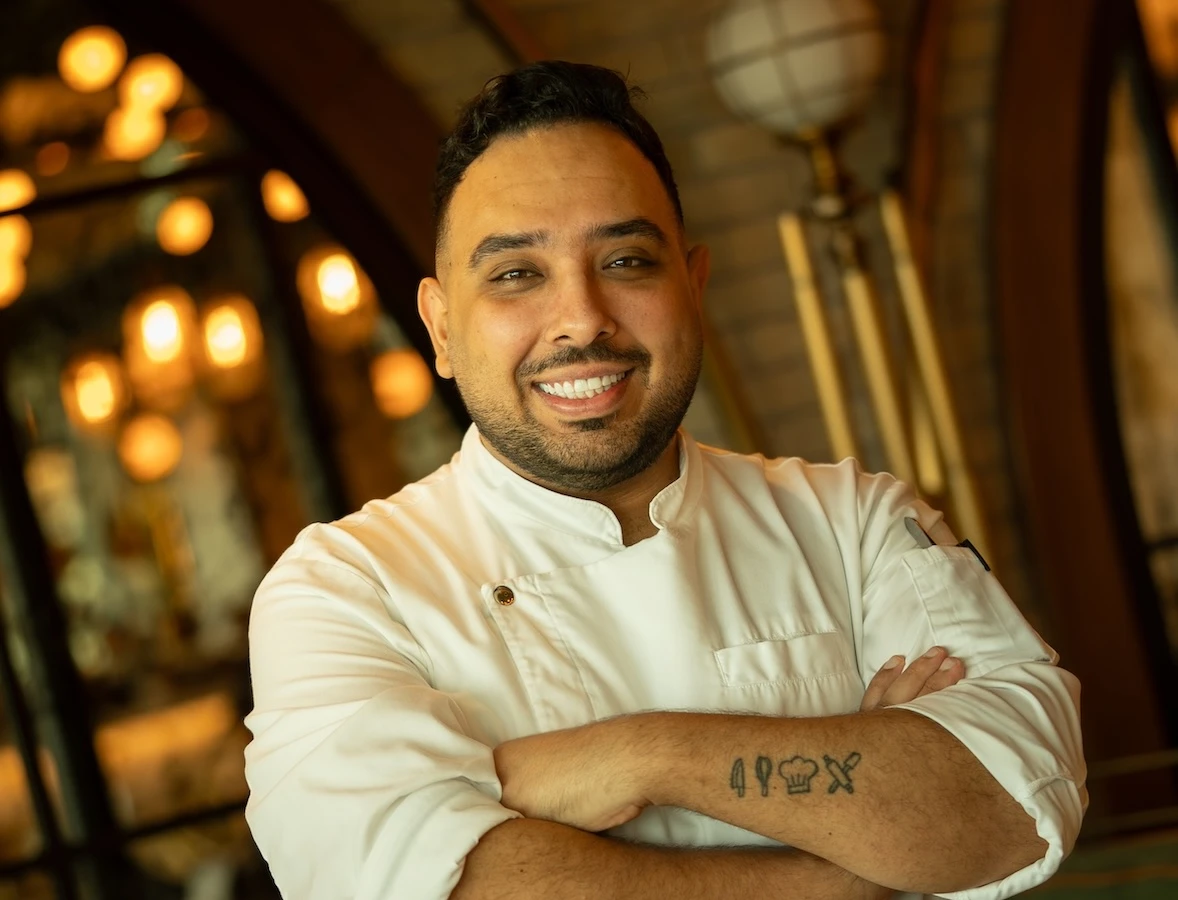
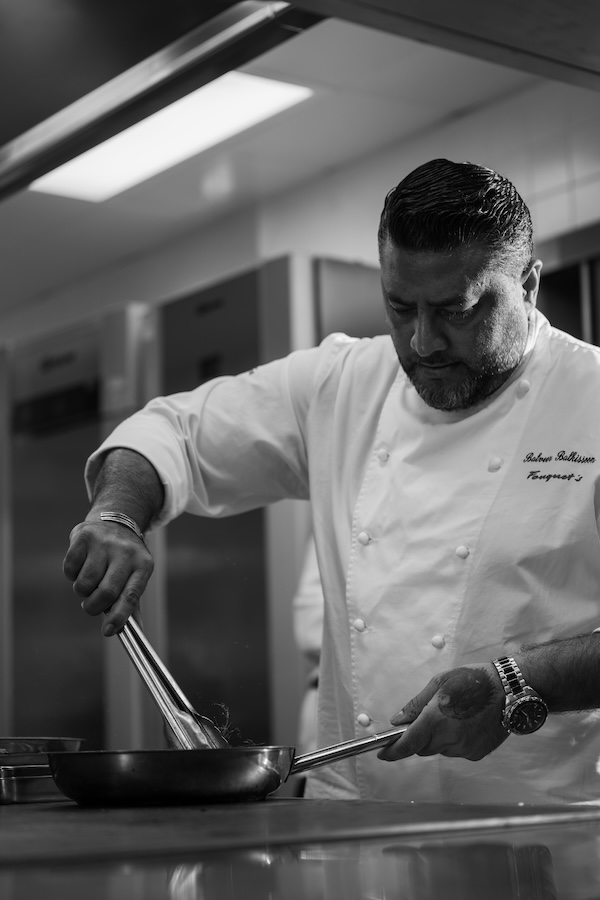
DUBAI: Over his 20-year career, Mauritian chef Balveer Balkissoon has honed his skills across European, African, and Asian cuisines in his homeland, the Seychelles, Oman, and the UAE.
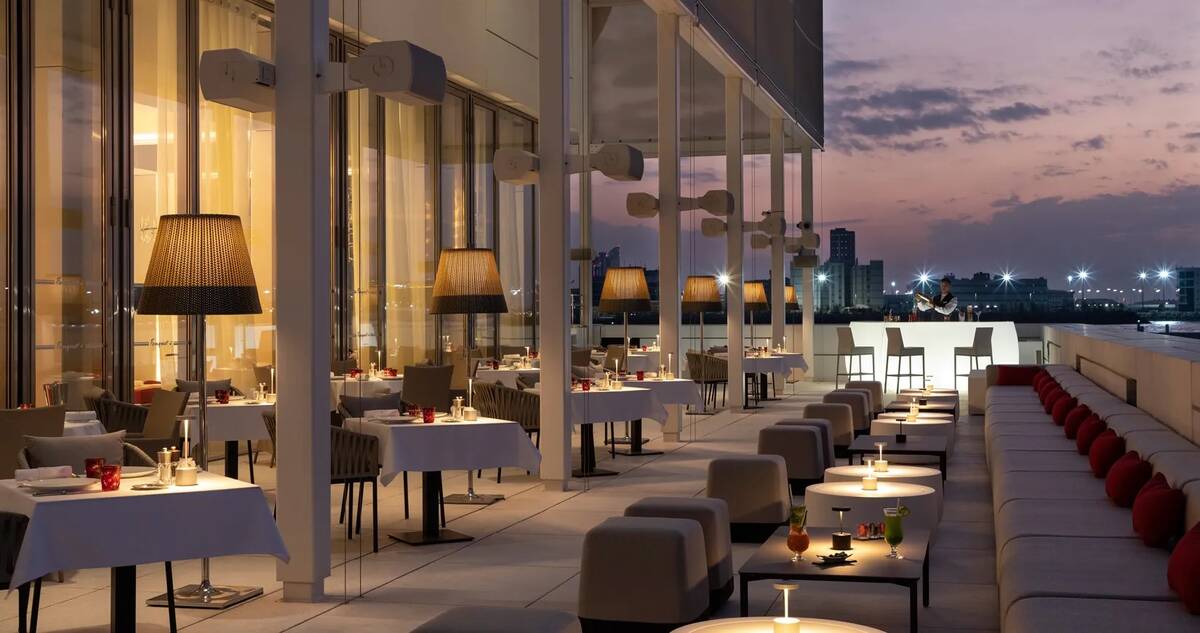
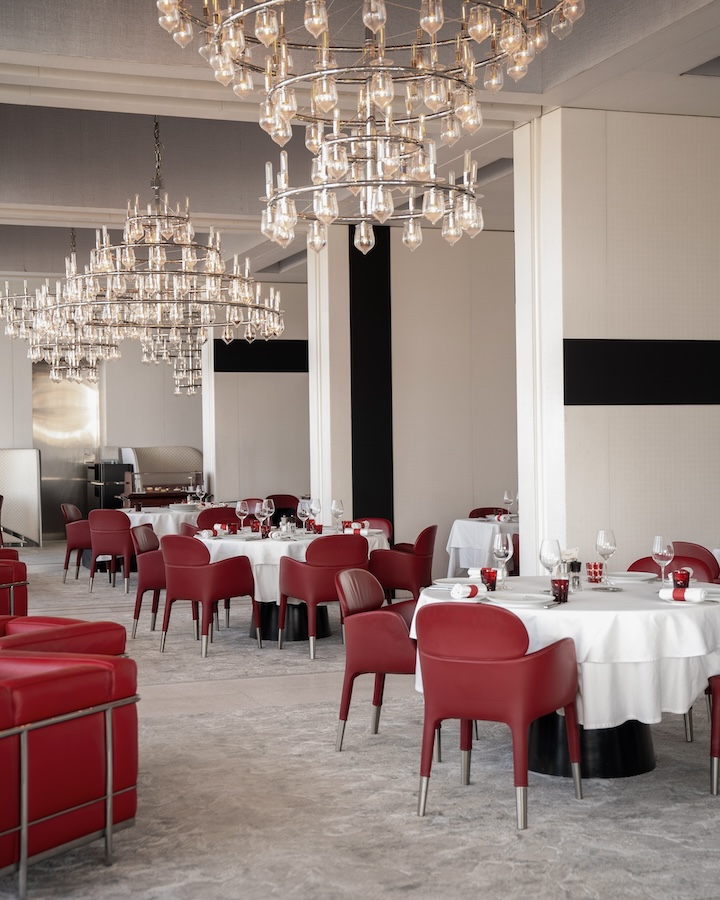
Today, as culinary director of the UAE at Groupe Barrière, Balkissoon oversees a diverse portfolio of restaurants including Paradiso Abu Dhabi, Art Lounge, Tazu by Art Lounge, Museum Café and the French brasserie Fouquet’s at the Louvre Abu Dhabi.
His work has contributed to the inclusion of several of these venues in the Michelin Guide and Gault&Millau.
When you started out, what was the most common mistake you made?
I tended to over-marinate or add too many ingredients to high-quality products like a beautiful cut of beef or fresh fish. I’ve learned that the best ingredients require minimal intervention. A chef’s role is to highlight and respect the natural flavor of the product, not mask it.
What’s your top tip for amateur chefs?
Always cook with your heart and trust your senses, especially your palate. Don’t stress if things don’t go perfectly. Cooking is a personal journey, not a performance.
What’s one ingredient that can instantly improve any dish?
For me, onions are essential. They’re a foundational ingredient that builds depth and enhances the flavor profile of almost any dish.
When you go out to eat, do you find yourself critiquing the food?
Yes, I naturally analyze what I eat. It’s second nature.
What’s the most common issue that you’ve noticed in other restaurants?
Poor seasoning. Without proper seasoning, a dish can’t express the full potential of its ingredients.
What’s your favorite cuisine or dish to eat?
Being from Mauritius, I always gravitate towards fresh fish, prepared in any style. I enjoy the simplicity and the purity of flavor that comes with well-prepared seafood. And, naturally, it reminds me of home.
What’s your go-to dish if you need to cook something quickly at home?
Spaghetti aglio e olio. It’s simple, quick and packed with flavor — just garlic, chili and olive oil. It’s a classic comfort dish that never disappoints.
What’s a common customer request that annoys you?
When someone asks for a Wagyu MB9 tenderloin or ribeye to be cooked well-done. It defeats the purpose of using such a premium cut. You lose all the richness, marbling and tenderness that make it special.
What’s your favorite dish to cook?
I’ve created a signature recipe for braised beef cheeks — slow-cooked for 48 hours until they’re melt-in-your-mouth tender. It’s a dish that requires patience, technique, and a deep respect for the ingredient. And you only need a spoon to eat it.
What’s the most difficult dish for you to get right?
A good risotto. The challenge lies in expectation; every culture has a different idea of the perfect texture. So, getting it “right” depends on who you’re serving. It’s a dish that’s both technically and culturally nuanced.
As a head chef, what are you like?
I’d say I’m a democratic leader. That said, I believe discipline is non-negotiable, especially in our industry. Food safety and consistency require structure, accountability, and focus from every member of the team.
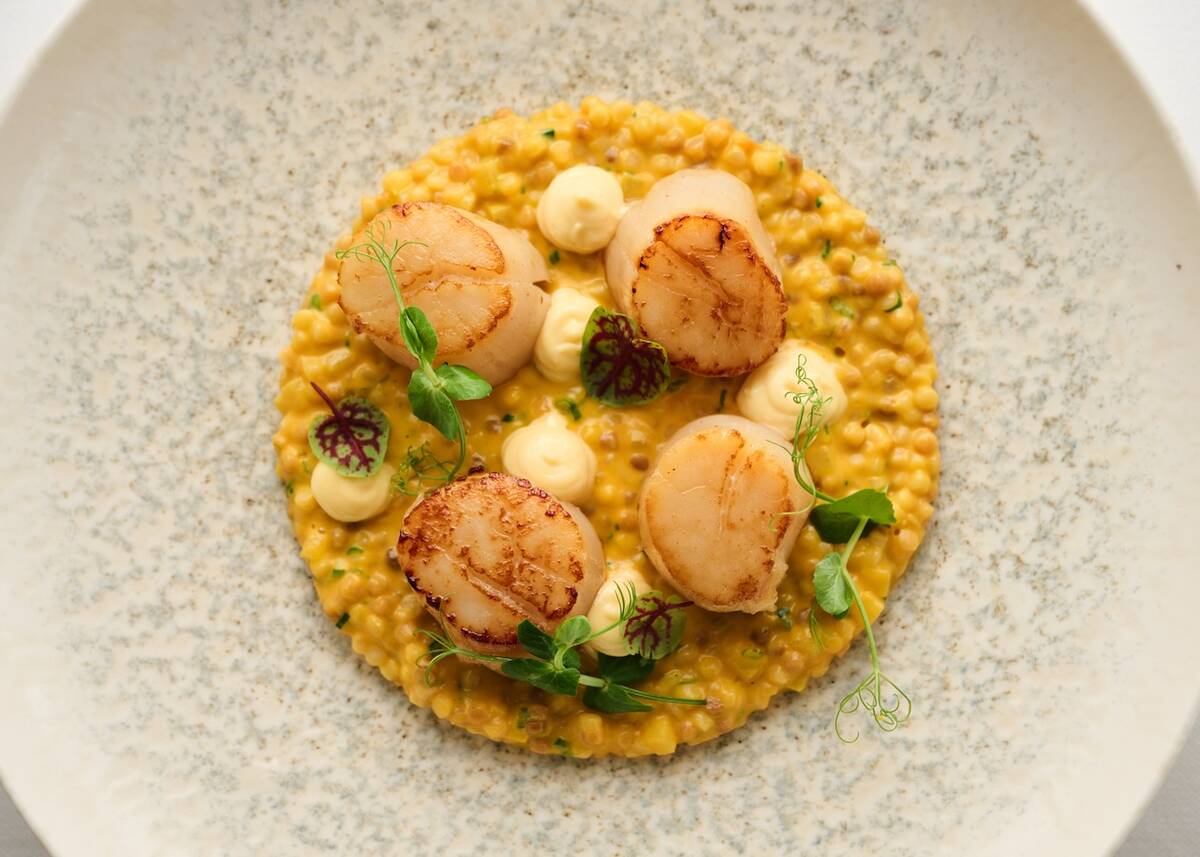
Chef Balveer’s pan-seared sea scallops with creamy fregola, parmesan, pears and garlic aioli
Ingredients:
Scallops
Fresh sea scallops (U10 size): 16 pcs (approx. 30g each, total 480g)
Neutral oil (grapeseed or canola): 15ml
Unsalted butter: 20g
Salt & black pepper: to taste
Fregola pasta base
Fregola sarda (medium): 200g
Shallot (finely chopped): 30g
Garlic (minced): 5g
Vegetable or chicken stock: 500ml
Olive oil: 15ml
Salt: to taste
Parmesan cream
Heavy cream (35%): 200ml
Parmigiano Reggiano (freshly grated): 60g
White pepper: a pinch
Nutmeg (freshly grated): a pinch
Pear brunoise
Firm pear (e.g., Williams): 1 large (180g)
Lemon juice: 5ml
Unsalted butter: 10g
Light brown sugar: 5g
Garlic aioli
Egg yolk: 1
Roasted garlic cloves: 2 cloves
Dijon mustard: 5g
Lemon juice: 10ml
Olive oil: 50ml
Neutral oil (sunflower or grapeseed): 50ml
Salt: to taste
Garnish (optional)
Pea sprouts: 8g
Vene cress: 4g
Extra virgin olive oil: for finishing
Preparation:
Parmesan cream
In a saucepan, bring cream to a light simmer.
Stir in parmesan until melted and smooth.
Add white pepper and nutmeg to taste. Keep warm.
Fregola pasta
In a medium pot, heat olive oil and sweat shallots and garlic without colouring.
Add fregola, gradually add warm stock, stirring occasionally like risotto, until al dente (12–15 minutes).
Fold in half the parmesan cream to coat. Reserve the rest for plating.
Sautéed pears
Peel and dice pear into small brunoise.
In a sauté pan, melt butter, add pear, lemon juice, and sugar.
Gently cook 3–4 minutes until just tender. Keep warm.
Garlic aioli
Whisk egg yolk, roasted garlic, mustard, lemon juice until smooth.
Slowly emulsify with oils until creamy.
Season with salt, place in a squeeze bottle or piping bag.
Scallops
Pat scallops dry and season with salt and pepper.
Heat neutral oil in a non-stick or cast-iron pan over high heat.
Sear scallops 1.5–2 minutes per side until golden brown.
Add butter, baste, then rest off-heat for 1 minute.
Plating:
1. Base layer – Fregola nest
Spoon 2–3 tablespoons of creamy fregola into the center of the plate.
Using the back of a spoon, gently swirl it into a 10–12 cm round to form the base.
2. Parmesan cream
Spoon a small amount of warm, reserved Parmesan cream around and within the fregola nest.
This adds gloss and extra creaminess to the dish.
3. Scallops
Place 4 seared scallops on top of the fregola, slightly off-center.
Arrange them in a loose square or diamond layout.
4. Garlic aioli
Using a piping bag or squeeze bottle, pipe 4–5 small pearls of garlic aioli around the scallops.
Place them asymmetrically for visual interest.
5. Pear brunoise
Sprinkle a few spoonfuls of pear brunoise across the fregola.
Allow some to remain visible around the scallops for color and texture contrast.
6. Garnish
Add pea sprouts and vene cress using kitchen tweezers (optional).
Position them over and around the scallops for vertical dimension and freshness.
7. Final touch
Finish with a light drizzle of extra virgin olive oil over the fregola and scallops just before serving.