Anyone cruising along Khurais Road in Riyadh cannot fail to notice Wooden Bakery’s gigantic trademark windmill. The story behind this successful franchise started in 1969 when Edward Bou Said founded a traditional bakery in Jal El Dib in Lebanon. In 1996, his sons, Assaad and Ghassan, came up with a new concept focused on high quality and freshly baked breads and pastries. The first Wooden Bakery was inaugurated in 1999 in Beirut, followed in 2002 by the opening of the first franchise in Lebanon and seven years later, Wooden Bakery introduced its first international outlet in the Saudi capital.
During my frequent trips to Lebanon I have often bought a tasty “manouche”, in one of the Wooden Bakery’s numerous outlets. The Lebanese are known for their enterprising spirit. They have successfully introduced Lebanese food to the four corners of the world so I am not surprised that the Wooden Bakery has also chosen to establish itself in the Kingdom and other Gulf countries.
Wooden Bakery has a clear mission to offer more and deliver better, and indeed it features a wonderful selection of freshly baked French and European breads, a wide variety of French and American pastries as well as Arabic sweets. This functional bakery cum pastry shop also has an adjoining restaurant where you can enjoy all kinds of delicious snacks, breakfast, a light lunch or dinner.
Amongst the wide variety of freshly baked breads, I found “Ciabatta” one of my favorite breads. Ciabatta incidentally means ‘’slipper’’ in Italian because its slightly rounded rectangular shape looks likes a soft slipper.
“Ciabatta” is an Italian white bread with a tangy, yet sweet taste. It was created in 1982 by Arnaldo Cavallari, a baker and miller from Adria, a small town close to Venice in Veneto.
Cavallari and other bakers in Italy were concerned by the popularity of sandwiches made from baguettes imported from France, which were endangering their business, so they decided to pool their efforts and create an Italian alternative.
Ciabatta is made with five ingredients, flour, salt, water, olive oil and yeast. It is perfect bread for sandwiches because it has a firm and rich texture which doesn’t fall apart when you’re slicing it. My favorite way of eating ciabatta bread is warm from the oven and dipped in olive oil. It possesses a soft chewy inside with a thin, crispy crust and this gives the bread a nice crunch that makes the sandwich a delight to eat especially when it is toasted. The other practical thing about ciabatta is its ability to soak up sauce without falling apart.
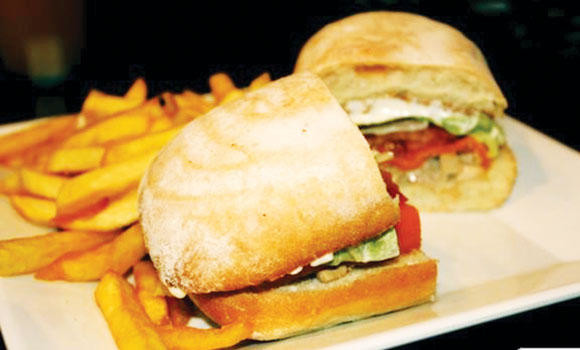
I recommend the “Chicken Ciabatta Sandwich” filled with tender grilled chicken, cheddar, mayonnaise sauce, iceberg lettuce, tomatoes, and you will understand what I mean by a sandwich which does not fall apart. You might prefer a ” Tuna Ciabatta Sandwich” filled with tuna, Iceberg lettuce, corn, chopped tomatoes laced in a Tartar Sauce.
There are some tasty side orders like Mozzarella Sticks which are elongated pieces of battered or breaded mozzarella. For an interesting combination of taste I suggest you try it with the Lemon Mayo sauce.
It is interesting to know that mozzarella is traditionally made with buffalo’s milk, however, the milk of the female water buffalo is becoming increasingly rare and expensive. Therefore, nowadays, mozzarella is mostly made from cow’s milk.
The traditional mozzarella made from buffalo’s milk is characterized by its stringy texture. After the whey is discarded, the curds are strung or spun in order to achieve the typical “pasta filata”. The cheese is then cut, (mozzare means to cut in Italian), placed in water to firm it up, then immersed in a light brine, in which it is kept until it is eaten.
Another tasty side order is “Garlic bread & Cheese”. This appetizer is generally made with slices of baguette topped with garlic, olive oil and cheese. It is then toasted in the oven.
In the Salad section, I noticed the presence of a Tuna Pasta Salad which is served chilled with pasta, corn, shredded carrots, tuna and Iceberg lettuce. A Pasta Salad is generally regarded as a spring or summertime meal but it can be enjoyed all year-round. It is best when served with a mayonnaise dressing. If you are counting calories then you might like to tell your waiter that you prefer the Light Mayonnaise dressing which is featured on Wooden Bakery’s menu.
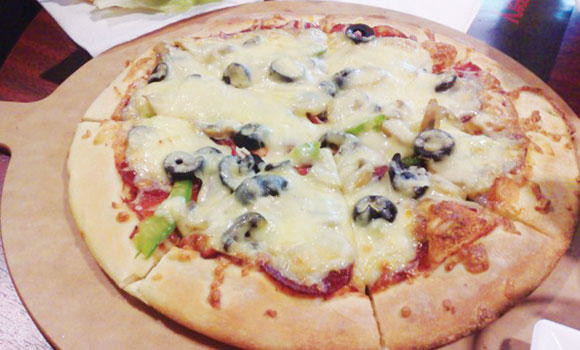
The pizza section features an interesting “Soujouk Pizza”. Soujouk is a dry, spicy sausage popular in the Middle East. It is often fried with eggs or sliced into sandwiches so why not use “soujouk” as a pizza topping.
Moreover, the cold sandwiches section includes “Chocoba”: a sliced banana laced in a chocolate hazelnut sauce, topped with nuts on a baked dough. This reminds me of the dessert pizza. Although the dessert pizza is not as well-known as the savory pizza, there is an endless variety of sweet pizza. I have come across a Strawberry Mascarpone Dessert Pizza, a Dessert Pizza with Nutella and Strawberries, a Cinnamon Streusel Dessert Pizza to name but a few.
A variety of Manakeesh with different toppings are featured on the menu. Manakeesh is originally a flat bread topped with zaatar, cheese, or ground meat. It is traditionally eaten piping hot with a glass of tea at breakfast but can very well be chosen for a light lunch or dinner. You might like to add some lettuce, chopped tomatoes and olives on top of the zaatar (a mixture of thyme, oregano, sesame, seeds, sumac and olive oil).
Other manakeesh toppings include: “Zaatar &Labneh” “Zaatar & Labneh”, “Beef Hot Dog and Cheese” “Beef Salami & Cheese”, “Turkey & Cheese”, Kafta & Cheese” “Cheese Combo with mushrooms and olives” and ” Wooden Bakery Special” a manakeesh spread with a hot sauce, then topped with diced tomatoes and onions and finally covered with a thick layer of cheese.
For dessert you can choose a pastry from Wooden Bakery’s large selection. For once I ignored the French pastries
and ordered a slice of cheese cake instead. The cookie base was soft enough to be easily munched and the cream cheese layer delightfully soft and moist, smooth yet firm. The cheesecake vanished away in an instant like cotton candy leaving a lovely flavor behind. I shall certainly be back for this elusive but delicious cheesecake.
—
Email: [email protected]


Mouth-watering breads and other delights at Wooden Bakery
Mouth-watering breads and other delights at Wooden Bakery

Where We Are Going Today: Under 500
- Both their soups, the lentil and the roasted tomato, are wonderful; I’ve been enjoying pairing either one with a main (a combo special Under 500 offers)
A place for all the gym rats and diet fiends, Under 500 offers fairly tasty meals complete with nutritious goodies, all of which are, well, under 500 calories.
I’ve quickly grown fond of this cloud kitchen — I won’t tell you it is the most delicious food you’ll ever have, but would absolutely recommend it if you want good meals that will leave you feeling energized and satisfied.
They have a wide selection of options; pasta, sandwiches, salads, bowls, rice meals, soups and some breakfast options.
First things first; all of their food smells amazing. They definitely load it up with spices to kick up the flavor since they are being conscious about what to put in it.
Both their soups, the lentil and the roasted tomato, are wonderful; I’ve been enjoying pairing either one with a main (a combo special Under 500 offers). The lentil, though it may need an extra pinch of salt and pepper, gives you a little taste of home while the roasted tomato is creamy and packed with Italian flavors.
They also add fresh kale to the lentil soup, an unusual choice I was a little iffy about but have grown to enjoy for its texture.
Another favorite is the grilled chicken burger, topped with a chipotle mayo, tomato salsa, guacamole and sauteed mushrooms in a multi-cereal bun. Be warned that it is a little messy, but very tasty.
Also recommended is their cheesesteak sandwich, made with tenderloin beef strips and topped with grilled onions, sauteed mushrooms, mixed peppers and mild cheddar cheese in a whole wheat baguette; perfectly good and enjoyable.
Their chicken quesadilla is also not a bad choice for a light meal — a little thinner than I would like maybe and I wish the salsa was spicier, but I did enjoy the flavors of this dish.
Now their hot meals; while yet to try their pasta, I have become well acquainted with the rice dishes.
The kabsa, chicken tikka biryani and their famous butter chicken are all solid picks. For me, the best out of the three is the butter chicken, which comes with a small side salad made up of cucumbers, tomato and pomegranate seeds (again, unusual choice but I don’t mind it).
A meal I would not order again is the chicken mushroom with mashed potatoes — the chicken and sweetcorn mash were good and so were the steamed vegetables on the side, but the mushroom sauce was not the right taste at all — much too tangy and no true mushroom flavor.
I have been recommended the steak and eggs and the honey mustard salmon bowl, and have to say the salmon quinoa looks very interesting with the grilled vegetables on the side; all of which I look forward to trying.
Overall, will Under 500 blow your mind? No. Will you find yourself reordering from it because of its reliability, decent cost, health factor and pretty good flavors? Yes, so try it out.