JEDDAH: A trickle, not a flood of foreign money is likely to enter Saudi Arabia’s stock market in coming months as the $575 billion bourse, the Arab world’s biggest, opens to direct foreign investment.
Saudi Arabia is one of the world’s last major markets to open up, and nobody doubts the latent interest among foreign funds.
The plunge of oil prices has slashed the Kingdom’s export revenues but it has not dimmed the long-term attractions of its rapidly growing population or wide range of companies.
If the market-opening causes Saudi Arabia to enter equity benchmarks such as MSCI’s emerging market index, it will attract tens of billions of dollars of new foreign money.
The trouble is, inclusion in the MSCI index is at least two years away.
Moreover, the valuations of many Saudi stocks don’t look particularly attractive to foreign funds at present.
Operational issues such as the rules for settling trades are another obstacle. And by imposing strict foreign ownership limits, Saudi regulators have made clear they don’t want any sudden deluge of international money.
The result is likely to be a cautious trickle of additional foreign funds into Saudi Arabia — perhaps tens of millions or a few hundred million dollars a month, accelerating as MSCI inclusion nears — rather than any sudden surge.
“As they transition from a retail-dominated market to one with more institutions, they want to do it in a way that won’t hurt anybody,” Sanyalak Manibhandu, manager of research at NBAD Securities in Abu Dhabi, said of Saudi regulators’ approach.
“They want to make sure that retail investors don’t get hurt with too much money coming in at the same time.”
INDEXES
At present, non-resident foreigners are limited to indirect investment in Saudi stocks through instruments such as swaps and exchange-traded funds, which can be inconvenient and expensive.
They are estimated to own about 3 percent of the market.
From June 15, they will be allowed to buy stocks directly through licensed institutions. The Capital Market Authority announced rules governing the reform recently.
Saudi Arabia’s entry into global equity indexes is not certain; it would need to satisfy the index compilers in areas such as market liquidity, investor access and transparency.
But expectations for entry are strong enough that MSCI has compiled a provisional list of 18 Saudi stocks for inclusion.
Petrochemicals giant Saudi Basic Industries, National Commercial Bank and Saudi Telecom account for 45 percent of the group.
EFG Hermes estimates the provisional list would give Saudi Arabia a weight of 1.66 percent in MSCI’s emerging market index.
“Assuming allocation by passive and active global emerging market funds at weight, this should translate into $4.2 billion of passive inflows and $16.4 billion of active inflows,” EFG Hermes analyst Mohamad Al-Haj said.
MSCI itself has estimated total inflows due to index entry at $27 billion.
But passive funds would only enter when the inclusion actually took effect; MSCI says the earliest time for this would be June 2017.
Active funds have more flexibility, and in the glow of Saudi Arabia’s market-opening, they may take a fresh look at the country. US asset manager BlackRock announced in October that it would establish a US-listed, exchange-traded fund to invest in Saudi stocks.
But it is not yet clear how much money the fund will raise.
“Active money will probably flow in increments, and will depend on market valuations among other factors,” Haj said.
Valuations are not great at present.
With a forward price-to-earnings ratio of 17.2, Saudi Arabia is pricier than even developed market benchmarks such as the Dow Jones Industrial Average at 16.0 and Britain’s FTSE 100 at 16.5.
REGULATOR
There are other challenges. Short-selling is banned, reducing the ability to hedge, and trades must be settled on the same day — meaning foreigners will need to have large amounts of money on hand before trading, which may be inconvenient given Riyadh’s time zone and its Sunday-Thursday business week.
Many big emerging markets have settlement after two days.
Also, the rules announced this week are restrictive. Foreigners can directly own no more than 10 percent of the market by value — in many other big bourses, they own 20 percent or more — while a single foreign investor can hold no more than 5 percent of any listed Saudi firm, and total foreign ownership of a firm is limited to 20 percent.
The rules are identical in major respects to draft regulations which the CMA released for comment last August. BlackRock said the draft was “overly restrictive and could in fact disincentivise foreign investment in Saudi stocks.”
Disincentivising large-scale foreign buying of stocks may be just what the regulator intends, for now at least.
It wants to avoid the wild swings seen in the UAE and Qatar last year, when those markets’ entry into the MSCI emerging market index caused speculative bubbles to form and burst.
Also, the CMA may be mindful of the political sensitivities of having foreigners build large stakes in some of the Kingdom’s corporate crown jewels.
“Hopefully as the market moves and as the market matures, things could be relaxed,” CMA chairman Mohammed Aljadaan said this week of the possibility of easing ownership restrictions in future.
Saudi officials say they are not opening the market because Riyadh needs the money. Instead, they want to use foreign institutions to stabilize the market, obtain expertise and expose firms to market discipline as the economy diversifies.
The licensing process for foreign institutional investors may also slow fund inflows.
The rules indicate officials will normally decide on applications within 11 days of receiving them, but it is not yet clear how quickly licenses will actually be awarded.
China used a similar Qualified Foreign Institutional Investor system to manage a cautious, gradual entry of foreign funds into its stock market.
Prices of most Saudi blue chips have dropped slightly since the investment rules were announced recently, suggesting local investors’ hopes of profiting from a big influx of foreign money are fading.


![]()
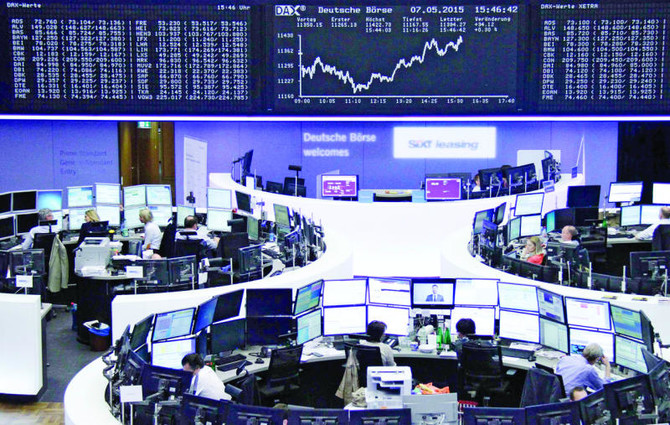
Foreign funds keen to enter Saudi exchange
Foreign funds keen to enter Saudi exchange
Latest updates



© 2026 SAUDI RESEARCH & PUBLISHING COMPANY, All Rights Reserved And subject to Terms of Use Agreement.