GCC organic farming market to reach $1.5bn

Updated 22 April 2015
Follow

GCC organic farming market to reach $1.5bn

The gradual shift of the consumer’s preference for organic food and products in the Middle East and the current position of UAE as the second largest market for organic food has made this sector integral to the country, said a top official.
“It is our goal to promote and become one of the major pillars for the organic food sector in the coming years,” said Saud Salim Al-Mazrouei, director of Hamriyah Free Zone Authority (HFZA) and Sharjah Airport International Free Zone (SAIF Zone).
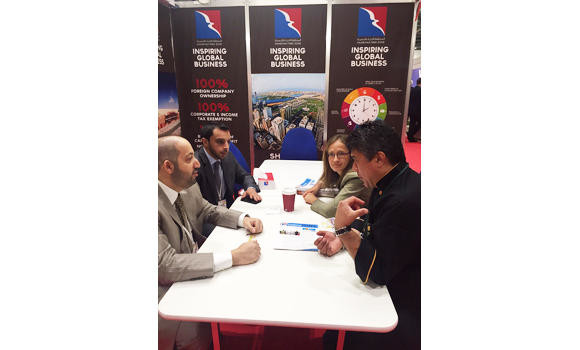
The director led a delegation to London to participate in the Natural & Organic Products Europe exhibition that concluded in London recently.
“HFZA’s participation in this year’s Natural & Organic Products is a start for us to understand the sector further and interact with potential investors,” he said.
Quoting a report by Frost and Sullivan, Al-Mazrouei said that organic farming in the GCC is set to reach $1.5 billion by 2018, driven by evolving consumer tastes and change in health habits.
In the UAE, the number of organic farms rose to 39 at the end of 2013, covering a total of 3,920 hectares, compared with just 218 hectares in 2007, he said.
In general, the demand for organic food in the Middle East and North Africa is increasing.
“HFZA is facilitating the set-up of more food industries in the zone to increase their growth in the MENA region, because of the strategic position and advantages it has to offer, in addition to which it is noteworthy that UAE is emerging as a major food re-exporting hub in the World, making HFZA all the more attractive as a destination for investors to expand there business and tap in to new business opportunities through the region.”
The Natural & Organic Products Europe exhibition that took place at ExCeL London, featured an unprecedented 600 exhibitors showcasing thousands of natural and organic brands — including supplements, botanicals, superfoods, homeopathic remedies, personal care and beauty, eco-household, and food and drink.
More than 10,000 people visited the event this year, renowned for attracting key buyers and decision makers from the food, beauty, health and eco-label categories.
“The event provided a good window for HFZA to introduce its capabilities and facilities to potential investors and exhibitors from other countries like the US, Poland, France, Italy, Sicily and many others,” said Ali Al-Jarwan, deputy commercial director of HFZA.


Riyadh Air launches “Riyadh Cargo” as it enters the global air freight market 

Updated 8 sec ago
Follow

Riyadh Air launches “Riyadh Cargo” as it enters the global air freight market 

RIYADH: Riyadh Air, the Kingdom’s new national carrier, has announced its official entry into the global air freight market with the launch of its “Riyadh Cargo” brand. 

The company has also activated belly-hold cargo operations across its fleet of more than 120 on-order wide-body aircraft to transport goods efficiently and reliably across global markets. 

The launch of “Riyadh Cargo” reflects a deliberate and gradual approach to building an integrated and scalable cargo business, starting from its headquarters in Riyadh.   

This move aligns with the company’s expanding network of destinations and operational activities, which began with trial flights under Riyadh Air’s “Road to Takeoff” strategy, connecting King Khalid International Airport in Riyadh with London Heathrow Airport. 

“Riyadh Cargo” has demonstrated strong operational momentum on the Riyadh–London route, successfully transporting substantial volumes of goods, including textiles, fresh flowers, fish, as well as tea and coffee. This underscores its capability to handle time-sensitive shipments, perishable goods, and high-value cargo with reliability. 

On this occasion, Pravin Singh, global head of cargo at Riyadh Air, said: “Riyadh Cargo has been built with a clear focus on operational discipline, reliability and long-term scalability. Launching within a live environment allows us to test, learn and continuously refine how we operate, while delivering real value to our customers from the get-go. The launch of the brand is a foundational step in building a cargo business that grows alongside our network expansion and supports Saudi Arabia’s broader logistics ambitions.” 

Digital capabilities remain a central element of Riyadh Cargo’s ecosystem. The company has adopted advanced technological systems for the centralized management and control of air waybills, enhancing operational data clarity. This supports faster decision-making, improved operational efficiency and consistently high service levels as the business grows and the operational network expands. 

In line with its digital strategy, Riyadh Cargo has partnered with CHAMPS to deploy the CargoSpot Neo system to manage cargo and terminal operations. The platform enables broader operational control, enhanced data visibility and faster responses to operational requirements, supporting service reliability as cargo volumes and network complexity increase. 

The company has further enhanced its operations by investing in unit load devices equipped with advanced digital tracking technologies, in collaboration with Unilode. This enables real-time cargo monitoring and highly accurate inventory management, ensuring a more sustainable workflow. Riyadh Cargo’s operational flexibility supports resilience even amid logistical disruptions across its global network. 

On the ground, cargo handling services are managed in cooperation with SATS Saudi Arabia at the Kingdom’s three main airports: King Khalid International Airport in Riyadh, King Abdulaziz International Airport in Jeddah, and King Fahd International Airport in Dammam. Operations are supported through modern facilities and specialized handling areas to ensure real-time oversight and seamless logistical integration. 

Riyadh Cargo is positioned as a key enabler of growth, supporting the Kingdom’s ambition to become a leading global aviation and logistics hub. 

With a total of 182 aircraft on order and Riyadh Air’s plans to serve more than 100 destinations by 2030, the airline is expected to contribute approximately $20 billion to Saudi Arabia’s non-oil gross domestic product and support more than 200,000 jobs globally.