NEW DELHI: A slowdown in India’s economy in the last quarter will increase calls for Prime Minister Narendra Modi to step up reforms but was less severe than feared, giving the central bank ammunition to resist government pressure to cut interest rates.
Gross domestic product expanded 5.3 percent in the July-September quarter from a year earlier, as a manufacturing slump took the bounce out of Asia’s third-largest economy. Growth in the previous quarter was at a 2-1/2 year high of 5.7 percent.
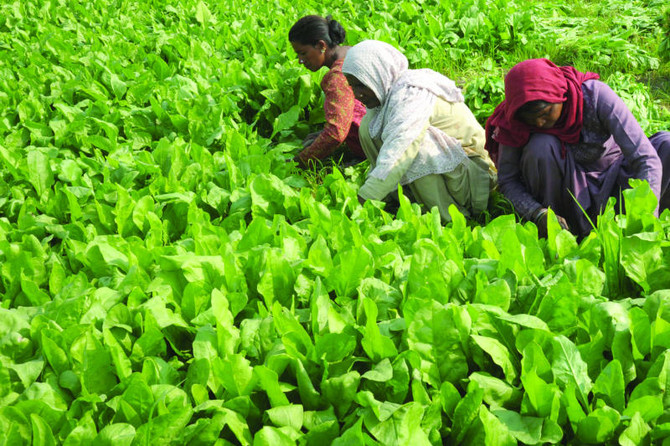
Thanks to growth in services and stronger-than-expected farming after a bad monsoon, the reading was higher than predicted by economists polled by Reuters, who on average forecast growth of 5.1 percent.
“Now the onus is on the government to boost growth by reviving the investment climate and get reforms moving,” said Shivom Chakrabarti, Senior Economist with HDFC bank. “That will have a more pronounced impact on growth in the next fiscal year.”
Worried by the growth performance, and encouraged by low oil prices and falling inflation, Finance Minister Arun Jaitley will reiterate his request that Reserve Bank of India Governor Raghuram Rajan cut interest rates when the central bank holds it policy review on Dec. 2, ministry officials have told Reuters.
Rajan can be expected to argue that with the slowdown not as severe as some forecast, inflation concerns carry more weight.
“If it was a very, very low number, there would have been pressure on the governor to act immediately. The better than expected overall GDP growth gives him that cushion” to wait, said Upasna Bhardwaj, Economist at ING Vysya Bank.
Economists polled by Reuters said a cut was unlikely, although markets have priced in a 25 basis point cut in the repo rate to 7.75 percent.
India is behind China, but among other large emerging economies it fares relatively well. On Friday, Brazil crawled from recession with quarterly growth of 0.1 percent.
CONSOLIDATED POWER
Elected in May with the first single party majority since the early 1980s, Modi was expected to live up to his market-friendly reputation by aggressively pursuing a reform agenda to remove obstacles to India’s industrialization.
Instead, his government has consolidated power by winning provincial elections to gain control of key states while offering little in the way of substantial new legislation.
The measures Modi has taken so far, including allowing more foreign investment in defense and construction, slashing red tape for businesses and ending major fuel subsidies, have yet to change the mood on the ground.
Poor corporate earnings in the September quarter highlighted weak consumer demand.
The global outlook has not helped, with India’s exports slowing in the second quarter after orders from Europe dropped. Trends suggest overall growth will likely be at the lower end of the government’s 5.4-5.9 percent target for the fiscal
year.
That would be an improvement on the previous two years of sub-five percent growth, the weakest phase since the 1980s, but still far too slow to generate the jobs needed for India’s rapidly expanding workforce.
Reflecting the goodwill and hope placed in Modi, the Indian share market is the best performer in Asia so far this year.
The nationalist premier has the backing of big business, but industrialists are still waiting for signs to convince them to boost spending on plant and machinery.
Data on Friday showed that seven months into the financial year the fiscal deficit is at 90 percent of its full year target as tax income fell short. Jaitley may choose spending cuts to meet his deficit goal, at the cost of further pressure on demand.
The government is hopeful of pushing several more reforms in the next few weeks, including looser foreign investment restrictions on insurance, overhauling land laws and new tax measures, but must overcome opposition in parliament.
This week parliament approved changes to labor laws to loosen regulation on small businesses.
In the new year, all eyes will be on Jaitley’s February budget.
Some analysts say markets could turn on the government if it fails to prove its commitment to structural reform.


![]()
Indian economic growth slows to 5.3%
Indian economic growth slows to 5.3%
Latest updates


© 2026 SAUDI RESEARCH & PUBLISHING COMPANY, All Rights Reserved And subject to Terms of Use Agreement.