- MENA ranked eighth among global regions, closing 62.5% of its gender gap, up 0.2 points from 2025
- Kingdom recorded strongest average annual improvement among high-income economies since 2006, while Iceland topped ranks for 17th consecutive year
LONDON: Saudi Arabia is among the economies making the fastest progress toward gender parity, even as global gains remain fragile and the overall pace of improvement slows, according to the World Economic Forum’s latest report.
The world has moved closer to gender parity than at any point since the WEF began tracking the gap 20 years ago. However, at the current rate of progress, full parity remains about 120 years away, according to the Global Gender Gap Report 2026.
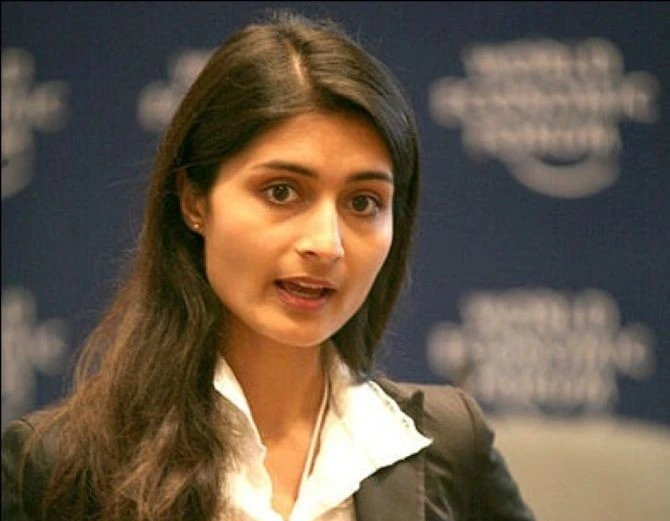
“Twenty years of data show that gender parity is achievable. Economies at every income level have made progress, so the barrier is not a lack of resources,” said Saadia Zahidi, managing director at the WEF and head of its Centre for the New Economy and Society, at the report’s launch at LinkedIn’s London Headquarters.
“Parity is a foundation for growth and competitiveness, but it is not inevitable. To accelerate, governments and employers need to learn from the policies that work and apply them faster. A new economy demands a new approach to talent.”
Speaking separately about progress in the Middle East and North Africa after a question from Arab News, Zahidi highlighted Saudi Arabia as one of the region’s strongest performers over the longer term.
“Saudi Arabia, for example, is one of the countries that has made the fastest progress over the past 20 years,” she said.
“But it really depends on where you are across the broader Middle East and North Africa region. Some countries are moving forward relatively quickly, while others are not.
“The region started from a very low base, and much of the progress we have seen has taken place in the past decade rather than across the full 20-year period.”
The report, the 20th edition of the WEF’s gender-gap index, assesses 145 economies across four areas: economic participation and opportunity, educational attainment, health and survival, and political empowerment.
Globally, 69.2 percent of the gender gap has been closed, an increase of 0.4 percentage points from last year.
Among the 97 economies tracked continuously since 2006, the gap has narrowed by 5.2 percentage points to 69.4 percent, the highest level recorded.
Economic participation and opportunity, at 61.7 percent, and political empowerment, at 22.1 percent, remain the areas furthest from parity.
The MENA region ranked eighth among global regions, having closed 62.5 percent of its gender gap — an improvement of 0.2 percentage points from 2025.
The region’s education gap has narrowed to less than 3 percent, but political empowerment remains the lowest worldwide, at 11.5 percent.
Saudi Arabia, meanwhile, was among the fastest-improving economies and recorded the strongest average annual improvement among high-income economies since 2006, according to the report.
The WEF said the MENA region had been a relatively late adopter of legal reforms affecting women but had steadily accelerated reform activity, becoming the most reform-intensive region during the current decade.