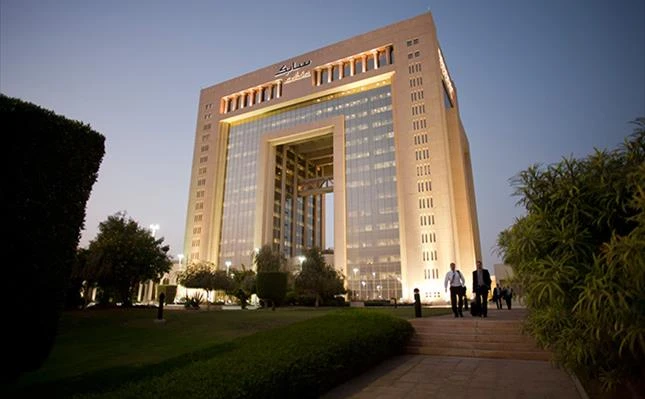
RIYADH: SABIC Agri-Nutrients Co. has awarded a $3.46 billion engineering, procurement and construction contract to Samsung E&A Co., Ltd. to build a new industrial complex for ammonia and urea production in Saudi Arabia.
In a statement, the company said the plants are expected to be commissioned in the third quarter of 2030, with commercial production scheduled to begin in the fourth quarter.
The new complex will include an ammonia plant with an annual capacity of 1.2 million tonnes and two urea plants with a combined annual capacity of 2.6 million tonnes.
Under this project, SABIC AN’s urea production capacity will increase from 4.8 million to 7.4 million tonnes per year, a 54 percent rise compared to current levels.
The project comes as the Kingdom seeks to strengthen its position as a major global producer and exporter of fertilizers, while expanding its industrial base and capturing rising demand for ammonia and urea.
SABIC AN’s 2040 growth strategy
“The project represents a key pillar of SABIC AN’s 2040 growth strategy and contributes to achieving its sustainability and carbon neutrality targets,” said Fahad Al-Battar, CEO of SABIC AN.
He added: “Through this expansion project, we aim to secure reliable and sustainable supplies for our customers, maximize value for our shareholders, contribute to realizing the goals of Saudi Vision 2030, and support global food security.”
According to the press statement, the ammonia plant in the facility will use Kellogg Brown & Root LLC technology, while the urea plants will function using Stamicarbon B.V and thyssenkrupp Uhde Fertilizer Technology GmbH technologies.
The industrial complex also has a carbon capture unit utilizing Shell Global Solutions International B.V technology.
The project integrates advanced carbon capture and emissions-intensity reduction technologies into its operations, helping to lower product carbon footprints and supporting the company’s sustainability and carbon neutrality goals, while strengthening its position as a global competitor in delivering low-carbon industrial solutions.
SABIC AN’s 2040 strategy is framed by the company as a long-term growth and sustainability agenda aimed at cementing its role as the Kingdom’s agri-nutrients national champion and a leading global producer and exporter of nitrogen fertilizers.
The plan is focused on expanding production scale, strengthening the nation’s position in agricultural nutrient export markets, and contributing to global food security in line with Vision 2030.
Earnings and supply chain challenges
In July, SABIC AN revealed that its net profit for the first half of this year stood at SR1.6 billion ($430 million), representing a decline of 21.42 percent compared to the same period in 2025.
In a Tadawul statement, the company attributed the fall in earnings to lower sales volumes due to supply chain challenges and a decline in revenue between January and June.
SABIC AN’s ammonia-urea complex to go live in 2030; $3.5bn contract awarded to Samsung E&A