- New 12-month countdown starts in January
- The mission relies heavily on UN support for vital logistics
MOGADISHU: The US has agreed to give the UN another year to wind down its support for African peacekeepers in Somalia, a document showed — a move that gives some breathing space to a force that feared quicker cuts, but still leaves its future in peril.
Reuters reported in July that Washington — increasingly frustrated with the fragile administration in Mogadishu — said it would block the UN from supporting the African Union force which props up the government and helps it fight Al-Qaeda-linked militants.
Analysts have warned that any weakening of the African Union peacekeepers would severely undermine the government there and could exacerbate the political turmoil in a combustible region bordering the Red Sea.
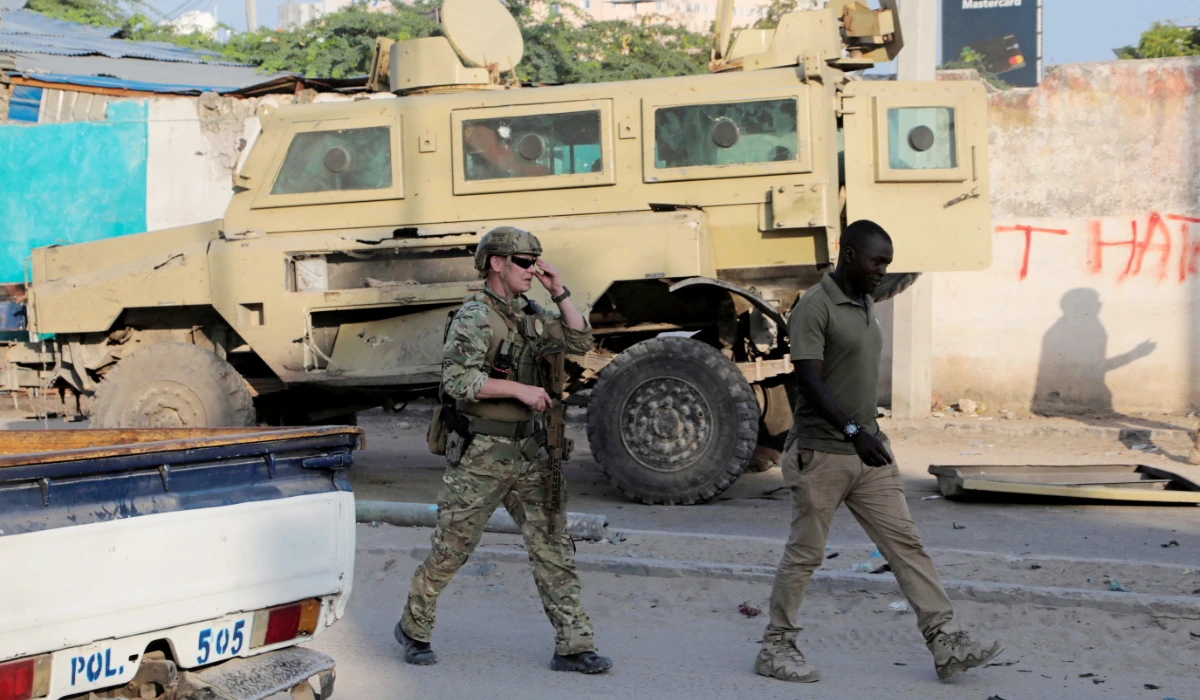
The peacekeepers, known as the AU Support and Stabilization Mission in Somalia, rely heavily on UN support for essential logistics such as food, water, fuel, medical services, and troop transport.
The administration of US President Donald Trump, which has pulled back from many international commitments, had told the African Union in a diplomatic note in July that it would use its clout to prevent the UN from supporting the peacekeepers from the start of next year.
In another diplomatic note seen by Reuters and shared with embassies last week, Washington said the US “is willing to support a 12-month drawdown followed immediately by liquidation” of the UN Support Office in Somalia, or UNSOS.
Without that 12-month window, the funding could have stopped at the end of December, when the mandate of that UN office expires.
Two diplomatic sources and a Somali government source said the new 12-month countdown would start in January.
A spokesperson for the US State Department said that Washington would no longer fund or support the UN office in Somalia, whose total budget is around $500 million.
“We would expect any drawdown processes and timelines to be discussed during UN Security Council deliberations in December,” the spokesperson said in a statement.
Five diplomatic sources and the Somali government source confirmed the 12-month deadline.
Somalia’s Defense Ministry, UNSOS and the African Union Commission did not immediately respond to requests for comment.
The move will buy Somalia and its partners some more time to find other backers, but it does not lift the threat to the peacekeeping force’s future.
“AUSSOM is a key pillar of Somalia’s state,” Afyare Elmi, professor at the City University of Mogadishu, said.
“Without it, the country would face a real risk of state fragmentation and disintegration.”
Samira Gaid, a regional security analyst, said the shutdown of UNSOS could spell the end for AUSSOM.
“The AU either needs to find alternative logistics arrangements or to draw down and exit,” she said.
Financing for the AU mission has become increasingly precarious, leading to a huge funding shortfall.
Washington blocked a plan last year to shift to a financing model that would have seen UN funds cover three-quarters of the peacekeeping mission’s $190 million annual budget.
Somalia has been mired in chaos and internal conflict since the fall of Mohammed Siad Barre in 1991.
Extremists have strengthened their control of the countryside and, two decades ago, seized the capital before being forced out by a joint Ethiopian and Somali government force.