- DP World will operate New Mooring Container Terminal in Chattogram Port for 15 years
- Deal includes DP World’s investment commitment of up to $81m for port modernization
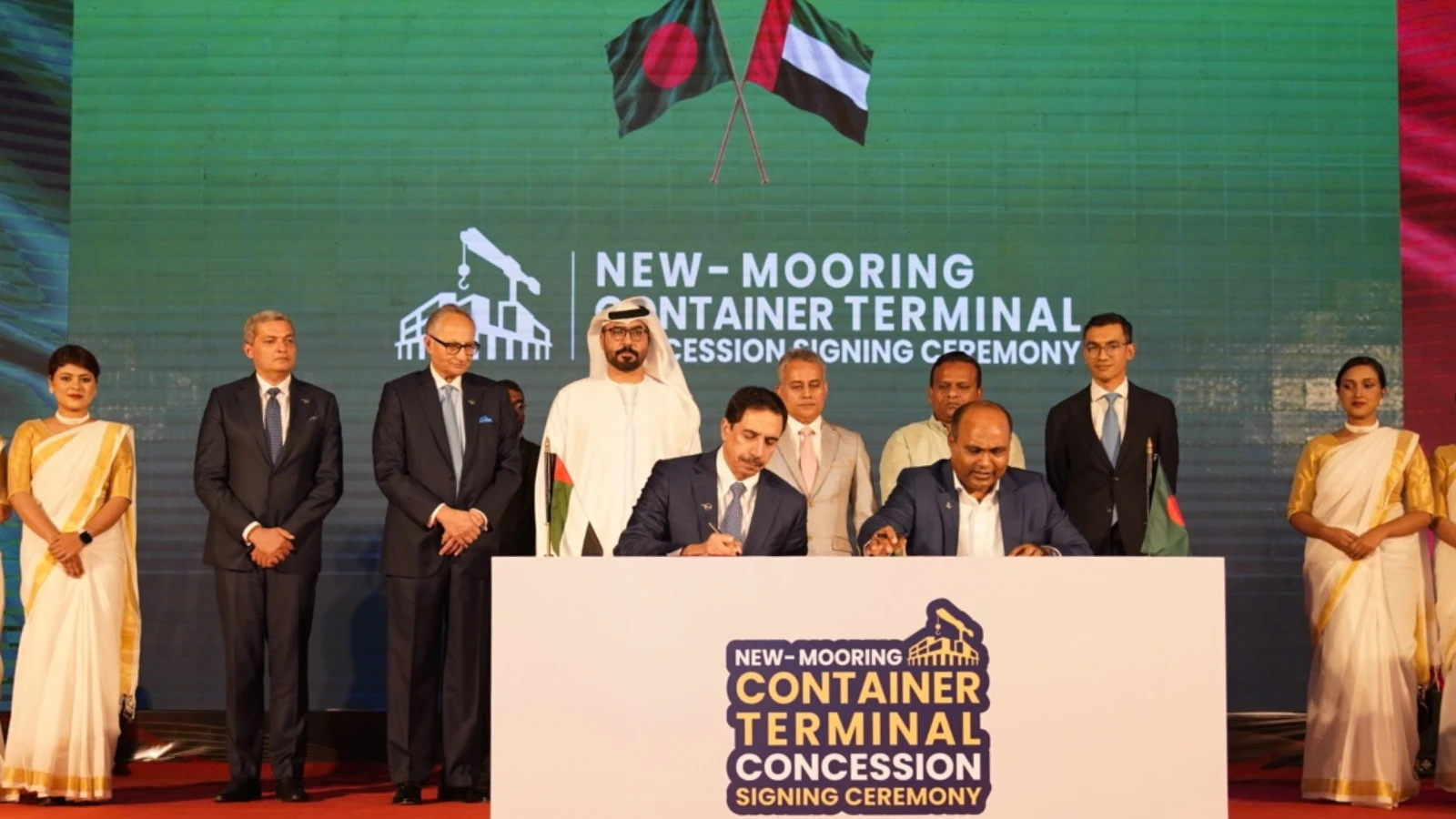
DHAKA: Dubai-based logistics giant DP World signed on Thursday a concession agreement with the Bangladeshi government to operate and upgrade one of the busiest terminals in the country’s largest port.
Chittagong Port, which is officially known as the Chattogram Port, is the main gateway for Bangladesh’s ocean cargo import and export, handling around 92 percent of Bangladesh’s foreign trade.
DP World and the Chattogram Port Authority signed the agreement in Dhaka, marking the beginning of a 15-year operational concession deal for the New Mooring Container Terminal struck under the public-private-partnership format.
“The New Mooring Container Terminal plays a critical role in supporting the country’s trade and logistics ecosystem, and this agreement will enhance operational performance, ease logistics constraints, and strengthen connectivity with international markets,” CPA Chairman Rear Adm. Md. Moniruzzaman said in a statement.
Bangladesh is keen on speeding up its logistics capacity and sees the partnership with DP World as “an important step in that direction,” according to Ashik Chowdhury, chairman of Invest Bangladesh.
“We want faster operations, stronger connectivity and higher standards at one of our most important trade gateways,” he said.
“For Bangladesh, it means a port system better equipped for the scale of trade we want to build.”
The New Mooring Container Terminal at Chattogram Port handles around 44 percent of the port’s container traffic, but has had significant challenges since operations began in 2007, including long container dwell times, vessel time in port, equipment performance and productivity.
Under the new deal, DP World agreed to provide an upfront fee of 6 billion Bangladeshi Taka ($48 million) and an investment commitment of up to 10 billion Bangladeshi Taka ($81 million) “over the first 10 years for modernization, equipment and technology,” Invest Bangladesh said.
Local employment will also continue, it added, while “modern technology and international training will strengthen skills” in Bangladesh’s port and logistics sector.
“Modern equipment, digital systems, international operating standards and global logistics connections will make NCT more competitive,” said Bangladesh’s shipping minister Shaikh Rabiul Alam.
“Our wider policy is to engage multiple international operators across terminals, improving service quality and reliability and strengthening supply chain resilience.”
DP World, which ranks among the world’s top global port operators, joins a host of foreign companies that have signed similar deals with the Bangladeshi government in recent years.
In December 2023, Saudi port developer Red Sea Gateway Terminal became the first foreign company operating Bangladeshi ports, under a 22-year concession agreement to run Chattogram’s new Patenga Container Terminal.
Existing issues in Bangladesh’s port management and operations have “badly affected exports and imports,” according to Dr. Selim Raihan, executive director at the South Asian Network on Economic Modeling.
“If you visit parts of Chittagong Port, the equipment still looks old and insufficient. The required cranes and logistics aren’t upgraded, which is why processing takes significantly longer compared to other ports,” Raihan told Arab News.
Additionally, foreign investment from companies such as DP World must be utilized to improve the country’s overall supply chain.
“If what was promised by DP World is delivered, it will definitely help. But I would … put more emphasis on developing the entire supply chain,” Raihan said.
“We want to transform Chittagong Port into an internationally efficient port, which is crucial for Bangladesh.”