- Islamabad’s envoy to UN tells Security Council more than 4,700 Pakistanis have been killed in past 3 years by terrorism originating in Afghanistan
- Concerns also raised over the Taliban’s treatment of girls and women; Afghan former minister describes it as the ‘worst form of gender apartheid’
LONDON: Pakistan has warned of the growing terrorist threat emanating from Afghanistan, and called on the Taliban to crack down on the militant groups threatening other countries in the region.
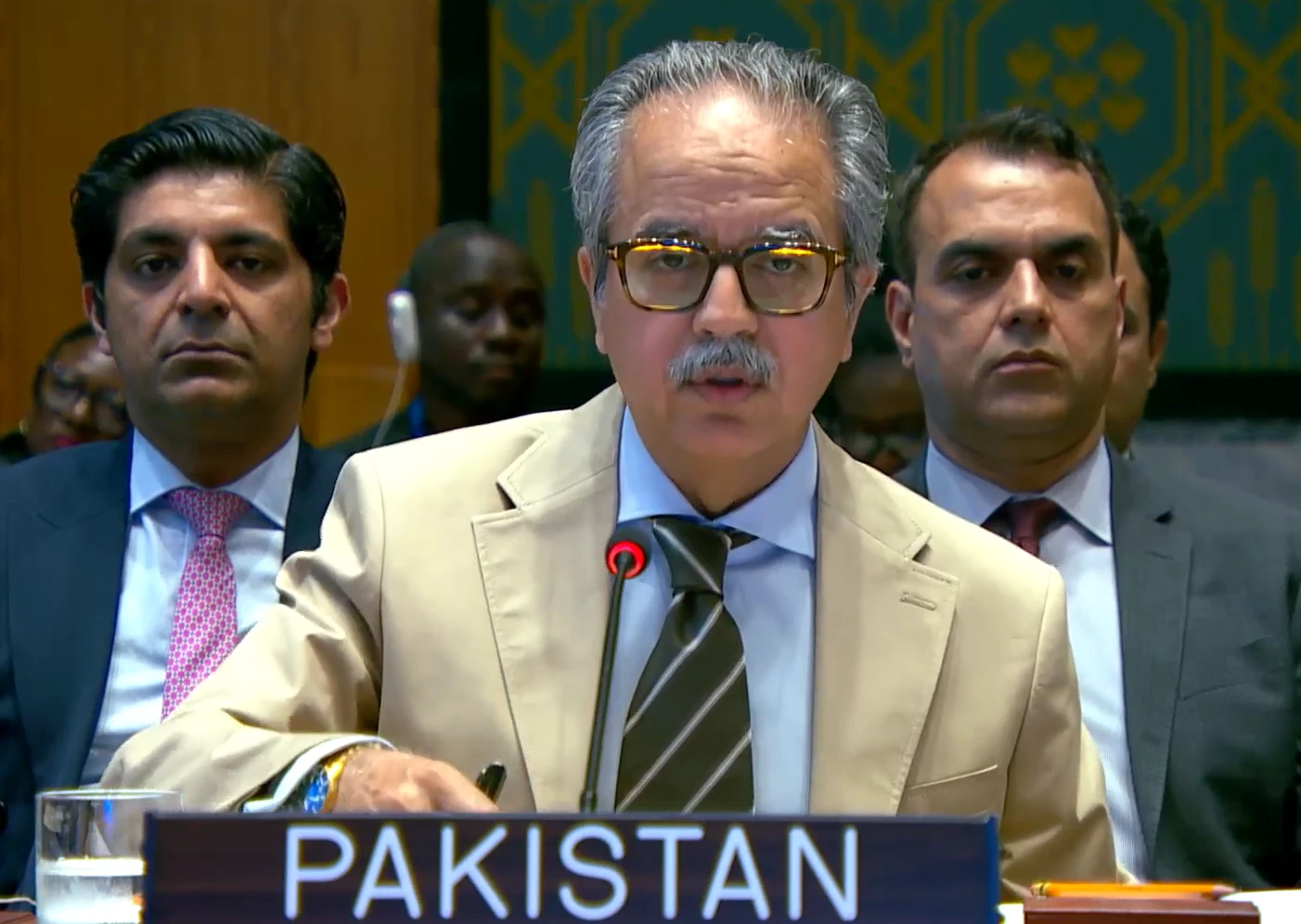
Speaking during a Security Council meeting on Wednesday to discuss the situation in Afghanistan, Pakistan’s ambassador to the UN, Asim Iftikhar Ahmad, said more than 4,700 Pakistanis had been killed over the past three years by “terrorism emanating from Afghanistan.”
He added: “The Taliban’s refusal to publicly denounce and condemn terrorist groups is evidence enough of their complicity and active support for these groups. Pakistan cannot sit idle in the face of this terrorist onslaught. We will respond in self defense, as and when needed.”
Relations between Pakistan and Afghanistan deteriorated sharply after the Taliban regained control of the country five years ago when the US withdrew its troops.
This year, Pakistan’s defense minister described the two countries as being in “open war,” after fighting erupted along the border and Pakistan carried out airstrikes against its neighbor.
Central to the tensions are Pakistan’s accusation that the Taliban allows a number of terrorist groups to operate in the country. These include the Pakistani Taliban, or Tehrik-e-Taliban Pakistan, which has carried out extensive attacks inside Pakistan. The Taliban has repeatedly denied the allegation.
Ahmad said that Pakistan had expected the Taliban government to take action against terrorist groups when it returned to power in 2021.
“Regrettably, they failed to act, in complete disregard for the legitimate security concerns of Pakistan and other countries,” he added.
Ahmad also raised concern about advanced weapons seized by the Taliban when the US forces departed. These included drones and a huge cache of arms and ammunition that had been intended for use by the previous Afghan government, he said.
In an interview with Arab News last month, Ahmad said the Taliban had regressed on the three key areas set out during talks with the US in Doha in 2020: an inclusive government; respect for human rights; and not allowing Afghanistan to be a staging point for terrorism against other countries.
Another main area of concern is the harsh restrictions placed on females by the regime.
“Women and girls are denied their fundamental freedoms and basic dignity, with discriminatory and abusive practices that contravene Islamic laws, traditions and tenets of Muslim faith,” Ahmad told council members.
They also heard from former Afghan minister Nargis Nehan, who described the treatment of girls and women in her country as the “worst form of gender apartheid.”
She called for a resolution recognizing the “institutionalized discrimination against women and girls in Afghanistan.”
Georgette Gagnon, head of the UN Assistance Mission in Afghanistan, said she had documented recent cases of women being arrested for dress-code violations.
“By denying women access to education, professions and public life, the de facto authorities are not safeguarding Afghanistan’s future; they are constraining the talent and productivity needed for post-conflict recovery,” she said.
She added that relations between Afghanistan and Pakistan remained a “serious concern,” and encouraged de-escalation and dialogue to resolve their differences, “including on the presence of terrorist groups in Afghanistan.”
The US ambassador to the UN, Mike Waltz, said it was heartbreaking that Afghan girls had been banned from secondary and higher education.