KABUL: Afghan President Ashraf Ghani confirmed on Monday that he would travel to Pakistan for a regional conference on Afghanistan, in a sign of fresh efforts to reduce tension between the two neighboring countries.
The Heart of Asia conference in Islamabad, previously held in Turkey, Kazakhstan and China, is seen as a chance to lay the basis for a resumption of an Afghan peace process broken off in July, although Afghan officials caution that obstacles remain.
“This is not Pakistan’s conference, this is Afghanistan’s conference,” Ghani, who had not previously confirmed his attendance, told reporters at a news conference in Kabul.
Referring to recent reports that Afghan Taliban leader Mullah Akhtar Mansour had died in a gunfight with other Taliban commanders, a development likely to further complicate any fresh peace talks, Ghani said there was no evidence to prove he had been killed.
Afghanistan has long harbored deep suspicion of Pakistan, accusing it of sponsoring the Taliban insurgency in what Ghani has referred to as a 14-year long “undeclared war” between the two countries.
Under pressure from his ally the United States, Ghani has stepped up efforts to improve relations, although they received a setback when peace talks with the Taliban, facilitated by Pakistan, broke down in July.
“Peace must be made between Afghanistan and Pakistan. The relations of two states are not relations between two youngsters — to be friends for an hour and then don’t talk to each the next hour,” Ghani said.
Speaking in Kabul on Sunday, newly appointed US Special Representative for Afghanistan and Pakistan Richard Olson, urged the two countries to work together.
“We appreciate the outreach that President Ghani has undertaken since becoming president to improve relations with Pakistan,” he said.
“We have always encouraged the best possible relations between Pakistan and Afghanistan, especially in the context of an Afghan-owned, Afghan-led reconciliation process.”
Pakistan is suspicious of the influence of its old rival India in Afghanistan. Afghan officials suspect Pakistan sees the Taliban as a tool for keeping Afghanistan in turmoil and preventing India from consolidating a presence there.


Afghan President Ghani to attend talks in Pakistan
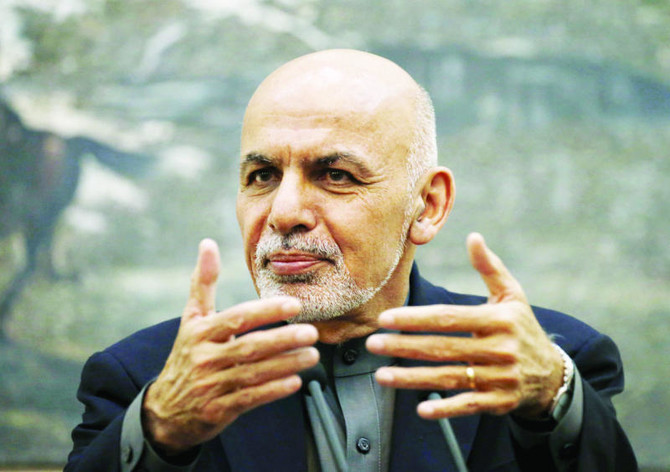
Afghan President Ghani to attend talks in Pakistan

Pakistanis fleeing Iran describe strikes shaking ground under their feet
- Nearly 1,000 students, businessmen and pilgrims have fled Iran since the war started out of a total 35,000 Pakistanis in the country
QUETTA: Pakistanis fleeing Iran described explosions and missile strikes across Tehran shaking the ground under their feet and engulfing buildings in fire and smoke in a city emptied of many of its residents. The conflict has widened sharply, with a US submarine sinking an Iranian warship off Sri Lanka on Wednesday and NATO air defenses destroying an Iranian missile fired toward Turkiye.
Governments have been scrambling to evacuate stranded citizens, with most of the region’s airspace closed due to the risk of missiles hitting passenger planes.
“I was in the classroom when a powerful explosion rocked our university building,” Hareem Zahra, 23, a student at the Tehran University of Engineering, told Reuters after crossing Pakistan’s land border with Iran.
“We saw thick smoke coming from many buildings on fire,” she said, adding Tehran was under attack until the moment she left.
TEHRAN LOOKED DESERTED
Nearly 1,000 students, businessmen and pilgrims have fled Iran since the war started out of a total 35,000 Pakistanis in the country, Mudassir Tipu, Pakistan’s ambassador to Tehran, said.
“There are now serious challenges. As you know there is no Internet in most parts of Iran,” he said. Iran has retaliated with a barrage of ballistic missiles targeting Israel and Washington’s allies in the Gulf, including Qatar, Kuwait, the UAE, and Saudi Arabia, following US and Israeli air strikes that killed Supreme Leader Ayatollah Ali Khamenei on Saturday.
Tehran has looked deserted since the conflict began, said Nadir Abbas, 25, a student of Persian literature at a university in the Iranian capital.
“I saw a drone hit a basketball court where six girl players lost their lives.”
Reuters could not verify his account.
DESTRUCTION EVERYWHERE
Islamabad is walking a diplomatic tightrope as it attempts to maintain warming ties with Washington while expressing solidarity with Iran.
Pakistan is home to the second-largest Shiite population in the world after Iran and being drawn into the conflict could lead to instability at home as well as complications evacuating its citizens.
“The first attack happened right next to my hospital,” said Sakhi Aun Mohammad, a student at Tehran University of Medical Sciences. After he reached the border, an Iranian friend called to check if he was safe, saying: “’Thank God, you have gone to Pakistan, all of you are safe, but your hostel has been attacked’.” A Pakistani diplomat who is still in Tehran said attacks took place every four or five hours, adding one missile struck a building next to his office. “At times you will feel as if something exploded right at your feet,” he said. “The last time I got out was at night. Buildings had collapsed, some others were on fire. There is destruction everywhere.”
He added: “It is almost like a ghost town.”


