JEDDAH: Two reputable Indian Muslim leaders have called for greater attention and vigilance by the community in preserving the ownership and protection of waqf (endowment) properties in the country.
Many prime tracts of real estate in India’s leading cities and states belong to Muslims but have been gradually taken over by corporate houses and government entities in connivance with corrupt officials on the different waqf boards.
Speaking to Arab News from New Delhi, Dr. Zafarul Islam Khan, president of the All India Muslim Majlis-e-Mushawarat, an umbrella body of the Indian Muslim organizations, and Dr. Syed Zafar Mahmood, a former high-profile bureaucrat who played a crucial role in the drafting of the famous Sachar Committee report and served as an adviser to former Prime Minister Manmohan Singh, feel that almost the entire political class has been united in “looting” waqf properties with impunity.
According to one estimate, there are nearly 600,000 waqf properties spread throughout the length and breadth of the country. Their estimated value runs into billions of dollars. The previous federal government put in place certain measures but they have fallen far short of the community’s expectations.Under Muslim law, waqf boards are supposedly the custodians of endowed properties.
Reacting to the Arvind Kejriwal-led Delhi government’s recent decision to nullify the powers of the Delhi Waqf Board, Khan said waqf boards existed in almost all Indian states and their members were all government appointees.
“It is very seldom that a good and sincere person gets onto these bodies and, if he does, he is soon removed as has happened some time ago with the administrator of the UP Sunni Waqf Board,” he said.
“Since they are all government appointees and have been given the jobs without any consultation with the community, they serve their masters and feel no qualms about stealing, selling and illegally transferring properties to their political masters,” he said.
In the case of Delhi, Khan said, the waqf board members were appointed by the previous government but the new chief minister must have felt that his hand-picked people should take charge. “As Kejriwal is a new player and somewhat conscious of corruption, the new appointees might be slightly better than the previous ones,” said Khan.
According to Zafar Mahmood, Section 99 of the Waqf Act 1995 provides for the stripping of the waqf board’s powers if there is prima facie evidence of financial irregularity, misconduct or violations according to the provisions of the Waqf Act.
“Surely, the Kejriwal government did its necessary work and so there appears to be nothing illegal about the decision,” he said. However, even when a board is dissolved or superseded, courtesy and tradition demand that the person appointed to perform the powers and functions of the board should be a Muslim, he said.
That was not the case in Delhi where the powers of the board were transferred to Revenue Secretary A. Ambarasu.
Zafar Mahmood feels, and rightly so, that there is no dearth of Muslim officers for holding the additional responsibilities. “The Kejriwal government did not take care of this aspect,” he said. “He should have taken Muslim sensibilities into account.”
He suggested that Kejriwal’s Aam Aadmi Party members must take a strong stand and write to the chief minister, requesting the appointment of a Muslim officer to look after waqf properties in Delhi.
According to Zafar Mahmood, many waqf properties currently under the Archaeological Survey of India (ASI) need to be extricated from it and restored to the boards.
“For that purpose a mechanism is in place, in the light of Sachar recommendations, whereby the officers of the Central Waqf Council and the ASI should meet every quarter with their decisions being minuted,” he said. “The CEO of each state waqf board should now be a Muslim officer not below the rank of deputy secretary. The leasing of waqf properties is not to be made at a price below the current market rate.”
He said the local community members have to systematically watch the process of removal of encroachment and against the misuse of waqf properties.
He said the CEOs and other officials of the 29 waqf boards in India and the Central Waqf Council need to undergo periodic refresher courses to keep them abreast of the latest laws, rules and court decisions.
Zafarul Islam Khan admitted that the previous Congress government passed the Waqf Act after a long delay “but even then left out the executive side despite our protestations and, because of that, the current law is useless and ineffective.”
He feels that the waqf properties should be in the hands of the community, following the example of gurdwaras and Sikh endowments which are in the hands of the Sikh community.
“Sikh gurduwaras are managed by officially elected representatives under the Shromani Gurdwara Parbandhak Committee Act which was originally passed in 1925 and was amended in 1971,” he pointed out. “No such benevolence was shown to the Muslims of India,” he lamented.


![]()
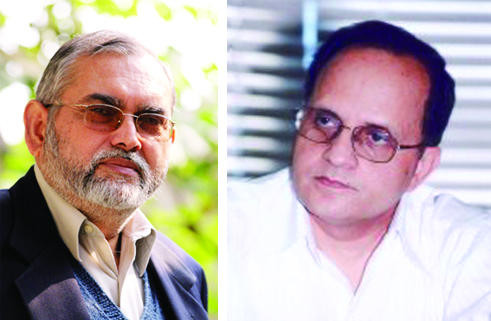
Indian Muslims call for protection of waqf properties
Indian Muslims call for protection of waqf properties
Latest updates




© 2026 SAUDI RESEARCH & PUBLISHING COMPANY, All Rights Reserved And subject to Terms of Use Agreement.