- It is India’s first paperless census, replacing manual ledgers with digital input devices
- In 2 phases, people answer 74 questions about their lives — more than ever before
NEW DELHI: A month before 3 million enumerators started visiting Indian households door-to-door, Priyanka Kumari taught them how to convince people to answer truthfully, as they faced dozens of questions about their livelihood, food and whether they had drinking water and toilets at home.
A teacher in Bihar’s Muzaffarpur District, Kumari has been training enumerators since March and has visited multiple families in her area with them.
“We witness a new reality when we are on the ground. We learn what kind of amenities people have been provided, what they lack, what is their actual state of living … whether the schemes that the government has launched are reaching the people or not,” she told Arab News.
“It was a real eye-opener for me.”
Usually a decennial exercise, the 2026-27 census is taking place with a five-year delay, mainly due to the COVID-19 pandemic.
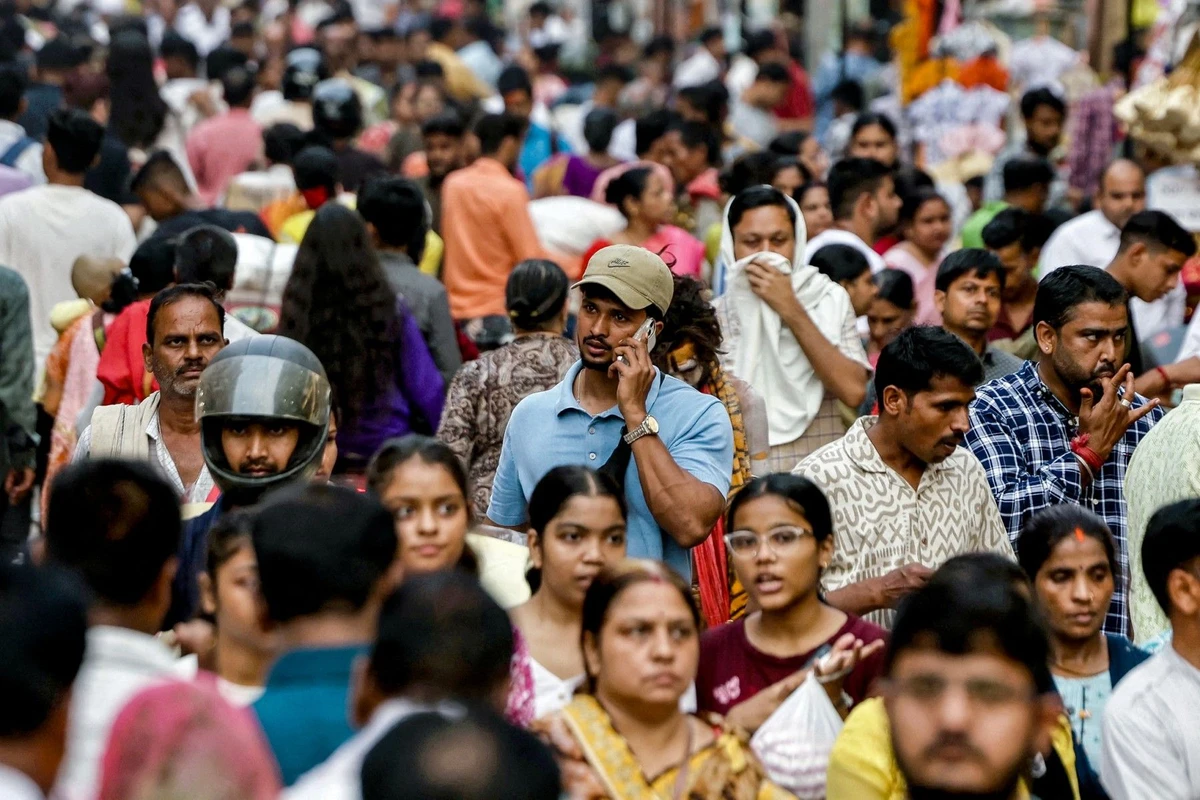
The last census, conducted in 2011, established that India’s population was 1.21 billion. It is believed that since then the population has added more than 200 million, overtaking China. But the exact numbers will be known only when the counting concludes in March 2027.
The ongoing census marks over 150 years since the first such synchronous decennial count across the Indian subcontinent took place under British colonial rule in 1881.
In the 2026–27 exercise, for the first time, traditional pen-and-paper operations are moving to an electronic, multi-platform infrastructure that incorporates real-time digital returns and geospatial tracking. Self-enumeration is also possible, with census mobile applications in 16 official languages.
People are required to answer more questions than ever before.
In the first phase of the census, between April and October, enumerators are asking 34 questions to gather data on housing conditions, household amenities and assets across all Indian states and union territories.
Neeraj Kumar, a middle school teacher in Bihar, who was randomly chosen to become an enumerator alongside six other teachers, said: “In my area, I counted at least 100 households and every day I used to visit six or seven houses and present them with a set of questions.
“We used to start at 7 a.m. and visit the houses. We have divided the areas and workload, and every enumerator would visit their assigned areas and count there.
“Among the questions that we ask is a question about the (number of) people in the house, and whether the house is self-owned or rented. What kind of grains do they eat? Do they have toilets inside or not? Do they have electricity in the house or not? Is the house made of concrete or not? These are some of the 34 questions we ask the residents.”
What struck him most was the actual standard of living of many families.
“When you visit the village as an enumerator, you develop a new understanding of the village. The surroundings, where you were born and raised, looks slightly different when you visit them house to house as an enumerator. One thing that strikes you is the claim that the government makes about raising the standard of living of the people and the reality on the ground. There is a gap,” he said.
“The villages are running on loans mostly. It’s (a) loan-based economy … Working-class people have thatched houses, but they have expensive motorbikes because the loan is easier. Many are trapped in this loan market.”
After house listing, full population enumeration is scheduled for February and the first days of March 2027. In this phase, 40 questions will be asked, including about languages, literacy, education, religion, disability, migration, and work.
“We will visit the households again and ask detailed questions on different issues. There would be questions on caste, too,” Kumar said.
The last time caste was featured in India’s census was in 1931.
Rooted in Hinduism, the caste system has long structured Indian society into a rigid hierarchy that shapes people’s occupations, living conditions, and marriage prospects.
For centuries, those at the bottom of this hierarchy have faced persistent marginalization and social exclusion. After gaining independence from Britain in 1947, India formally outlawed caste-based discrimination and discarded universal caste enumeration to foster a national identity.
It introduced specific caste categories to support affirmative action policies, and specific marginalized groups have been documented every 10 years. Other caste identities have not been updated for nearly a century.
Restoring them in the new census, the Indian government argued that resolving this data gap would allow it to adjust policy decisions.
While the decision initially drew controversy, the inclusion of caste data will also reopen public debates on social justice and representation.
“This census tells us who we are today, where people live, how they earn, what they lack, and how fast we are changing. Every scheme — from ration cards to schools to hospitals — depends on these numbers,” Prof. Afroz Alam, head of the Department of Political Science, Maulana Azad National Urdu University, told Arab News.
“The impact of the new census will be deep and long-lasting. Welfare will reach people more accurately, because budgets will be based on real needs rather than old estimates … As a largely digital exercise, it could also give us faster, more usable data than ever before. The real test is what we do with it. Data by itself changes nothing; honest use of that data can change everything.”