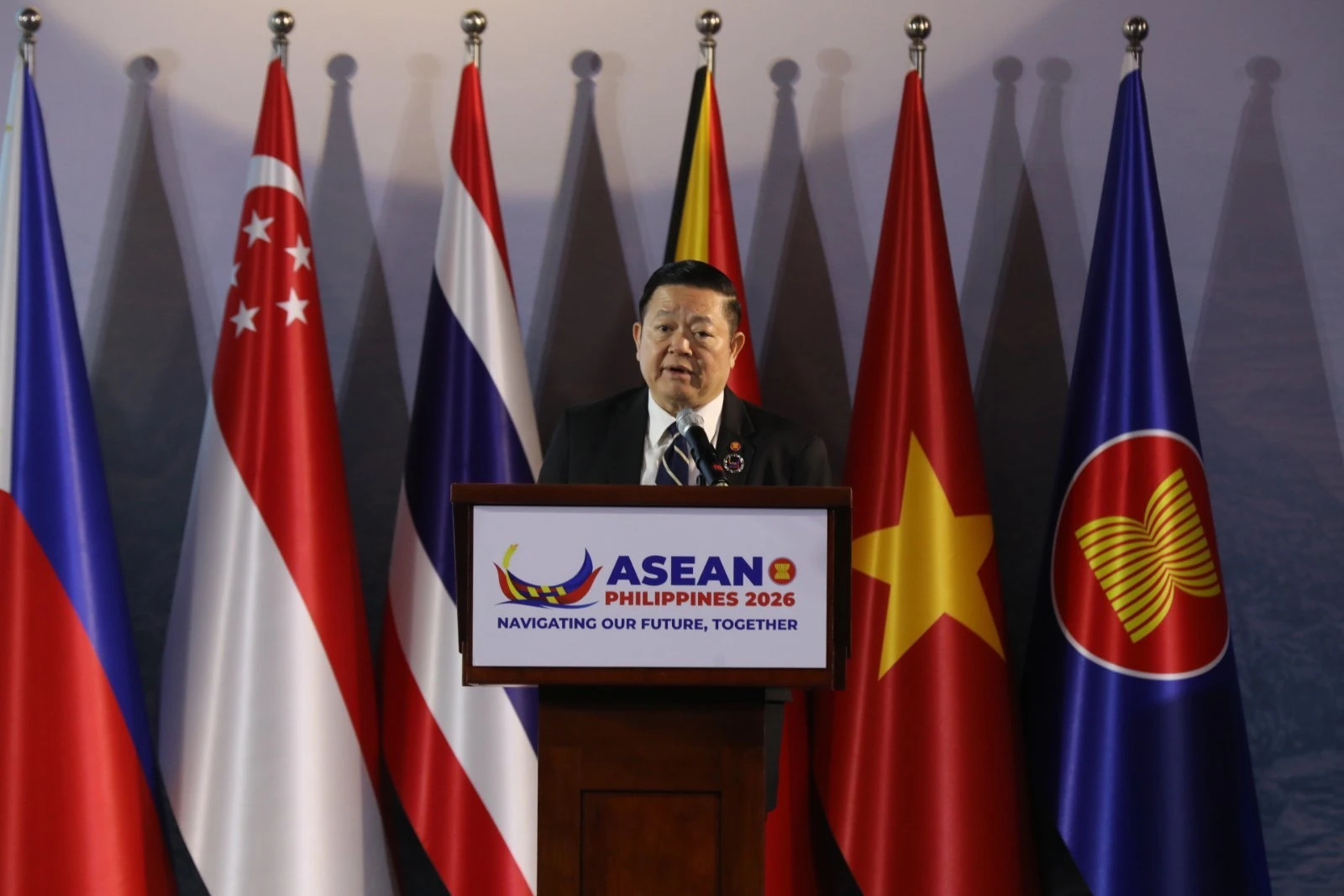
- ASEAN Centre for Energy warns the conflict puts 28% of the bloc’s final oil consumption at risk
- Ministers discuss speeding up megaproject linking electricity networks of all 11 member nations
Southeast Asia’s energy ministers gathered in Manila on Wednesday for energy security talks, seeking to lessen the region’s dependence on supply chains upended by the fallout of the US-Israel war with Iran.
Since February, US-Israeli attacks on Iran and Tehran’s retaliatory strikes on American allies in the Gulf region have repeatedly disrupted maritime access, shipping security, and the cost of moving energy through the Strait of Hormuz.
The strait is the single most consequential chokepoint for the energy system of the Association of Southeast Asian Nations, one of the world’s fastest-growing economic blocs, which imports over 55 percent of the crude for its refineries from the Middle East.
ASEAN’s energy chiefs are meeting as the war has pushed oil prices over $100 a barrel. Attacks on vessels near the Strait of Hormuz have intensified since September, and Houthi strikes have simultaneously targeted Saudi Arabia and increased pressure around the Bab Al-Mandab Strait waterway — one of the main alternatives to Hormuz.
“Recent geopolitical developments and supply disruptions have shown how quickly events beyond our region can affect energy markets, supply chains and the daily lives of our people,” ASEAN Secretary-General Dr. Kao Kim Hourn said, as he addressed the ministers.
“We see this in the cost of transport and goods, as well as in the reliability of the energy supplies. These challenges make preparedness and cooperation among ASEAN member states more important than ever.”
In a policy paper released last week, the ASEAN Centre for Energy warned that a severe disruption to Middle East supplies could place nearly 28 percent of the bloc’s final oil consumption at risk.
Dependence on power imports from the Middle East varies across ASEAN member states, from around one-quarter of crude in some markets to more than four-fifths in others, but the impact of the crisis has been felt across all of them, affecting the region’s 700 million population.
ASEAN Center for Energy data shows that in the Philippines and in Cambodia, petrol retail prices have jumped by 76 and 68 percent respectively, while in Thailand diesel surged by 70 percent.
With over a third of global urea exports moving through the Gulf, supply shortage triggered emergency contract suspensions at the region’s petrochemical giants in Singapore and Indonesia.
Inflation in the Philippines has nearly doubled since February, while Malaysia’s projected petroleum subsidy costs have surged to $10.1 billion, almost tripling the initial budget.
During the two-day Manila meeting, Southeast Asia’s ministers will be discussing ways to reduce the bloc’s long-term dependence on fuel imports, as they begin to implement the ASEAN Plan of Action for Energy Cooperation 2026-30.
The plan targets a 40 percent reduction in energy intensity, a 30 percent share of renewable energy in primary energy supply, and a 45 percent share of renewable energy in installed power capacity.
The bloc is also speeding up work on regulatory frameworks for the ASEAN Power Grid — a massive, multi-decade infrastructure megaproject linking the electricity networks of all 11 member countries.
“The world’s markets will always be part of our story. But each member state is made stronger by belonging to a community of nations that look out for one another,” said Philippine Secretary Sharon Garin, who hosts the ministers in Manila, as the Philippines holds ASEAN’s rotating chairship in 2026.
“This year, member states are operationalizing the enhanced memorandum of understanding, advancing multilateral power trade, and developing a framework of submarine power cables.
“The Laos DR, Thailand, Malaysia, Singapore power integration project, and the Brunei Darussalam, Indonesia, Malaysia, Philippines power interconnection project are moving forward.”