- Matchday 2 ended with Ultra Chmicha moving top of the table after a 7-3 win over Rising Peaks
- Head coach Ballestín says the format's unpredictability — from President's Penalties to secret cards — demands total focus from players and fans alike
RIYADH: A thrilling Kings League MENA Matchday 2 took place at Cool Arena at Boulevard Riyadh City, with a series of end-to-end fixtures that have begun to shape the table. For the uninitiated, the Kings League is unlike anything traditional football has to offer — faster, more unpredictable, and designed to ensure no moment goes to waste across its 40 minutes.
The night opened with Ultra Chmicha, led by Morocco's Ilyas Elmaliki, continuing their strong start with a 7-3 victory over Saudi content creator Abdulrahman Al-Shehri's Rising Peaks to move to the top of the table.
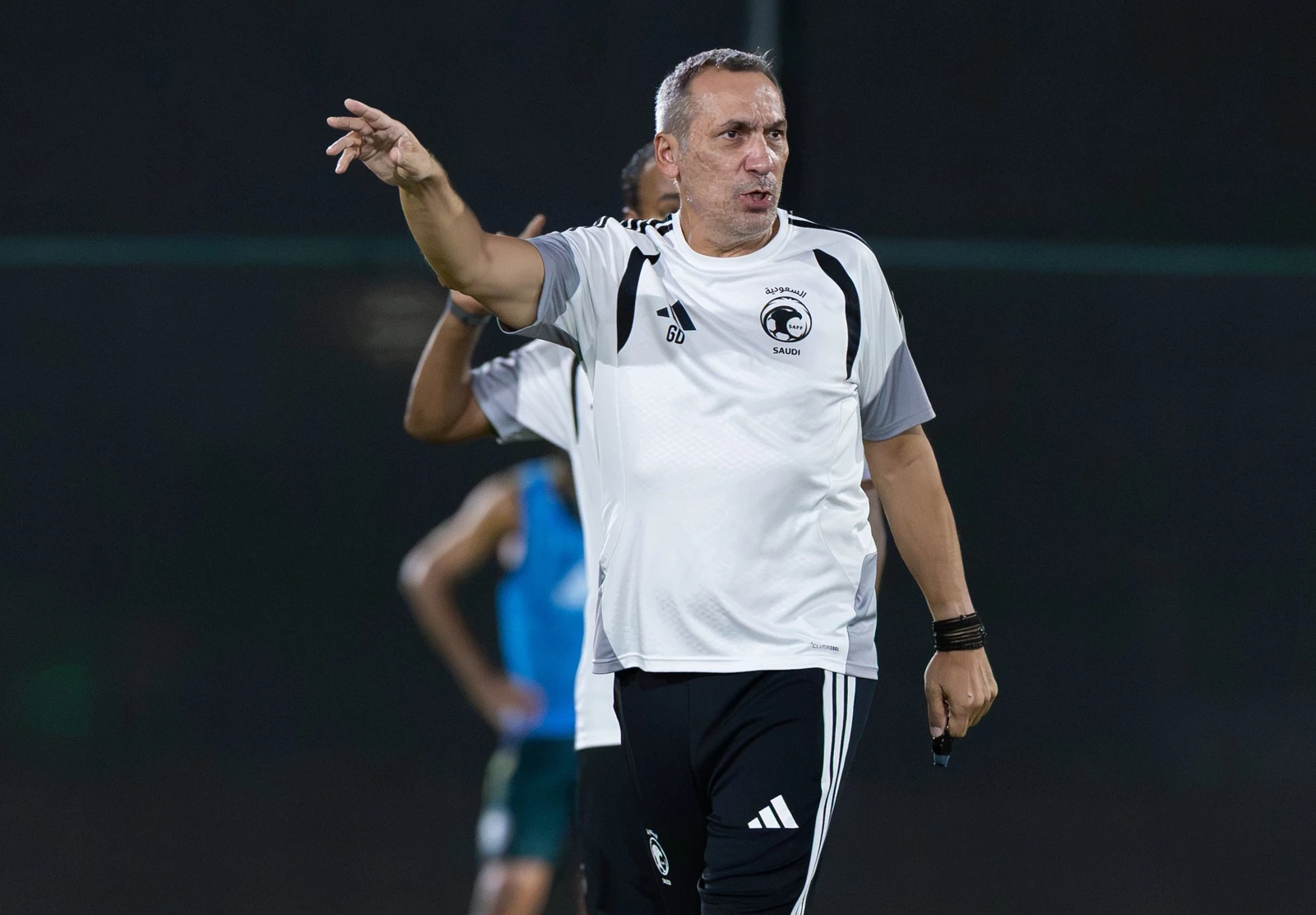
"The level at this Kings League edition is very high," Ultra Chmicha head coach Ricardo Ballestín told Arab News. "The victory in our first game made us think this one would be easier."
"You have to give it your 100 percent in every match — any of the teams here can beat you," he added. "Because at the individual level, there are very strong players in this league."
"The mentality with which players have to come here is to compete from the first minute."
Next up was a heated battle between Fwaz's FWZ and Maherco's Redzone.
FWZ took a 2-0 lead inside the first two minutes before Redzone rallied to a 4-2 advantage by the 28th minute, the fourth scored by Jordanian national team star Ali Olwan. FWZ pulled it back to 4-3 before Jero Martin scored a double goal shortly after to restore Redzone's advantage.
That match saw both teams score in the first two minutes of each half — when the scale-up occurs. The Kings League does not start with all seven players on each side; instead, it scales up from 1v1 — with goalkeepers throughout — with the dice roll determining whether the opening phase is 1v1, 2v2 or 3v3 for the second half.
The final phase produced a stellar comeback by FWZ, who had fallen behind 6-5 in match ball mode before drawing level at 6-6 — forcing the de-escalation phase to continue, in which players drop off the pitch one by one until it is down to 1v1 plus goalkeepers, with the next goal now deciding the winner. Cristian Hernandez struck the post from the penalty spot, only for Mohamed Bencherif to complete his brace and seal it for FWZ at 7-6.
Jordanian fans had more to cheer in the next game when 3BS took on Morocco's Bakhira FC. 3BS — still smarting from a 7-1 defeat to RDZ on the opening matchday — cruised to a 9-3 victory, with double goals from former Le Havre winger Moussa Sao and Khaled Abbas.
In what was becoming a pattern on the night, the high-scoring victory was followed by a nervy encounter. Drb7h's DR7 faced AboFlah's ABO FC in a game that went down to the wire — Abu Omar missed the President's Penalty that could have lifted DR7 into a 3-1 lead, before AboFlah converted the equalizing penalty to force a shootout — where the latter won 4-3.
In the final match of the night, Saudi Arabia's RA2 FC faced Egypt's Turbo in a shootout-decided thriller. The Egyptian side took the lead in the first minute before five goals in the first six minutes of the second half handed RA2 FC a 4-2 advantage. With the game set to enter match ball mode, Islam Moursy — whose star player card had been activated in the 10th minute — converted from the spot for a double goal to level the scores and force a shootout.
In stunning fashion, all five penalties from both sides were missed, leaving it down to the goalkeepers. Eloy Amoedo finally broke the deadlock, dribbling past his opposing keeper — sparking a VAR debate — before Islam Ahmed responded with a chipped effort, only for it to miss the target and confirm a 1-0 shootout win for RA2.
President's Penalties, secret cards, giant dice, double goals and match ball mode: all which come alongide the scale-up format that sees play begin with a 1v1 before building to a 7v7 over the opening five minutes. None of it resembles the traditional football fans are accustomed to — but Ballestín believes there is value in it.
"For me, the Kings League is an attempt to bring the sport closer to new technologies and the way television is consumed today," he said. "A lot of people who watch 11-a-side football nowadays are constantly on their phones, talking with their friends."
"What the Kings League wants to do is put that phone away. There are many cards, many lights, it starts from 1v1, then 2v2 — if you are not 100 percent focused, whether as a player or as a spectator, you can miss a goal."
"I believe that is the big difference in how the Kings League wants to make its mark, and the audience it is aimed at," he said.