RIYADH: Red Sea Global has announced scheduled flights connecting Abu Dhabi to its international airport, starting Oct. 4.
The inaugural flight will depart from Zayed International Airport on Sunday, Oct. 4, operating once weekly on Sundays; the frequency will increase to two flights a week — on Thursdays and Sundays — starting Oct. 25.
John Pagano, group CEO of Red Sea Global, said that the partnership with Etihad Airways marked a significant step in enhancing accessibility by linking the destination to a premier global aviation network.
The airline said in a statement: “Etihad Airways will fly to Saudi Arabia’s Red Sea coast from 4 October 2026. The year-round service to Red Sea International Airport puts a new holiday destination on our map just over three hours from Abu Dhabi.”
The Red Sea is Etihad’s sixth destination in Saudi Arabia, alongside Riyadh, Jeddah, Dammam, Madinah and Al-Qassim. Saudi Arabia is among the airline’s largest markets in the region, carrying business, family and religious travel throughout the year, and the Red Sea adds a holiday destination to that mix.
Antonoaldo Neves, Etihad Airways chief executive officer, said: “The kind of holiday people normally take a long-haul flight for — islands, reefs and relaxation — is now a short flight from Abu Dhabi and a single connection from anywhere across our network.
“We are always looking ahead to where our guests will want to travel next and making sure we are there early. The Red Sea is exactly that kind of destination, and it is an easy one to reach; the holiday starts on the day guests arrive, not the day after.”
As the group continues to expand its portfolio of resorts and experiences, improved international air connectivity enables it to attract more visitors from key markets worldwide.
The General Authority of Civil Aviation, the Air Connectivity Program, and daa International — the operator of Red Sea International Airport — played pivotal roles in launching these flights.
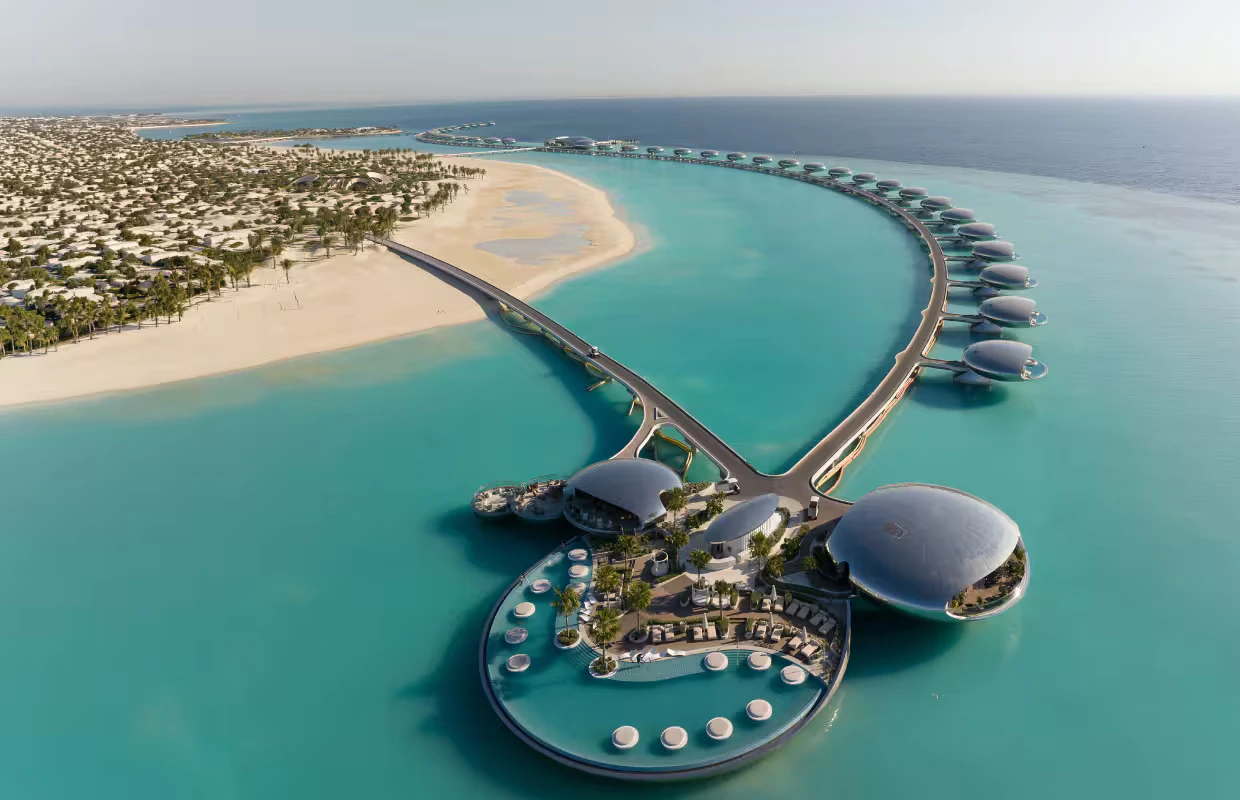
The Red Sea destination is a luxury tourism hub covering islands, coastlines and desert landscapes.
More than 90 islands lie off Saudi Arabia’s northwestern coast in Tabuk province, in turquoise water above reefs that form part of one of the largest coral systems in the world. Turtles, dolphins and rays move through the lagoons, and mangroves line the shore. Inland, where the desert of the Hejaz begins, lava fields and mountains rise within a short drive of the beach.
The resorts are small and spread along the coast rather than gathered in one place. For guests that means diving, sailing, desert and an empty stretch of beach within minutes of where they are staying.
It currently features 11 resorts — including Six Senses Southern Dunes, Nujuma (a Ritz-Carlton reserve), and Four Seasons Resort and Residences at The Red Sea — with six additional resorts set to open in the coming months.
Red Sea International Airport currently connects to Riyadh, Jeddah, Dubai, Doha and Milan via about 20 weekly domestic and international flights.
Red Sea Global announces new flights connecting Abu Dhabi to its international airport