RIYADH: The Ministry of Municipal and Rural Affairs will host the first urban planning forum in collaboration with the United Nations Human Settlements Program, or UN-Habitat, for a better urban future.
To be held under the patronage of Custodian of the Two Holy Mosques King Salman, the three-day forum will kick off in Riyadh on March 29 to discuss “Modern trends in urban planning toward a prosperous city.”
The forum is expected to attract top speakers, decision-makers and international experts, according to Abdul Rahman Al-Asheikh, chairman of the organizing committee of the forum.
Other participants include municipal councils, technology-based companies and management bodies for city planning, professional associations, civil society organizations, urban development companies, regional councils, real estate developers, universities, research centers and transportation and infrastructure consulting firms and offices.
The speakers are expected to discuss the future of Saudi cities in light of modern trends in urban planning, environmental legislation, architectural and urban management and community participation.
They will also review global best practices during the technical session, said Al-Asheikh.
The forum aims at raising awareness about the need to develop urban planning practices in the Kingdom and provide a platform for discussion between multiple stakeholders with the urban environment as a starting point to address new fundamental challenges witnessed in the 21st century.
He said the forum will also exhibit products and pointed out that cities are increasingly tested in developed and developing countries alike because of the negative effects left by climate change caused by global warming, the depletion of resources, environmental pollution, demographic growth and economic slowdown; therefore, the experts will brainstorm on all these factors reshaping towns and cities.
He noted that Saudi cities are excluded from facing some of these challenges, however, it continues to test the rapid rise in the rates of urbanization including the consequences of overcrowding and increasing imbalances caused by income inequality, environmental degradation shrinking public spaces, and the lack of means of transport and mobility.
He pointed out that more than 82 percent of the Kingdom’s population is now living in urban areas, which is expected to rise. Therefore, he said, urban planning becomes a great priority for the government as well as partners in the private, academic and civil sectors.
With this forum, the ministry seeks to achieve an increase in competitive and sustainable cities to raise the efficiency of services, and improve the ways and methods of urban planning and development in the Kingdom with qualified staff to embrace innovative ideas and solutions.
UN-Habitat has developed a unique position supporting urban development, and the planning and building of a better urban future for the next generations.


![]()
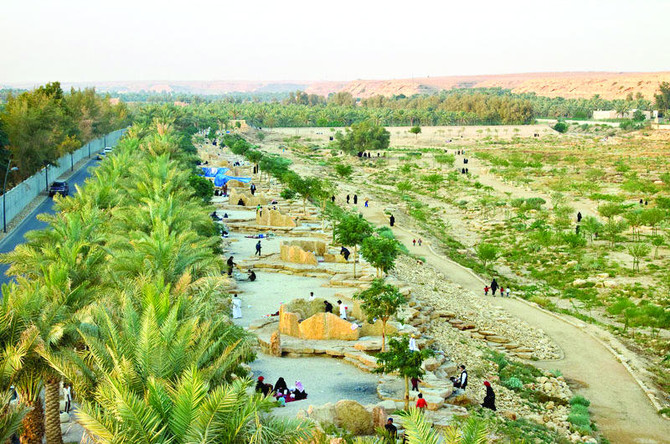
KSA, UN-Habitat to discuss future of Saudi cities in March
KSA, UN-Habitat to discuss future of Saudi cities in March
Latest updates


© 2026 SAUDI RESEARCH & PUBLISHING COMPANY, All Rights Reserved And subject to Terms of Use Agreement.