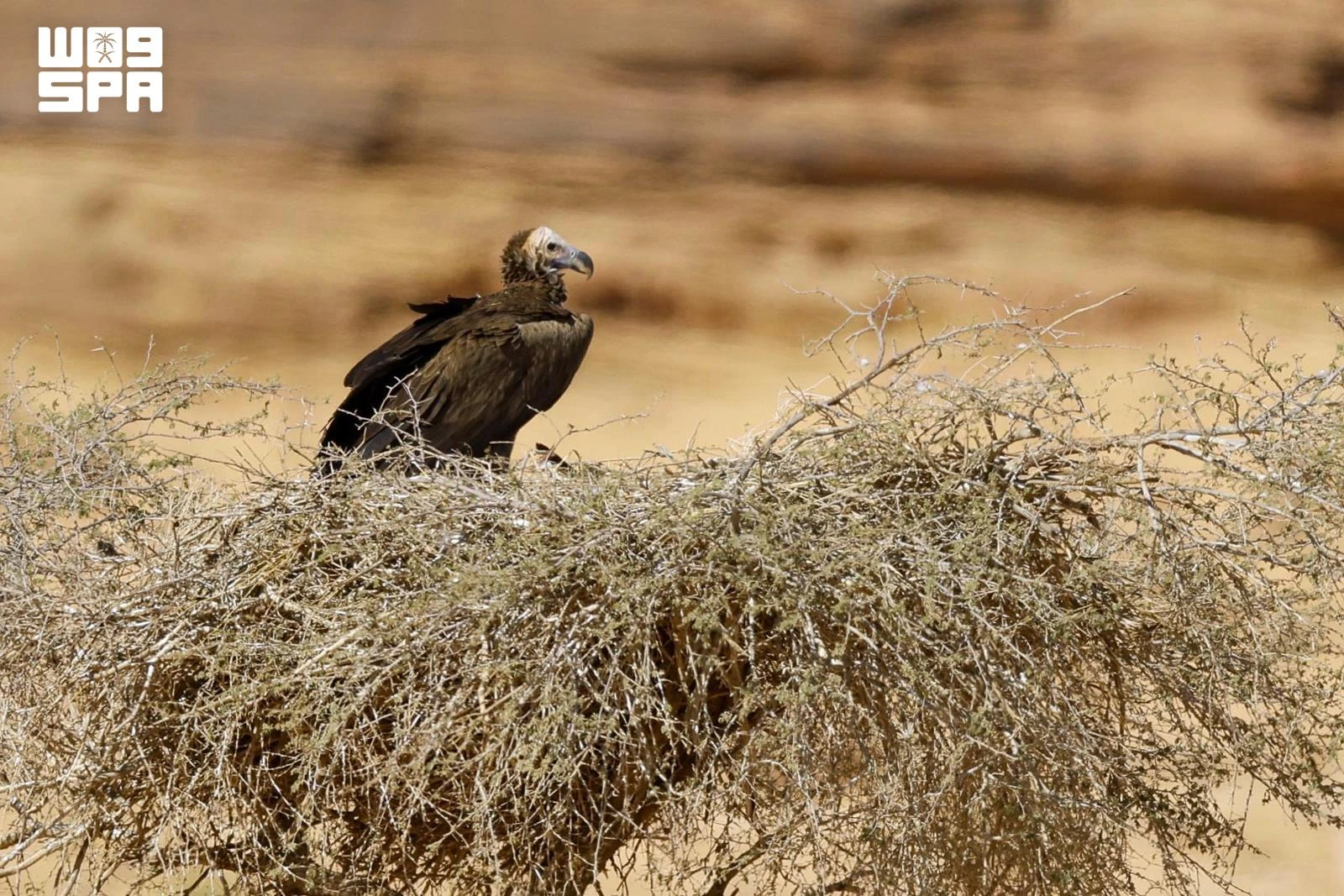
JEDDAH: Environmental teams in AlUla are using field studies and tracking technology to monitor endangered vultures and protect the natural habitats on which they depend.
AlUla’s diverse terrain provides a natural habitat for several vulture species and migratory birds.
Monitoring programs have documented their presence, movements, behavior and environmental needs, with particular attention given to endangered species.
Sharaan Nature Reserve, which covers more than 1,500 sq. km, is among the habitats where rare vulture species have been recorded.
The reserve’s environmental monitoring team documented an endangered Ruppell’s vulture in what is believed to be only the second official sighting of the species in AlUla. Field surveys have also regularly recorded between 20 and 30 lappet-faced vultures in the area, representing about 2.5 percent of the species’ population in Saudi Arabia. Four breeding pairs were observed in AlUla during the current season.
The Royal Commission for AlUla has partnered with King Abdullah University of Science and Technology to track lappet-faced vultures using GPS technology. The program collects data on the birds’ movements, behavior, habitats and potential threats, helping environmental teams develop targeted conservation measures.
Fieldwork also focuses on reducing risks along migratory routes, restoring natural habitats and conducting specialized studies to support wildlife conservation and protect AlUla’s biodiversity.
Vultures contribute to healthy ecosystems by disposing of carcasses and recycling nutrients. Their presence and breeding success are also regarded as indicators of environmental health and ecological balance.
Scientific monitoring in AlUla is providing researchers with data needed to understand the birds and support their long-term survival in the wild.
International Vulture Awareness Day is observed annually on the first Saturday of September to highlight the birds’ vital role in maintaining healthy natural ecosystems and the need to protect them from threats worldwide.
More than 100 organizations in 43 countries participate in the occasion, raising awareness of the global decline in vulture populations caused by poisoning, habitat loss and illegal killing.
By consuming animal carcasses, vultures help limit the spread of diseases and epidemics while contributing to cleaner environments and healthier communities.
Saudi Arabia is also undertaking measures to protect vultures and migratory birds more broadly. These include installing protective insulation on power lines along migration routes, regulating hunting seasons in accordance with environmental rules, and conducting monitoring programs and field studies through the National Centre for Wildlife.
AlUla steps up efforts to protect endangered vultures