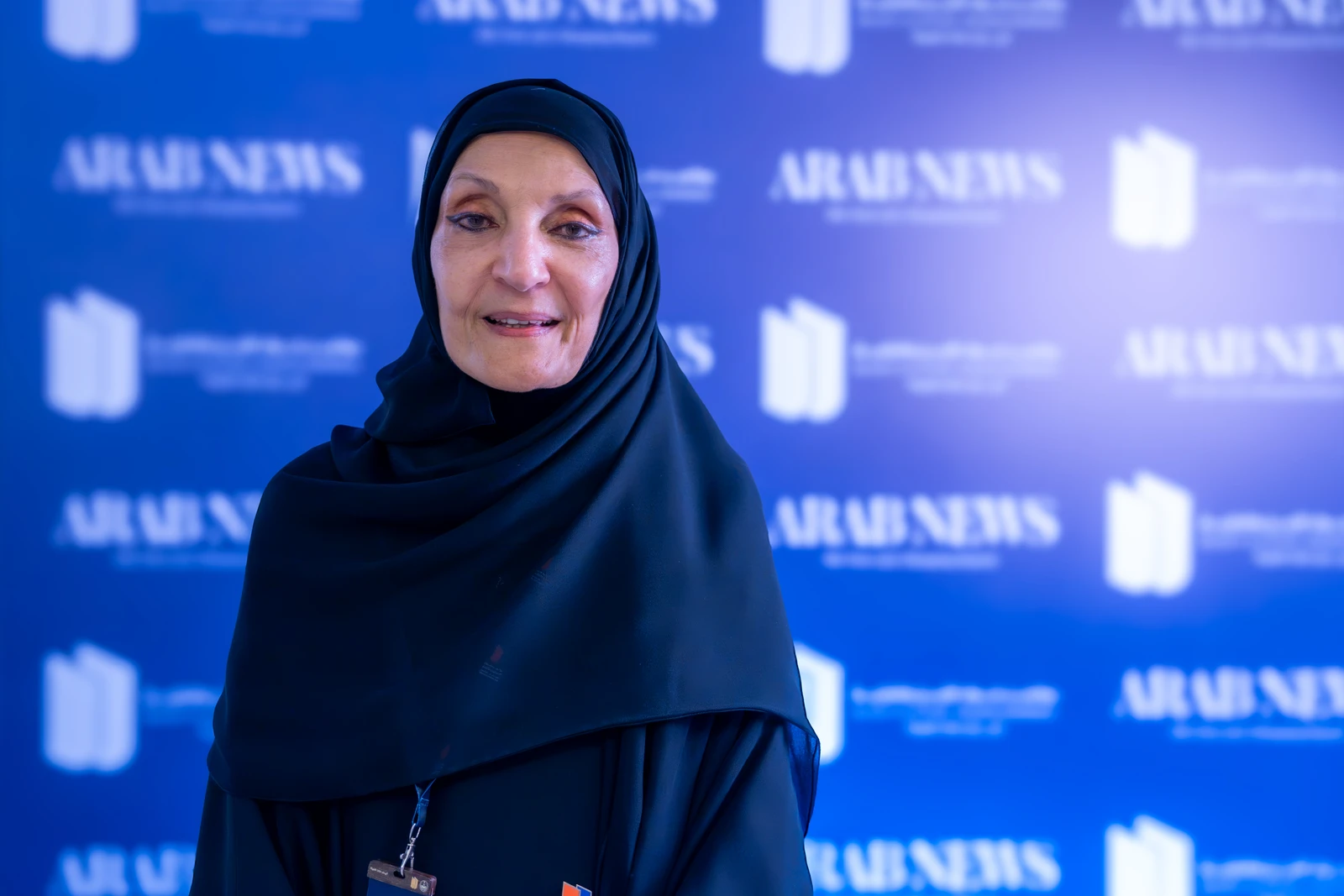
RIYADH: Princess Lulwah Al-Faisal has been one of the most prominent Saudi women to empower women and champion higher education in the Kingdom. Following her talk at the Security and History Dialogue Conference in Riyadh, she spoke to Arab News about the importance of education and security in the Kingdom’s ambitious transformations and reflected on the pillars that made the country what it is today. As the event looks at various elements that contributed to securing the Kingdom’s standing history, Princess Lulwah said that one of the most crucial strategies by King Abdulaziz was prioritizing pockets of community. “Since the unification of Saudi Arabia the first thing that King Abdulaziz did was bring the people together in every way: settling the nomads, having their lands. “The first things that were built on those lands were the mosques, where they also learned. It was a school at the same time, learning their religion, learning foreign languages, everything was involved in it.” Mosques were not only spaces for spiritual practice but also places of learning. They provided structured study circles, elementary schooling and scholarly gatherings that instilled civic values with the community. Following that path, Princess Lulwah helped found Effat College, now Effat University, in 1999, taking a hands-on role in fundraising, curriculum design, campus construction and faculty recruitment. She now serves as the vice chair of the board of trustees and general supervisor of the university. “In all of our programs we study what the country needs right now and all of our curriculums and studies sprout from that. My ambitions are much higher than what we’ve reached (at Effat) and I hope that those ambitions are reached by the people working with us and supersede all that we’ve achieved,” she said onstage. She highlighted a program that the university is collaborating on with the Swiss organization CERN, which has been in the works for seven years, for Saudi students to study nuclear sciences and engage in research. “Now we’re entering into an agreement with them on a continuous collaboration, not limited to study abroad,” she said. After establishing health centers as well and securing doctors, King Abdulaziz brought the telegram to the nation. “Communication started from the first day of the unification of Saudi Arabia. From there, the roads spread, communication and getting Saudi Arabia open for transportation for everybody … We’re continuing on the same road and leading worldwide, even space-wise,” Princess Lulwah said. Mirroring this pillar, Saudi Arabia has invested billions in securing sustainable transportation domestically and across cities. One of its most credible projects is the opening of the Riyadh Metro system that was 12 years in the making. The country has opened its doors widely for tourism and is a point of connection to 65 different countries. During its unification there were many illnesses but as the founder brought in an “army of doctors” to treat its residents and pilgrims it proved to be an essential element to providing human security. During her talk Princess Lulwah said that she never recalled a time when national security was a worry. King Faisal had a strong belief and ambition that Saudi Arabia become a source of humanity, peace faith and true Arab values that celebrate its customs and traditions. He saw them as pillars for a strong nation. “What we see today are the results of that faith that my father had and all of us had. What we see today in our youth, who are performing this role in securing their future, represent everything we’ve been expecting of them and are a source of radiance for humanity,” she said during the panel. For decades Princess Lulwah has championed Saudi women’s advancement, playing a central role in expanding women’s access to fields including engineering, sciences, architecture and technology. She told Arab News that Saudi women, who form essentially half of its population, were a critical component in planning and securing its future. She said that when speaking about education and security, “one doesn't work without the other.” As Saudi Arabia looked toward the future it was up to the youth to preserve the Kingdom’s strong sense of historical identity as it embraced rapid social and economic change, she said. “One doesn't prevent the other. So it is very important that you, young people, continue holding onto your traditions, your beliefs, your religion and your confidence in God in what you do.”
Education, security go hand in hand, Princess Lulwah Al-Faisal says