- Pakistan is seeking to attract more foreign investment, mobilize private capital to spur economic growth
- A delegation of Gates Foundation expresses interest in supporting greater access to finance in Pakistan
KARACHI: British International Investment (BII), a development finance institution of the UK government, is exploring an expansion into Pakistan as part of a broader $2 billion investment strategy targeting markets across Asia and Africa, Pakistan’s finance ministry said on Thursday.
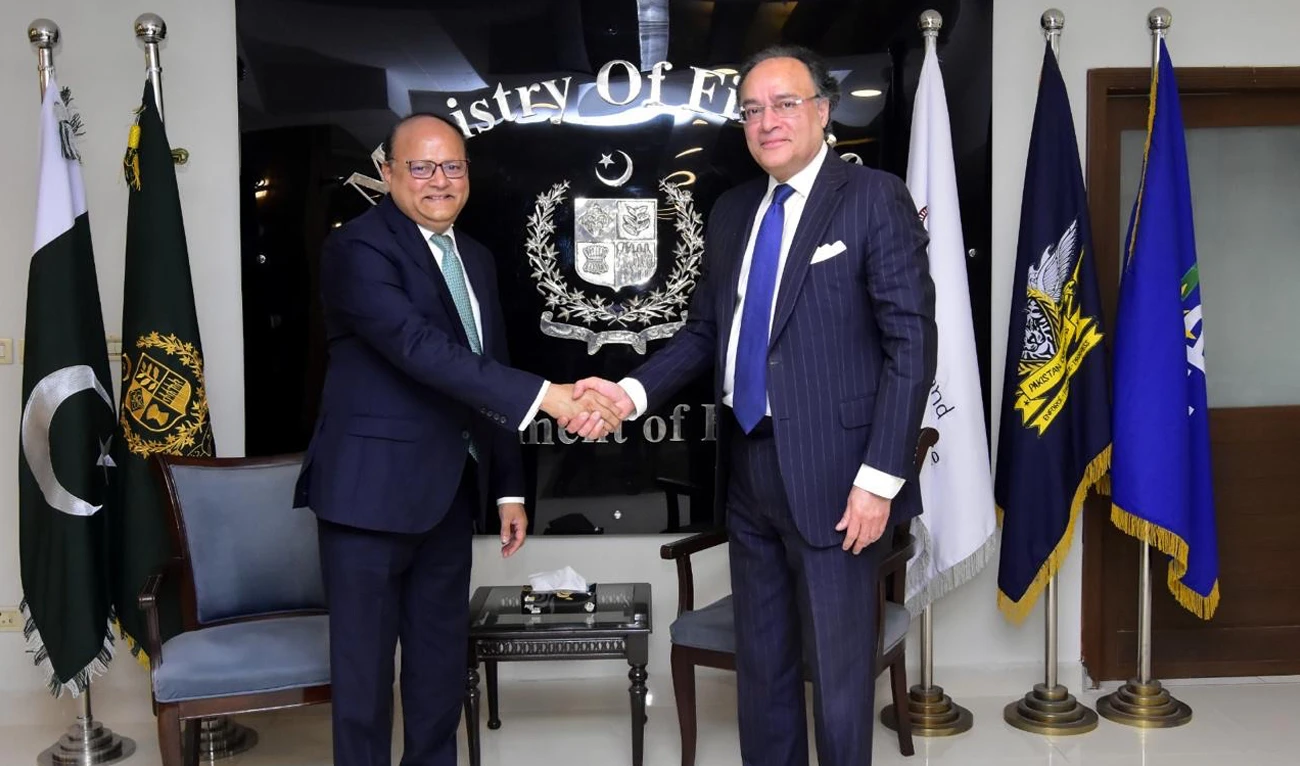
The statement came after Finance Minister Muhammad Aurangzeb’s meeting with the BII managing director and head of Asia, Srini Nagarajan, during which they discussed opportunities to expand BII’s investment footprint in Pakistan and mobilizing greater private capital across priority sectors.
The meeting comes as Pakistan seeks to attract more foreign investment and mobilize private capital to support economic growth, with infrastructure, energy, financial services and other priority sectors offering opportunities for international investors.
Thursday’s discussions focused on BII’s investment plans for Pakistan in private capital mobilization, infrastructure and climate finance, private equity, small-medium enterprise financing and emerging investment opportunities arising from Pakistan’s ongoing economic and structural reforms.
“Mr. Nagarajan briefed the Finance Minister on BII’s 2026–31 investment strategy, under which the institution plans to invest at least $2 billion across Asia and Africa, with a significant focus on South Asia and frontier markets,” the Pakistani finance ministry said.
“He identified Pakistan as an important investment destination and expressed BII’s interest in significantly expanding its investment footprint in the country over the coming years.”
The finance minister welcomed BII’s continued commitment and interest in scaling up investment in Pakistan, and highlighted the significant improvement in macroeconomic stability and investor confidence, alongside the government’s focus on structural reforms, privatization and a transition toward private-sector-led growth.
The discussions also covered opportunities to develop new capital-market instruments for infrastructure financing and explore innovative approaches, including the potential tokenization of suitable existing real estate assets, to broaden investment channels and mobilize new pools of capital.
Aurangzeb held a separate meeting with a high-level Gates Foundation delegation, led by Dr. Anita Zaidi, president of the foundation’s Gender Equality Division, along with Ms. Kalpana Kochhar, interim president for Global Policy and Advocacy Division.
The delegates briefed the finance minister on the foundation’s growing engagement in Pakistan, particularly in human capital, child health, nutrition, maternal health and women’s economic participation, as well as in maternal health work and the use of artificial intelligence to improve health outcomes.
Aurangzeb outlined his government’s Access to Finance agenda for SMEs, agriculture and other underserved segments, with a focus on digital financial pathways, improved data exchanges and cash-flow-based lending. On revenue mobilization, he emphasized enforcement, facilitation and trust, alongside digitalization and automation of tax assessments and audits to enhance transparency and efficiency.
“The Gates Foundation representatives welcomed progress in Pakistan’s financial sector and expressed interest in supporting greater access to finance, particularly for SMEs, through improved information flows, digital footprints and cash-flow-based lending,” the finance ministry said.
“The two sides also discussed opportunities in agriculture, the digital economy and private-sector-led investment.”