The Gulf and Central Asia are often discussed as if they are competing for the same economic future. Every disruption in the Middle East prompts speculation that investors will look north, toward the Central Asian region. Every new Chinese railway, logistics terminal or energy project generates another prediction that Eurasia’s landlocked economies are finally ready to challenge the Gulf’s position as the region’s commercial gateway.
That comparison is useful, but only if we stop treating the two regions as interchangeable.
The Gulf states built globally connected economies on the back of hydrocarbons, accumulated sovereign wealth and aggressive state-led investment. Central Asia is following a fundamentally different trajectory: resource-rich but landlocked, increasingly connected through the Caspian Sea and transcontinental corridors, and more dependent on trade integration, logistics and regional connectivity.
The question, therefore, is not whether Central Asia can become another Gulf. It cannot, and it does not need to. The more important question is what Central Asian governments can learn from the Gulf’s use of sovereign capital, public-private partnerships and economic diversification, and where that model reaches its limits.
A corridor is not an economy.
Hina Ayra
The distinction has become particularly relevant since 2022. The Russia-Ukraine war disrupted established Eurasian trade routes and accelerated efforts to diversify transport links. The Gulf, meanwhile, entered a new phase of economic repositioning, with Saudi Arabia’s Public Investment Fund, Abu Dhabi’s sovereign investment architecture and Qatar’s global investment platform increasingly being used not simply to preserve oil wealth but to build new sectors, attract multinational companies and establish globally recognized economic brands.
Saudi Arabia is perhaps the clearest example. PIF now reports more than $900 billion in assets under management. Announcing its 2026-2030 strategy in April, the fund said it had invested more than $199 billion in new projects inside the Kingdom between 2021 and 2025, and that it had contributed more than $243 billion to real non-oil GDP between 2021 and 2024, equivalent to around 10 percent of Saudi Arabia’s total non-oil GDP in that final year. The Vision 2030 annual report for 2025 puts non-oil activity at approximately 55 percent of real GDP, growing 4.9 percent that year.
Abu Dhabi demonstrates another version of the same model. Mubadala’s assets under management reached AED 1.4 trillion, approximately $385 billion, in 2025, while capital deployment increased to AED 143 billion. Its portfolio now spans technology, artificial intelligence, advanced manufacturing, health care, infrastructure and other sectors across more than 80 countries.
This is more than diversification in the conventional sense. It is the evolution of the classic resource-rentier state into what might be called an investment-state model: hydrocarbon revenues and accumulated sovereign wealth are converted into financial capital, and that capital is then deployed to build new domestic industries, attract global expertise, acquire strategic assets and create internationally recognizable economic platforms.
Central Asia does not possess the same balance sheet. More importantly, its geography imposes a different economic logic.
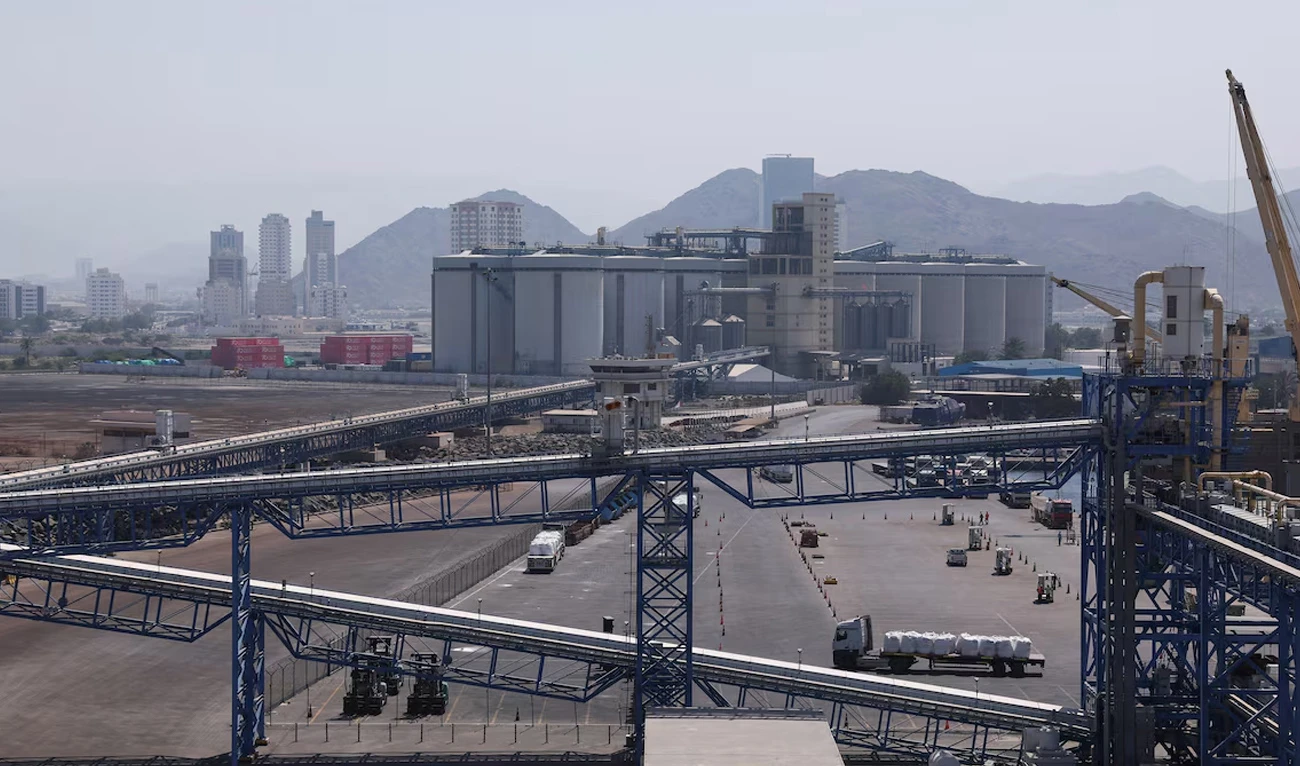
Saudi Arabia, the UAE and Qatar sit on or near major maritime trade routes and have invested heavily in ports, aviation and logistics platforms that connect directly to global shipping networks. Kazakhstan, Uzbekistan, Kyrgyzstan and Tajikistan are landlocked. Their competitiveness depends disproportionately on the efficiency of other countries’ infrastructure, border procedures and transit arrangements.
That constraint is also an opportunity.
The Middle Corridor, the Trans-Caspian International Transport Route linking China with Central Asia, the Caspian Sea, the South Caucasus and Europe, has gained considerable momentum since 2022. Cargo volumes increased 62 percent in 2024 to approximately 4.5 million tons, while Kazakhstan targeted 5.2 million tons for 2025.
But a corridor is not an economy. This is where Central Asia’s trajectory becomes more interesting than the simplistic “next Gulf” narrative suggests.
Central Asia cannot, and arguably should not, attempt to build economies around the same combination of hydrocarbons, concentrated sovereign wealth and expatriate-heavy labor markets. Its demographic structure, landlocked geography, smaller domestic markets and different institutional histories require a different strategy.
The existence of a sovereign fund is not itself a development strategy. The important question is what the fund does. Does it merely stabilize the budget when commodity prices fall, or does it crowd in private capital, finance commercially viable infrastructure, support strategic industries and generate financial returns? Saudi Arabia’s PIF is increasingly designed around the latter logic, with its 2026-2030 strategy explicitly focused on competitive domestic ecosystems, greater private-sector participation and financial returns.
The Gulf’s most successful diversification projects increasingly seek private participation, international partnerships and global expertise. That approach matters because government capital can build the initial platform, but private capital is generally better positioned to test whether a business model is commercially sustainable.
The Gulf understood early that investors do not buy a port, an airport or a free zone in isolation. They buy access to an ecosystem. Dubai’s logistics infrastructure works because it connects ports with aviation, finance, business services, customs, tourism and international corporate networks. Riyadh is now attempting something similar through regional headquarters, industrial policy, logistics and large-scale investment.
The Gulf’s advantage, therefore, is not simply oil. It is what decades of accumulated oil revenues allowed its governments to build: sovereign balance sheets, infrastructure, financial centers, global brands and increasingly sophisticated investment institutions.
Central Asia is starting from a different point. Its comparative advantage lies in its position between China, Russia, the Caucasus, South Asia and Europe, its natural resources, its growing labor and consumer markets, and its ability to become a more important link in Eurasian supply chains.
The real opportunity after 2022 is not a simple relocation of the Gulf northward. It is the emergence of a more interconnected Eurasian economic geography in which the Gulf supplies capital, Central Asia provides resources and transit connectivity, China provides manufacturing linkages and investment, and South Asian economies provide markets and maritime access.
That system will succeed only if each participant captures value rather than merely providing geography.