- Planning minister calls for shift from raw commodity exports to processed and branded goods
- Livestock identified as largest unrealized opportunity as halal meat export target set at $700 million
ISLAMABAD: Pakistan’s food exports stood at $5.02 billion in the last fiscal year against a food import bill of $9.15 billion, figures presented at a government roundtable showed on Friday, as the planning minister called on the agriculture sector to shift from raw commodity shipments to processed, certified and branded exports.
Agriculture accounts for close to a quarter of Pakistan’s gross domestic product and around 37 percent of employment but has a relatively small export footprint, participants at the roundtable on expanding high-value exports were told.
Officials said Pakistan’s target of $100 billion in exports by 2035 under Uraan Pakistan, the government’s economic transformation framework, would require greater processing and value addition in agricultural products.
“The requirements of premium markets have changed, and compliance, traceability, quality standards and certification are now the entry ticket rather than an optional extra,” Federal Minister for Planning and Development Ahsan Iqbal said, according to a statement.
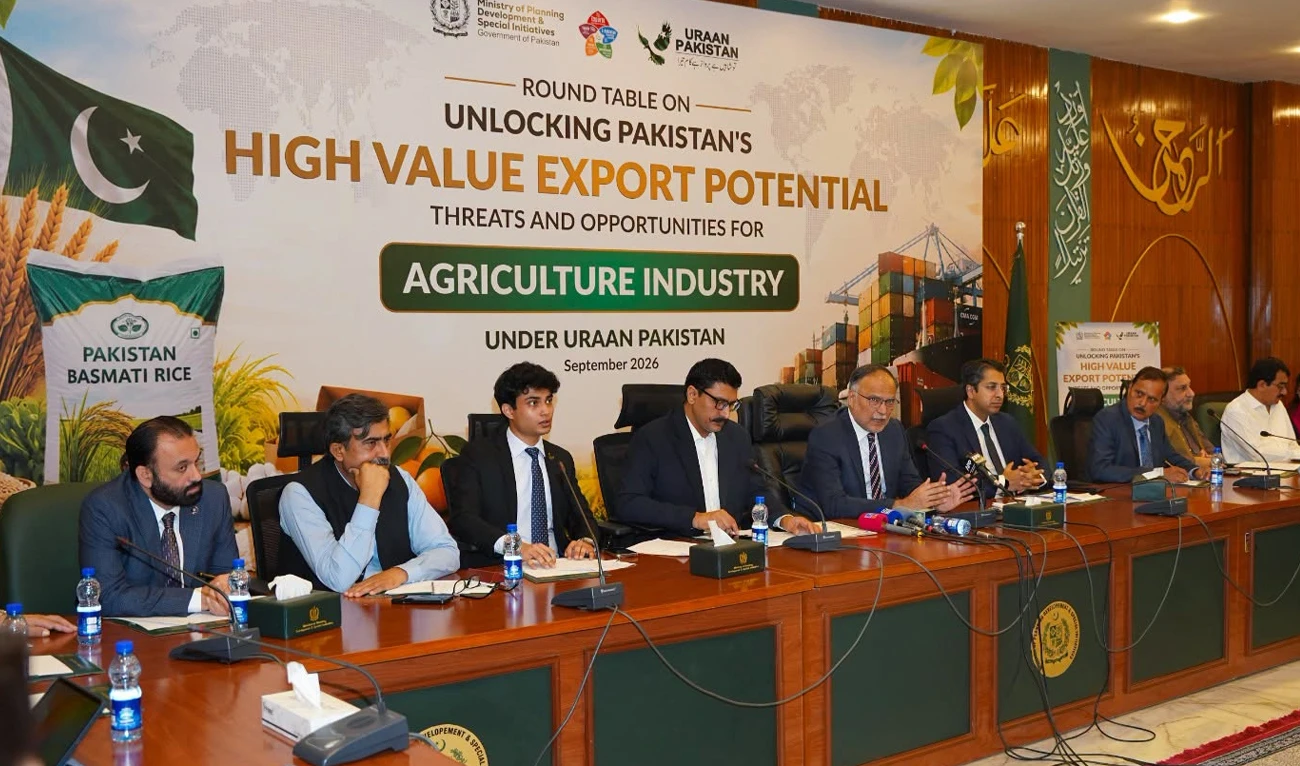
Iqbal chaired the roundtable, which brought together nearly 100 government officials, exporters, growers, academics and representatives of business and certification bodies.
He said countries that stood level with Pakistan a generation ago, among them Vietnam and Malaysia, had pulled ahead through policy continuity sustained over decades and a willingness to restructure.
Iqbal identified livestock, which accounts for more than 60 percent of Pakistan’s agriculture economy, as the largest unrealized opportunity, saying Pakistan had one of the world’s largest herds but exported relatively little processed and branded meat and other livestock products.
Participants in Friday’s meeting identified opportunities in halal meat and poultry, including under a $700 million export target for 2028, as well as premium horticulture with new direct access to the European Union, branded basmati rice, processed foods, dates, edible oils and certified niche products such as organic produce.
Global retail sales of organic products reached about €145 billion in 2024, but a participant said Pakistan had made limited inroads into the market because it lacked national standards and a domestic certification body.
Rana Ahsan, coordinator to the prime minister on commerce and industry, said agricultural trade accounts for almost 22 percent of Pakistan’s exports but remains dominated by raw commodities, leaving it exposed to price volatility and external shocks.
Referring to a recent official initiative to make export financing more accessible, he said the EXIM Bank export finance pool would expand from Rs1 trillion ($3.6 billion) to Rs2 trillion ($7.1 billion) between 2026 and 2028, while a dedicated financing window for small and medium enterprises was also being prepared and a National Compliance Authority was expected to become operational within three months.
Participants also proposed measures including changes to taxes on processed meat, livestock disease control and breed improvement, as well as national organic standards backed by accredited laboratories.