- 5,300 Palestinian children have reportedly been killed since Israel launched aerial and ground offensive in Gaza after Oct. 7
- Israel and Hamas have agreed to pause in fighting to allow for release of 50 Israeli hostages, 150 Palestinians held in Israeli jails
ISLAMABAD: Pakistan said on Thursday Gaza was “today the most dangerous place in the world to be a child,” adding that it was “impatiently” waiting for a temporary ceasefire deal to come into effect.
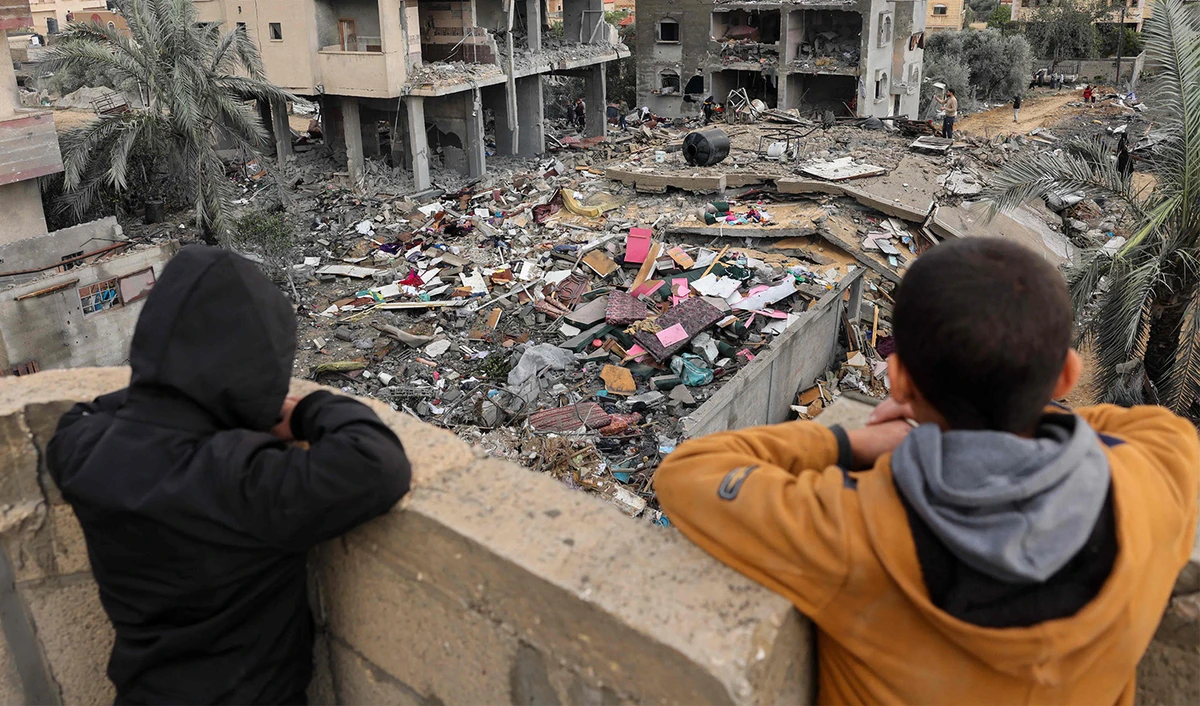
UNICEF Executive Director Catherine Russell told the UN Security Council this week that more than 5,300 Palestinian children had reportedly been killed since Israel launched an aerial and ground offensive in Gaza after Oct. 7 when Hamas fighters attacked Israel, killing 1,200 people and taking hostages.
After over a month and a half of war, Israel and Hamas, which rules Gaza, agreed on Wednesday to a pause in fighting to allow for the release of 50 hostages held by the group in exchange for 150 Palestinians held in Israeli prisons and also to allow for more aid to enter the enclave.
Israel's national security adviser and the US said on Thursday the release under the temporary truce would not happen until Friday.
“Gaza is today the most dangerous place in the world to be a child,” foreign office spokesperson Mumtaz Zahra Baloch told reporters in Islamabad.
“We call for the protection of children of Gaza, the prime victims of an indiscriminate bombing campaign, and will live the rest of their lives affected by lost and tremendous trauma.”
Baloch said Pakistan was “impatiently” awaiting a truce deal to come into effect tomorrow, Friday, in Gaza.
“It presents an opportunity to establish a humanitarian corridor, facilitating the delivery of food, water, fuel and other humanitarian aid to the besieged people of Gaza. We believe that a durable and sustained ceasefire will be the key to the end of the war,” the spokeswoman said.
“The ceasefire is critical for bringing the much-needed relief to the Palestinian people and to respond to the immense humanitarian needs in Gaza that include extensive and robust humanitarian supplies, urgent medical aid to the injured, and shelter to those who have been displaced as a result of indiscriminate and inhumane bombing campaign by Israeli forces.”
The 50 Israeli hostages, among about 240 taken by Hamas in their Oct. 7 raid on Israel, are expected to be released in batches, probably about a dozen a day, during the four-day ceasefire.
Hamas said Israel had agreed to halt air traffic over the north of Gaza from 10 a.m. (0800 GMT) until 4 p.m. (1400 GMT) each day of the truce and to halt all air traffic over the south for the entire period. The group said Israel agreed not to attack or arrest anyone in Gaza, and people can move freely along Salah al-Din Street, the main road along which many Palestinians have fled northern Gaza where Israel launched its ground invasion.
Qatar's chief negotiator in ceasefire talks, Minister of State at the Foreign Ministry Mohammed Al-Khulaifi, said that under the deal there would be "no attack whatsoever. No military movements, no expansion, nothing."
He said Qatar hoped it would "be a seed to a bigger agreement and a permanent cease of fire."
With inputs from Reuters