- Cross-border project remains at feasibility stage amid worsening Pakistan–Afghanistan tensions
- Separate upgrade of key freight line shifts toward ADB after years of stalled Chinese financing
ISLAMABAD: Pakistan has proposed a joint effort with Uzbekistan to seek international financing for a railway through Afghanistan, its planning minister said Monday, as Islamabad sought support for a separate upgrade of its main rail line to Karachi’s ports.
The proposed trans-Afghan railway would give landlocked Uzbekistan a route to the Arabian Sea through Pakistan. The three countries signed an agreement in July 2025 to prepare a feasibility study but have yet to secure construction financing.
The route would also depend on sustained cooperation between Pakistan and Afghanistan. Islamabad accuses Afghanistan’s Taliban government of sheltering militants who carry out attacks in Pakistan, an allegation Kabul denies. Fighting has repeatedly disrupted their border and the trade routes the proposed railway is meant to strengthen.
Planning Minister Ahsan Iqbal raised the project with Uzbek officials at a regional economic conference in Mongolia on Monday. According to a Pakistani government statement, he urged faster work on the feasibility study and proposed a joint mechanism to approach international lenders. The statement did not say Uzbekistan had accepted the proposal or that any lender had pledged funding.
“Our objective should be simple: connect our markets, mobilize investment, develop projects and deliver tangible economic benefits to both countries,” Iqbal said.
The security problem has sharpened in the past week. Pakistan launched airstrikes inside Afghanistan on Sept. 21, saying it had targeted militants. The United Nations mission in Afghanistan confirmed three civilian deaths.
On Sunday, Kabul accused Pakistan of backing fighters it said had crossed the border into Afghanistan. Islamabad denied the allegation. Neither government has indicated how the latest confrontation might affect cooperation on the railway.
The proposed line would cross Afghanistan before entering Pakistan, where freight would still need a dependable route to the coast. Border closures have already interrupted existing overland trade, showing how political and security disputes could affect the railway’s commercial use even if financing and construction proceed.
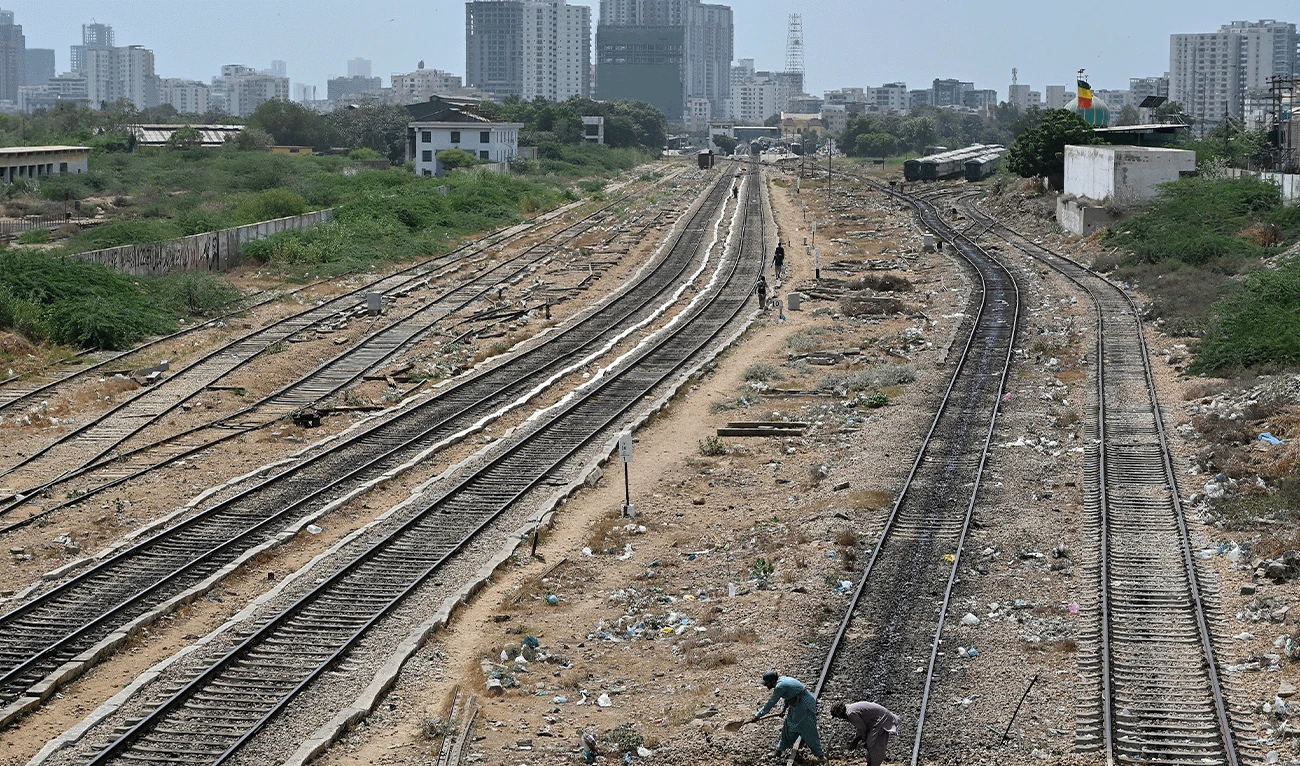
In a separate presentation to development partners in Mongolia, Iqbal pressed for the modernization of Main Line-1, Pakistan’s principal railway from Karachi to Peshawar.
He said the 1,726-kilometer corridor carries 76 percent of the country’s rail passengers and 98 percent of its rail freight.
Pakistan is prioritizing the roughly 480-kilometer Karachi–Rohri section, which connects the port city to the network farther north. It is also important to plans for exporting copper-gold concentrate from the Reko Diq mine in Balochistan: a separate western rail route would meet Main Line-1 at Rohri, allowing freight to continue to Port Qasim near Karachi. That western route requires its own upgrades and financing.
Main Line-1 was conceived as a flagship project of the China–Pakistan Economic Corridor. Years of talks with Beijing did not produce a financing package for the full upgrade. Pakistan subsequently turned to the Asian Development Bank for the Karachi–Rohri section. Its railways minister told Arab News last year that China had agreed to the move and remained involved in discussions about the wider line.
Iqbal put the cost of Karachi–Rohri at about $2.5 billion and said the ADB was leading the financing effort, with other development banks engaged as potential partners. The construction financing has not been approved. The ADB approved $10 million for project preparation in 2025 and says it is considering subsequent financing for the upgrade.
“The priority now is to convert the progress already made on Karachi–Rohri into implementation while securing financing for the remaining corridor in parallel,” Iqbal said.
The Reko Diq connection adds urgency to Pakistan’s freight plans, though the mine’s own timetable is uncertain. Barrick, its Canadian operator, said in April it was slowing development and reviewing the project through mid-2027 because of security risks. It warned that the review could change the cost and its previous target of starting production by the end of 2028.