- Heads of state are scheduled to address UN General Assembly next week amid conflicts in Middle East
- Shehbaz Sharif to outline Pakistan’s priorities on climate change, counterterrorism, Islamophobia, says FO
ISLAMABAD: Prime Minister Shehbaz Sharif will lead a high-level delegation at the United Nations General Assembly (UNGA) session next week, the foreign office said on Thursday, where he will speak on the importance of dialogue to resolve regional conflicts and highlight Islamabad’s priorities on global issues such as Islamophobia, climate change and counterterrorism.
The “high-level week” of the UN General Assembly’s 81st session will take place in New York next week amid tensions in the Middle East. The US-Iran war has entered its seventh month, with no diplomatic breakthrough in sight. Turmoil in the Middle East has increased further as the Iran-backed Houthi rebels have stepped up attacks against Saudi Arabia since last week.
All eyes will be on the UNGA’s General Debate, which begins on Sept. 22. Over several days, presidents, prime ministers and senior representatives of all 193 UN member states will address the General Assembly from its iconic green marble podium.
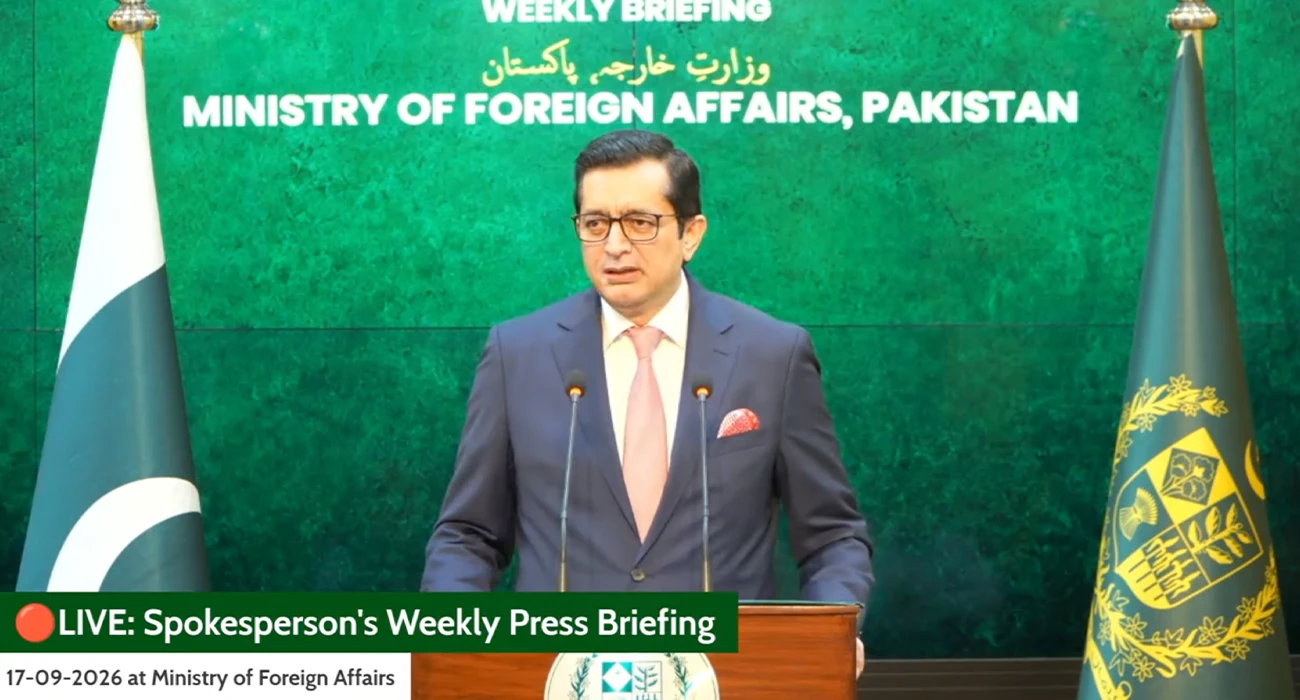
“In his speech at the UNGA, the prime minister will highlight Pakistan’s perspective on regional and global developments, reaffirming the importance of dialogue, diplomacy, restraint and peaceful resolution of disputes,” foreign office spokesperson Sajjad Haider Khan said at a weekly press briefing.
Sharif will outline Pakistan’s priorities on sustainable development, climate change, counterterrorism, Islamophobia, global economic challenges, UN reforms and issues confronting the Global South, the spokesperson said.
He will also draw attention to conflicts in Palestine and the alleged suppression of the rights of Muslims in Indian-administered Kashmir region.
Pakistan has consistently criticized Israel for its military campaigns in the Middle East, especially in Gaza and the West Bank. Islamabad calls for the establishment of an independent Palestinian nation, with Al-Quds Al-Sharif as its capital.
“During the visit, he will participate in high-level events and hold bilateral meetings with world leaders and the UN secretary-general, highlighting Pakistan’s commitment to multilateralism, the UN Charter, regional peace and international cooperation,” Khan added.
‘UNACCEPTABLE ACTION’
The spokesperson also spoke about a collision this week between Indian and Pakistani naval ships that prompted both countries to lodge formal protests by summoning each other’s top diplomat.
Pakistan’s foreign ministry said the incident occurred on Tuesday when a Pakistan Navy ship was undertaking its biennial exercise SEASPARK-26. An Indian vessel carried out “aggressive maneuvers in dangerously close proximity of Pakistani naval ship” that resulted in contact between the two vessels, the foreign office said.
Pakistan said the collision took place in Pakistan’s Exclusive Economic Zone (EEZ).
“Pakistan calls upon India to act responsibly, avoid provocative actions and ensure strict compliance with international law and bilateral commitments to preserve regional peace and stability,” Khan said.
The incident marked the first overt military tension between the neighbors since they engaged in an armed conflict last year in May. Pakistan said the incident constituted a serious violation of international law and the bilateral agreement on Advance Notice on Military Exercises, Manoeuvres and Troop Movements, 1991.
Khan also spoke about Pakistan and China operationalizing the “Pakistan-China Boundary Joint Commission” on Sept. 16. He said the commission’s inaugural meeting was held at the Ministry of Foreign Affairs in Islamabad on Wednesday.
“Co-chaired by senior officials from both sides, the Commission will strengthen cooperation in border management, joint surveys, trade facilitation and people-to-people connectivity,” he added.