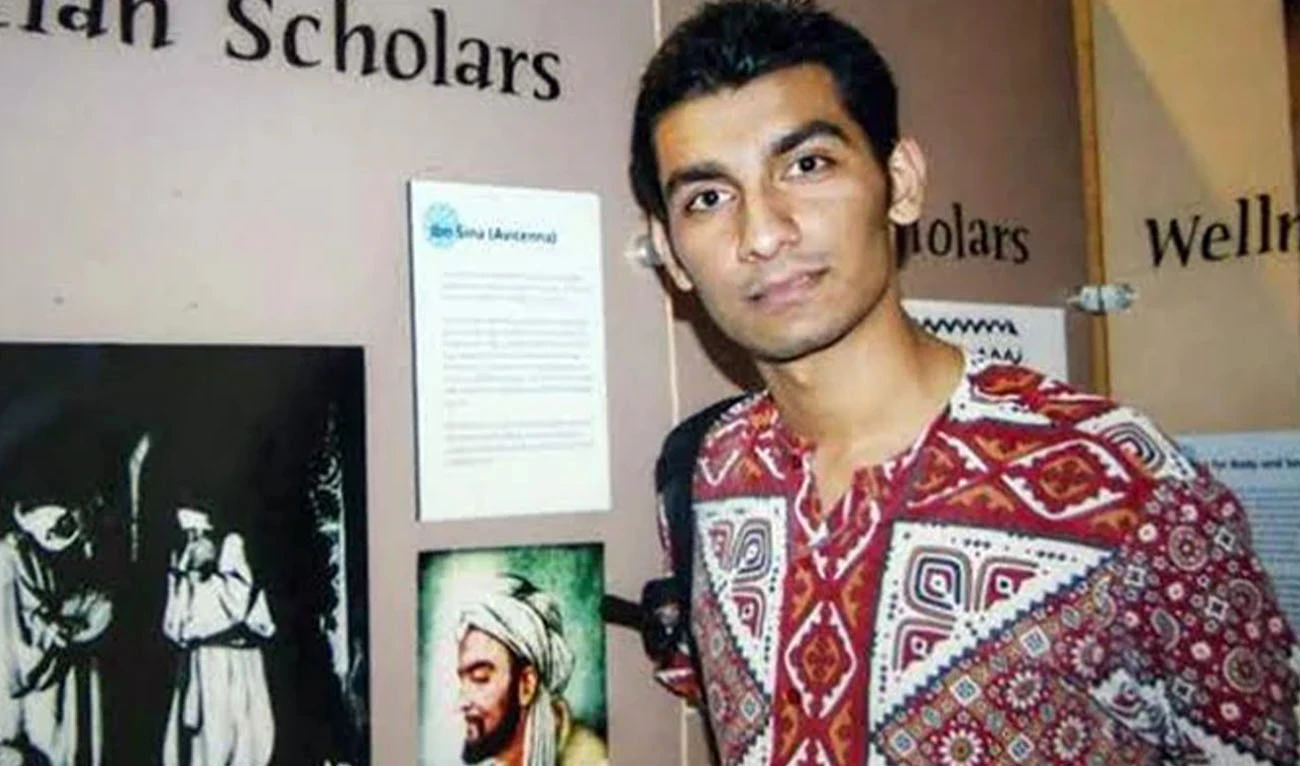
- Junaid Hafeez has been on death row since 2019 over material he allegedly posted on Facebook
- Blasphemy accusations have sparked mob killings, Hafeez’s defence lawyers was shot dead
ISLAMABAD: A Pakistani court on Tuesday asked prosecutors to address whether digital evidence could be admitted in the long-delayed appeal of Junaid Hafeez, a former university lecturer sentenced to death for blasphemy in 2019.
Pakistan’s blasphemy laws criminalize a range of acts deemed insulting to religion. A conviction for insulting the Prophet Muhammad (pbuh) carries a mandatory death sentence. No one has been executed by the state for blasphemy, but accusations have triggered mob killings, and suspects, their lawyers and others involved in their cases have faced threats and violence. Human rights groups say those pressures make it difficult for defendants to obtain legal representation and a fair trial.
Hafeez was arrested in 2013 over material allegedly posted on Facebook and his trial was moved inside a prison because of security concerns. In 2014, gunmen killed one of his lawyers, Rashid Rehman, after he received threats for defending Hafeez. The death sentence was handed down in December 2019, and his appeal has been pending since 2020. Human Rights Watch says he has been held in solitary confinement since June 2014.
“I think that significant progress was made today,” Hafeez’s lawyer, Asad Jamal, told Arab News. “The court picked up the case, it was called, and beyond that, the court raised the key points that the prosecution must address. The court instructed them to satisfy the bench regarding the grounds raised in Junaid Hafeez’s appeal.”
A two-judge bench of the Lahore High Court issued formal notices to the parties and said it wanted to hear the prosecution’s arguments on the admissibility of electronic evidence, including a Facebook page attributed to Hafeez. Jamal said the court had also asked prosecutors to satisfy it on the authenticity of the digital evidence. The judges made no ruling on the evidence or Hafeez’s conviction on Tuesday.
“The court explicitly stated that the prosecution must satisfy the court regarding the authenticity of the digital or social media evidence,” Jamal said.
Hafeez was a visiting lecturer at Bahauddin Zakariya University in Multan when he was arrested in March 2013. His trial began the following year and was repeatedly delayed before a Multan court sentenced him to death. His appeal was transferred from the high court’s Multan bench to its main court in Lahore at the defence’s request in 2021.
The bench considered hearing the case again on October 7 but scheduled it for October 10 after the complainant’s lawyer sought more time to prepare.
“I am hopeful that a decision on this appeal will be reached very soon,” Jamal said.