The changing tone of the Moscow Format on Afghanistan is becoming increasingly difficult to ignore. What began as a regional diplomatic mechanism aimed at encouraging an Afghan political settlement and addressing the security concerns of Afghanistan’s neighbors appears to be moving toward a different purpose: accommodation of the Taliban regime.
The failure of the latest Moscow Format meeting, held on Oct. 5, to produce a joint statement is particularly revealing. The Taliban reportedly objected to language relating to terrorism and Afghanistan’s obligations toward neighboring countries. This is significant because the language under discussion was not fundamentally new. Similar concerns about terrorism emanating from Afghan territory have figured in earlier Moscow Format statements. Russia’s special envoy, Zamir Kabulov, attributed the failure to a disagreement between the Afghan and Pakistani delegations, while acknowledging that similar wording had appeared in the previous statement. The Taliban’s refusal to accept even previously agreed language therefore raises questions about how far the regime is prepared to go in accommodating regional concerns.
More important than the failure of the joint statement, however, was the broader political context. Russian Foreign Minister Sergey Lavrov’s description of the Taliban authorities as a “national government,” coupled with his positive assessment of their governance, reflects an unmistakable change in tone. In July 2025, Russia became the first country to formally recognize the Taliban government. The question, therefore, is no longer whether Russia will engage the Taliban, but how far Moscow is now prepared to go in actively strengthening the regime.
This development becomes particularly significant when viewed alongside India’s growing presence in Kabul. New Delhi has made considerable diplomatic inroads into Afghanistan since the Taliban takeover, gradually rebuilding its diplomatic and political engagement with the regime. Pakistan has repeatedly accused India of financially supporting the TTP and BLA, a charge New Delhi denies. In practical terms, India and Russia, despite their very different interests and approaches, could end up contributing to the same outcome: greater international space and legitimacy for the Taliban regime.
Several reasons make the Russian position worth closer examination.
First, Moscow is fully aware of Afghanistan’s security environment. Russia has its own long history of dealing with militant organizations operating from or through Afghanistan and has repeatedly expressed concern about the spread of terrorism into Central Asia. It is therefore difficult to believe that Moscow is unaware of the presence and activities of the TTP, BLA, ISKP, Al-Qaeda, the Islamic Movement of Uzbekistan, the Eastern Turkestan Islamic Movement and other militant organizations in Afghanistan.
The TTP is Pakistan’s most immediate concern. Despite repeated diplomatic engagements, Kabul has not taken the measures Islamabad considers necessary to prevent the TTP from using Afghan territory for attacks against Pakistan. The BLA has also figured increasingly prominently in Pakistan’s security concerns. The evidence so far suggests that the Afghan Taliban are unwilling to prevent Afghan territory from being used by groups conducting attacks against other states.
Second, Russia’s position is difficult to reconcile with the continuing assessments of the United Nations regarding terrorism in Afghanistan. The UN Security Council and UN monitoring mechanisms have repeatedly highlighted the presence, activities and capabilities of terrorist organizations operating from Afghan territory. Yet Moscow has generally refrained from making the Taliban’s counterterrorism record a central point of political pressure in the Security Council. This is all the more striking given that as recently as June, a statement from the Russia-Pakistan Joint Working Group on Countering International Terrorism specifically referred to terrorism emanating from Afghanistan.
Third, the latest Moscow Format episode is important because it is not an isolated incident. The Taliban have previously resisted joint formulations when these have touched upon terrorism or their obligations toward neighboring states. A similar situation arose during the trilateral engagement involving Pakistan, China and Afghanistan in Kabul in August 2025. Language concerning terrorism that had appeared in an earlier Islamabad meeting in 2023 reportedly became unacceptable to the Taliban side when it was proposed for a subsequent joint statement. The explanation offered was that the Taliban leadership was uncomfortable with the formulation.
The Taliban seek the benefits of regional diplomacy while resisting formulations that impose clear political or security obligations.
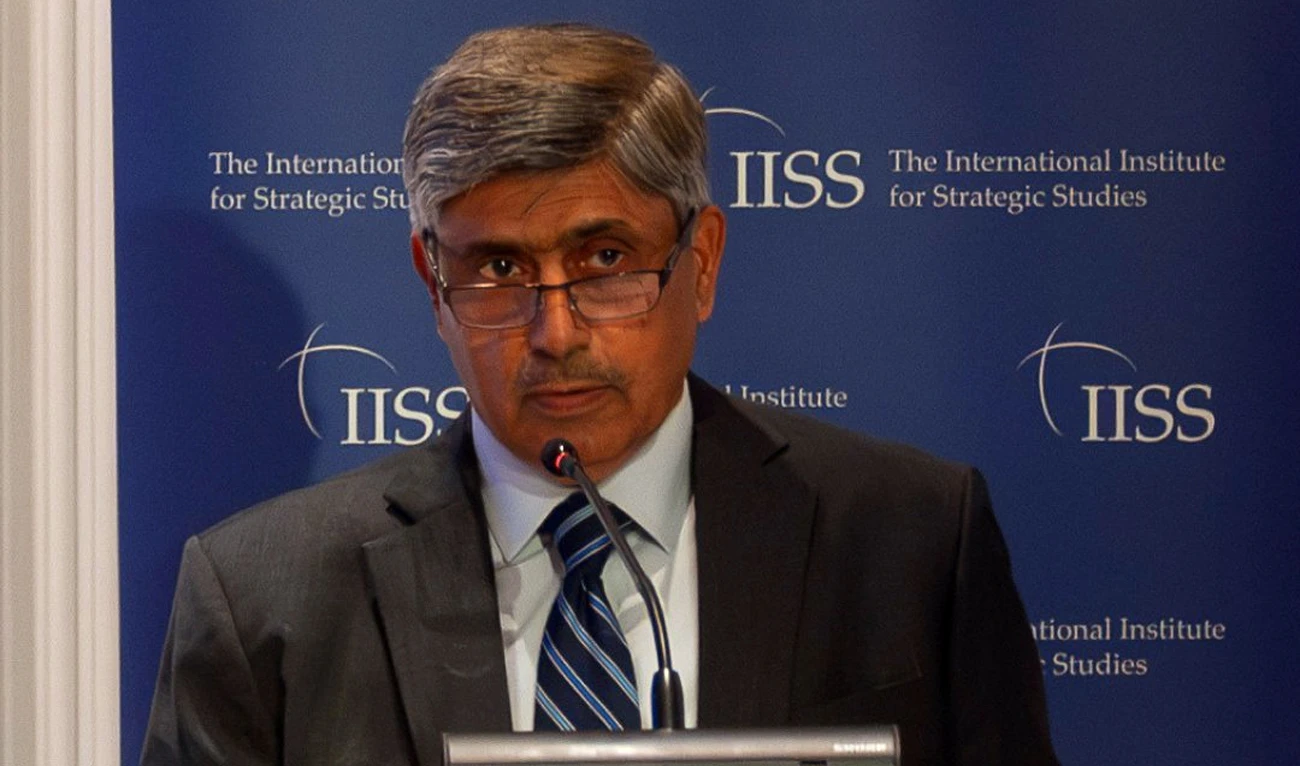
Asif Durrani
This shows the Taliban’s negotiating behavior. Commitments that appear acceptable in one setting can become problematic when they are subsequently subjected to internal political considerations. The result is a pattern in which the Taliban seek the benefits of regional diplomacy while resisting formulations that impose clear political or security obligations.
Fourth, Lavrov’s description of the Taliban as a “national government” has broader implications. Political terminology matters in international diplomacy. Calling the Taliban a national government, while understandable from Moscow’s perspective, represents a significant shift from the earlier regional emphasis on an inclusive political process and the Taliban’s need to fulfill international obligations.
Understandably, Moscow does not want Afghanistan to become a vacuum in which competing external powers dominate the political space. But this approach contains an inherent contradiction. A regime may provide some political stability while still presiding over a security environment that remains deeply problematic for its neighbors.
This contradiction has implications for Pakistan. The Taliban’s position on the TTP and other militant organizations has remained fundamentally resistant to Pakistan’s demands. If this continues, Pakistan’s room for maneuver will inevitably narrow.
The emerging Russian approach also changes the regional diplomatic equation. If India is expanding its engagement with Kabul while Russia increasingly provides political space to the Taliban, the regime may conclude that it has sufficient regional options to withstand pressure from Pakistan. That could further reduce Kabul’s incentive to respond to Islamabad’s security concerns.
This may ultimately prove to be the most consequential aspect of Russia’s changing policy. The Moscow Format was originally valuable because it brought Afghanistan’s principal regional stakeholders together around a common understanding that Afghan territory should not be used against its neighbors. If that consensus gradually gives way to individual countries pursuing separate bilateral interests with Kabul, the regional mechanism could lose much of its original relevance.
If the Taliban continue to refuse meaningful action against the TTP and other groups targeting Pakistan, Islamabad will eventually have to reconsider the assumptions underlying its policy toward Kabul. The choice may not be between engagement and confrontation. It may instead be between an engagement based largely on expectations and one based on clearly established security realities.
Moscow’s changing tone may therefore have consequences extending well beyond Russia-Taliban relations. It could reshape the regional balance around Afghanistan and, in the process, compel Pakistan to reassess where it stands in an increasingly competitive diplomatic environment.
-Asif Durrani is a former Special Representative of Pakistan for Afghanistan. He served as Pakistan’s ambassador to the UAE and Iran.