- The development comes as Iran said its forces attacked a US naval drone trying to enter the Strait of Hormuz
- The latest round of clashes, which began with US raids last week, comes amid a deadlock in their six-month war
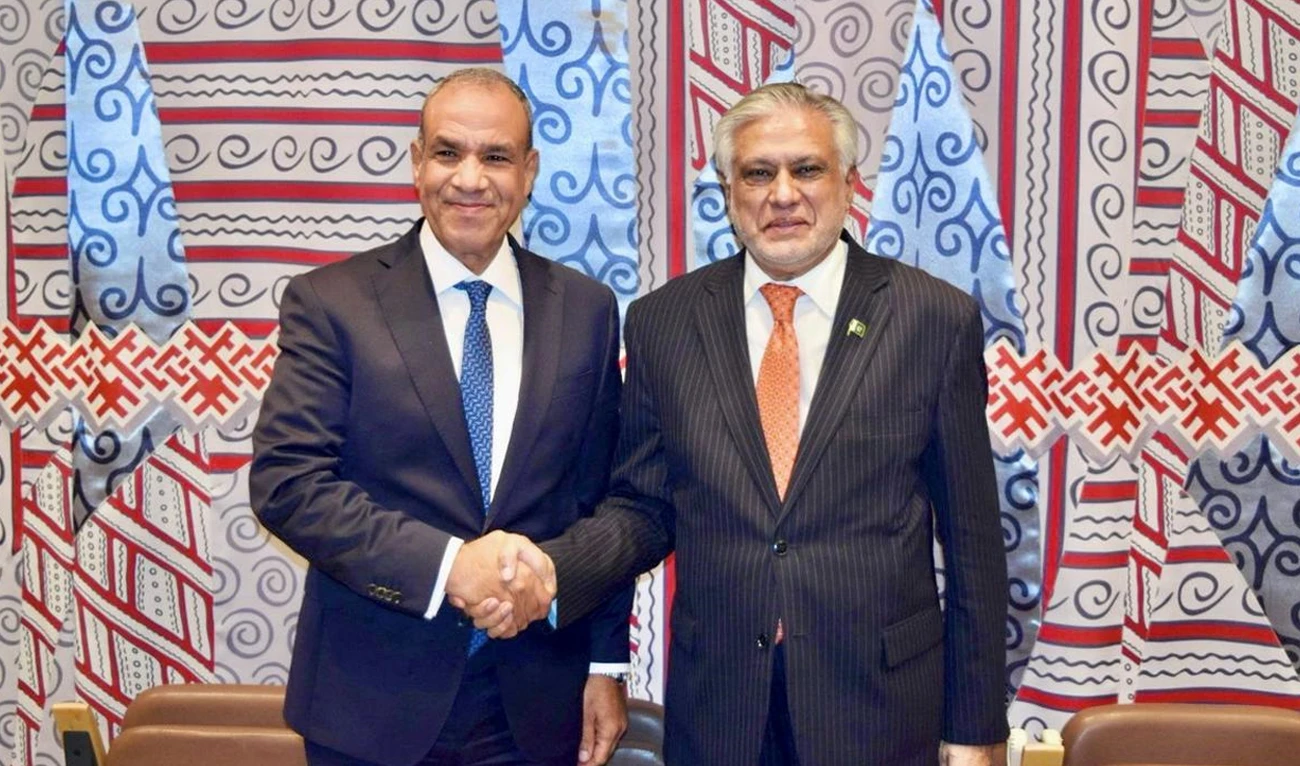
ISLAMABAD: The foreign ministers of Pakistan and Egypt discussed the evolving regional security situation in a telephone call, Pakistan’s foreign ministry said on Sunday, agreeing to hold an in-person meeting on the sidelines of the upcoming United Nations General Assembly session.
The development came as Iran said its forces attacked a US naval drone trying to enter the Strait of Hormuz, hours after targeting ships in retaliation for American strikes on three oil tankers. The latest round of clashes, which began with US raids last week, comes amid a deadlock in their six-month war.
Iran has maintained its stranglehold on the strategic Strait of Hormuz while Washington continues a counter-blockade of Iranian ports. Washington is also seeking to choke Iran’s economy, rolling out sanctions on entities with financial links to the Islamic republic in a bid to force it into submission.
Pakistani Foreign Minister Ishaq Dar spoke with his Egyptian counterpart Badr Abdelatty, and the two figures discussed Pakistan-Egypt bilateral relations and exchanged views on regional and international developments, Dar’s ministry announced on Sunday.
“FM Badr also invited DPM/FM to hold a bilateral visit to Egypt at his earliest convenience,” it said. “They reaffirmed their commitment to further strengthening bilateral ties, remain engaged and involved on the regional security matters. They also agreed to meet on the sidelines of UNGA.”
The administration of US President Donald Trump has tried to downplay the significance of the six-month conflict, which has proven increasingly unpopular at home as midterm elections near.
US Vice President JD Vance went so far as to say that he “wouldn’t call it a war.” Trump reiterated that view on Friday, calling the war “small potatoes” for Washington.
Iran’s Security Chief Mohsen Rezaei warned this week that the Islamic republic had adopted a “new strategy” against Washington that “will shatter your foundations”.
The US has been trying to step up pressure on Tehran in a bid to wrestle control of the Hormuz strait, through which one-fifth of world oil supplies previously flowed. A fragile ceasefire between the two sides collapsed in July after attacks on commercial ships in the strategic waterway.