JEDDAH: The number of Saudi students studying in the United States has fallen from 120,000 in 2015 to 80,000 in 2016 largely because many have graduated and returned to the Kingdom.
This is according to Mohammad Al-Isa, cultural attaché in the United States, who said that this was the figure for 51 states. He said the scholarship program has been reevaluated but would continue to provide opportunities for Saudis to study abroad, a local publication reported.
Al-Isa said his office was responsible for ensuring Saudi students are admitted to the best universities in the United States, including Ivy League institutions such as Harvard and Stanford.
Al-Isa said there was no room for laziness, with those failing to work being sent back to the Kingdom with nothing to show for their time overseas. The program was being amended to include some of those studying in the United States at their own expense, he said.
The scholarship program made great strides in ensuring scholarships in various disciplines, he said. In the medical field, Saudis were currently being trained at important medical centers including Jones Hopkins and Mayo Clinic.
In addition, outstanding students producing groundbreaking work now have a major law office, hired by the Saudi government and specializing in patents, to protect their rights. The number of patents filed by Saudi students has risen from 60 to 300, said Al-Isa.
He said that Saudis are encouraged to return home after obtaining their certificates. If students want to pursue their academic careers further, they can do so through one of the 37 universities in the Kingdom. For those who wish to engage in practical work, it would be the best to return home and find jobs, he said.
He said Saudi scholarship students mainly face problems with the immigration department when they move from one university to another without consulting the cultural attaché and official United States bodies, or if their visas expire.
The cultural attaché’s office has social activities and educational and awareness programs to warn them about going to places where there is unrest, or getting involved in political discussions.
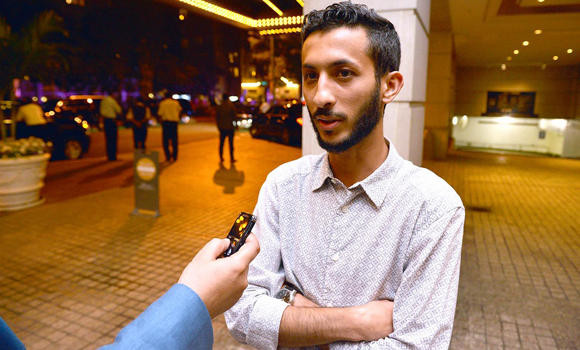
Al-Isa criticized Mohammed Al-Nimr, 29, so of Nimr Al-Nimr who was executed along with 47 terrorists earlier this year, for giving an interview with a United Kingdom newspaper and other media outlets that accused the Kingdom of human rights abuses.
Al-Isa said that Mohammed Al-Nimr had only started making these “extremists comments” after he graduated from a university in the United States. These views did not harm the Kingdom in any way, only the citizen himself, said Al-Isa.
On a related matter, David De Maria, assistant dean for international programs at Montana University, said the number of students coming from Saudi Arabia has fallen, which was unfortunate because it would deprive the two nations of developing closer ties.

Saudi scholarship students in America fall by 40,000
Threat to Kingdom’s security is ‘red line’ that will be ‘addressed and neutralized,’ Saudi envoy says
- Abdulaziz Alwasil tells UN Security Council the situation in southern Yemen is ‘a just cause with social and historic dimensions’ that can only be resolved through dialogue
- Recent military activity in the south was unilateral, resulting in an escalation that harms the interests of Yemeni people and undermines efforts to address issues in the south, he said
NEW YORK CITY: Any attempt to threaten Saudi Arabia’s national security is a “red line” and will be met with decisive action, the Kingdom’s ambassador to the UN told the Security Council on Wednesday.
Speaking during a meeting of the council to discuss Yemen, Abdulaziz Alwasil said the situation in the south of the country is “a just cause with social and historic dimensions” that can only be resolved through dialogue.
“We stress that any attempt to threaten our national security is a red line, and we will not hesitate to take the necessary actions and steps to address it and neutralize it,” he added.
Alwasil reaffirmed Saudi Arabia’s support for Yemeni President Rashad Al-Alimi, the Presidential Leadership Council, and the Yemeni government in their efforts to achieve security, stability, development and peace while preserving national unity.
He said military activity by Southern Transitional Council forces in Hadramout and Al-Mahra on Dec. 2, 2025, was unilateral, did not have the approval of the Presidential Leadership Council, and was not carried out in coordination with the Coalition to Restore Legitimacy in Yemen.
It had resulted in an unjustified escalation that harmed the interests of the Yemeni people, undermined efforts to address the issues in the south, and ran counter to the coalition’s objectives, Alwasil added.
The Kingdom, working with its coalition partners, the Presidential Leadership Council and the Yemeni government, had moved to contain the situation by dispatching a military force to coordinate arrangements with the Southern Transitional Council in Aden, he said.
The aim was to ensure the return of the southern council’s forces to their previous positions outside of Hadramout and Al-Mahra, and the handover of camps to legitimate government forces and local authorities in line with agreed procedures, Alwasil added.
He expressed regret over the military operations that took place in Hadramout and Al-Mahra, close to Saudi Arabia’s southern border, which he said posed a direct threat to the Kingdom’s national security, as well as the security of Yemen and regional stability. Such steps were extremely dangerous, he added, and contradicted the principles on which the Coalition to Restore Legitimacy in Yemen had been founded.
Alwasil welcomed a prisoner and detainee exchange agreement signed in Muscat on Dec. 23, which he described as an important humanitarian measure to alleviate suffering and build confidence.
He praised Oman for hosting and sponsoring the consultations and supporting negotiations, and commended the efforts of UN’s special envoy for Yemen, Hans Grundberg, the International Committee of the Red Cross and all others that has played a part.
Regarding the political efforts to resolve the crisis, Alwasil said Saudi Arabia welcomed President Al-Alimi’s call for an inclusive conference in Riyadh to bring together all stakeholders to discuss just solutions to the situation in southern Yemen.
Preparations for the conference have begun, he added, in cooperation with the Yemeni government and southern representatives, reflecting the close ties between the two countries and their shared interests in stabilizing Yemen.
He urged all southern stakeholders to participate actively and constructively in the talks, to help find comprehensive and just solutions that meet the legitimate aspirations of the people of southern Yemen.
Alwasil called on all Yemeni forces and stakeholders to cooperate and intensify their efforts to reach a lasting political settlement that would ensure security and stability.
He described the southern issue as “a just cause with social and historic dimensions,” adding that “the only way to address it is through dialogue that leads to a comprehensive political solution” based on nationally and internationally agreed terms of reference.