- Iranian FM speaks with Pakistani counterpart, army chief on ceasefire, regional tensions
- Islamabad police launch citywide searches, security remains tight at city’s Serena Hotel
Islamabad: Pakistan stepped up security across its capital on Friday as Iranian Foreign Minister Seyed Abbas Araghchi held a phone call with his Pakistani counterpart, according to the Pakistani foreign office, signaling fragile efforts to revive peace talks between Washington and Tehran.
Islamabad is pushing for a second round of negotiations after hosting initial talks on April 11 that ended without agreement, but uncertainty remains over whether Tehran will participate even as security preparations intensify across the city.
The diplomatic efforts follow a fragile ceasefire between the United States and Iran announced earlier this month after weeks of conflict, creating a window for negotiations that Pakistan has sought to facilitate.
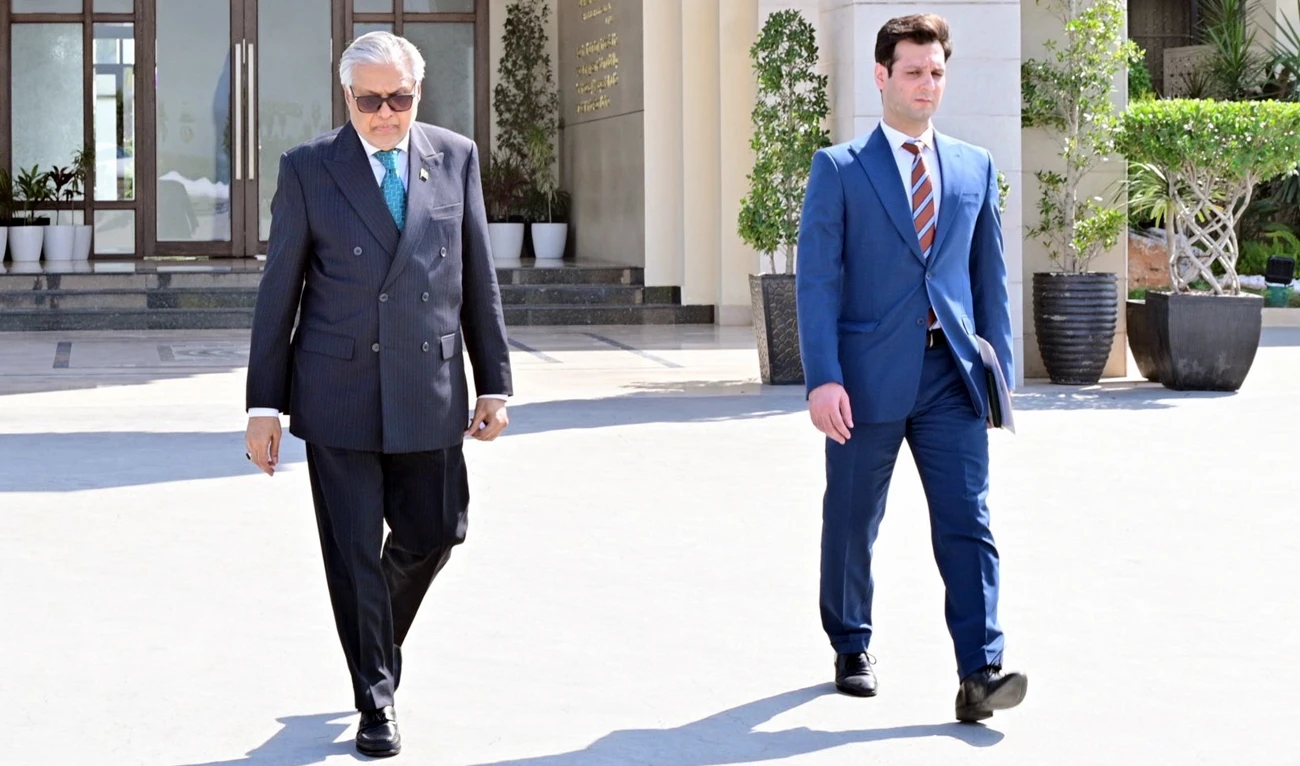
In his conversation with Iranian FM, Pakistan’s deputy prime minister and foreign minister, Ishaq Dar, discussed the regional developments, the ceasefire, and Islamabad’s efforts in the context of US-Iran engagement.
“FM (Dar) underscored the importance of sustained dialogue and engagement to address outstanding issues, in order to advance regional peace and stability at the earliest,” the Pakistani foreign office said, adding that Araghchi appreciated Pakistan’s efforts and both leaders agreed to remain in close contact.
Besides Dar, Iran’s state news agency IRNA reported, Araghchi also held a telephone conversation with Pakistan’s Army Chief Field Marshal Asim Munir on “regional developments and issues related to the ceasefire.”
Meanwhile, police launched large-scale search operations across multiple sectors of Islamabad, checking homes, hotels, shops and vehicles ahead of possible talks.
“Foolproof security arrangements are in place in the federal capital,” Islamabad police said in a statement, adding that joint search operations were underway across the city on the instructions of the police chief.
Police said officers checked more than 200 households, dozens of hotels and shops, and inspected hundreds of vehicles, while 37 people were taken in for questioning.
Security has also remained tight around the Serena Hotel, widely seen as the likely venue for any potential meeting. A hotel official said there had been no relaxation in security, with law enforcement agencies continuing to control access.
The continued deployment suggests authorities are still preparing for possible talks, even though Tehran has not formally confirmed participation.
Pakistan has positioned itself as a key intermediary between Washington and Tehran following weeks of conflict and a fragile ceasefire first announced on April 8 and later extended by US President Donald Trump this week.
The ceasefire followed a 40-day war that began on February 28, when the United States and Israel launched coordinated strikes on Iran, prompting retaliatory attacks. The fighting raised fears of a broader war in the Middle East and disrupted global energy markets.
Tensions have since centered on the Strait of Hormuz, a narrow waterway between Iran and Oman through which roughly a fifth of the world’s oil and liquefied natural gas supplies pass.
Iran has restricted shipping through the strait in response to US attacks, disrupting energy flows and raising concerns about global supply and prices.
Despite extending the ceasefire, Washington has continued its naval blockade of Iranian ports, underscoring the fragile nature of the truce.