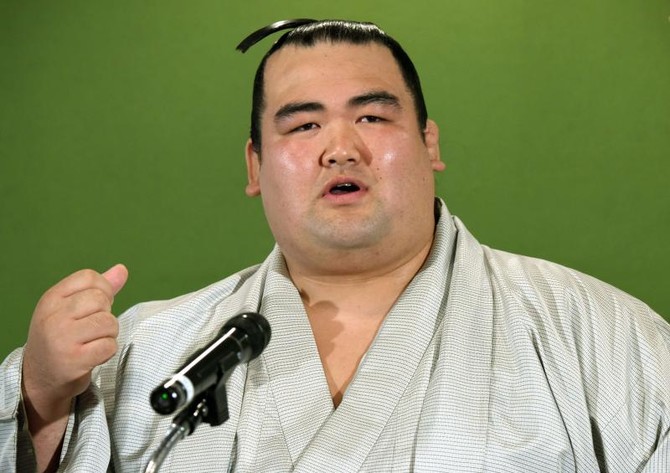
TOKYO: Japan's giant sumo wrestlers lack the mean streak needed to repel the flood of foreigners who have dominated the roly-poly sport in recent years, according to the country's first homegrown champion in a decade.
Kotoshogiku, who last month ended an excruciating wait for a Japanese-born winner, said Tuesday it was no accident that Mongolians had taken over Japan's ancient sport over the past decade and a half.
"All the Japanese wrestlers want to win championships," the 32-year-old told a news conference.
"We eat the same meat and vegetables as them," he added. "But sumo is about winning. Maybe we Japanese are too set in our ways, maybe we lack the greed to win at all costs."
The foreign invasion began in earnest with Hawaiian behemoth Konishiki, who was nicknamed the 'Dump Truck' and tipped the scales at a whopping 285 kilogrammes, and other hulking Pacific islanders in the 1990s.
But the subsequent rise of the Mongolians, led by the brilliant but temperamental Asashoryu and latterly by Hakuho, who has racked up a record 35 Emperor's Cup victories since 2006, has tormented sumo traditionalists in the absence of a serious Japanese challenge.
"We can learn from them," insisted Kotoshogiku, wearing a grey kimono and perched precariously on two chairs hastily bound together with sticky tape.
"Hakuho has so many weapons, like his fleetness of foot and how he puts you off balance. For many Japanese wrestlers, sumo is a test of strength and we charge head first.
"There are things we could definitely learn from," he added. "Like the angle of attack, coming in from lower down. You can understand why (Mongolian wrestlers) are so strong."
Japan has been without a homegrown yokozuna, or grand champion, since Takanohana retired in 2003 while three Mongolians currently occupy sumo's elite rank, with Harumafuji having won seven titles and Kakuryu two.
But Kotoshogiku, who stands 5 feet 11 inches (1.80 metres) and weighs a meaty 180 kilos, beat all three in January and believes his victory, though unexpected, was no flash in the pan.
"I've cried my eyes out in front of my mum and dad," said the Fukuoka native, who currently holds the second-highest rank of ozeki.
"But I've never once thought of quitting sumo," he added. "I'm calm about the future, I want to win more championships."
Many inside the cloistered world of sumo, which historians agree dates back some 2,000 years, will hope Kotoshogiku's emergence ushers in a new era after years of damaging scandals, including allegations of gambling and drug abuse, bout-fixing and underworld links.
One of the most immediate results of Kotoshogiku's new-found fame is being constantly asked to squeeze toddlers for good luck, like a benevolent deity.
"I get a lot of mothers asking me to cuddle their children to protect them from colds or whatever," he said, smiling.
"And pregnant woman ask me to rub their bellies for a safe child birth. Their interest in me reminds me that I have done something very special."


![]()
'Greed' the key to lost mojo, says Japan sumo wrestling champion
'Greed' the key to lost mojo, says Japan sumo wrestling champion
Latest updates


Recommended


© 2026 SAUDI RESEARCH & PUBLISHING COMPANY, All Rights Reserved And subject to Terms of Use Agreement.