DUBAI: The UAE district cooling sector, which pioneered the concept of hassle-free, eco-friendly, maintenance-free and energy-efficient solutions with its electric-powered and solar interface cooling services, is set to take its pride of place on a regional and global scale amidst rapid construction and surging demand for power and cooling.
The UAE district cooling companies, which include top names such as Emirates District Cooling LLC (Emicool), Empower and Tabreed among others, are expected to play pivotal roles in the growth of the industry across Middle East and Africa, and projected to grow by over 18 percent in the next five years, if industry estimates are any indication.
Moreover, the Middle East and Africa district cooling companies are expected to dominate over 40 percent of the overall demand globally by 2019, which is expected to reach $29 billion in value terms in the next four years, the research said.
New projects are witnessing a steady shift from traditional air-conditioning to comprehensive district cooling that help save energy, and cut down on maintenance and environmental damages.
District cooling comes with manifold advantages and is highly sustainable as it uses 40 percent to 50 percent less energy than traditional air-conditioning systems, which can account for 70 percent of a building’s electricity bill. Producing one ton of refrigeration using conventional air conditioning takes 1.8 kw of electrical power, while district cooling can consume as little as 0.85 kw per ton.
With the ongoing construction boom in the UAE and across the region, it is not only good news for companies in the sector, but also for the district cooling industry with each vying for more market share, if the performance and expansion plans – both capacity and geographical footprint — of the leading players in the segment are any indication.
One of the leading players, Emicool — a joint venture of Dubai Investments and Union Properties, is set to boost its market share from the current 12 percent to 20 percentamidst this surging demand.
In line with the projected growth, Emicool is targeting expansion of its plant capacity in Dubai Investments Park to 250,000 tons of refrigeration in the coming years from the existing 115,000 TR.
This is part of the Emicool’s overall growth plans which will see it increase its capacity to 500,000 TR by 2020 as DIP plans to build over 1,150 residential units in the near future. The company has also unveiled plans to expand its geographical presence to Saudi Arabia and Qatar in the coming years.
“The UAE and regionally, there is a huge commitment to the cause of sustainability, and no wonder district cooling industry has a profound role to play in eco-friendly infrastructure of districts, cities and countries. The benefits of district cooling are evident and master planners are increasingly incorporating villas that District Cooling is now the most viable solution.”
Emicool, which currently offers district cooling in DIP as well as Dubai Motor City, Dubai Sports City, Uptown Mirdiff and Palazzo Versace & D1 Tower at Al-Jaddaf, has also witnessed 21 percent increase in overall consumption in 2015 in comparison to 2014 consumption.
In DIP alone, the Emicool district cooling plant has helped to save electricity by 312.95 million kWh per annum (34 percent less than conventional air-conditioners), which is the equivalent of reducing 159,028 tons of CO2 yearly — thus reinforcing its key role in reducing the overall carbon footprint.
“It is a known fact that developers and the governments alike appreciate district cooling as it drastically reduces building maintenance costs and electricity consumption,” said Moubadder.
“Emicool’s centralized systems, and its partnership with world-class metering technology such as Aquametro, has proven to be far more economical and sustainable than conventional air conditioning. District cooling is here to stay as the demand heats up – locally, regionally and globally,” he said.


![]()
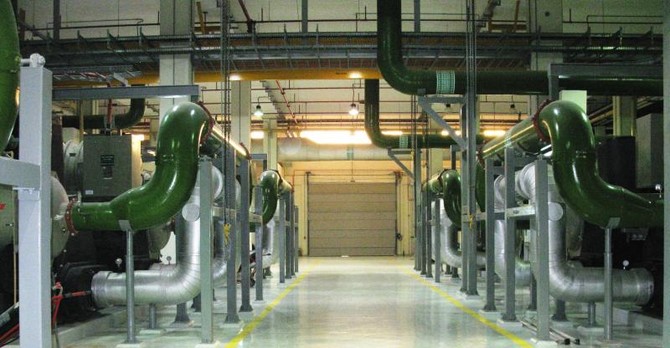
UAE district cooling companies to grow by 18% in next 5 years
UAE district cooling companies to grow by 18% in next 5 years
Latest updates


© 2026 SAUDI RESEARCH & PUBLISHING COMPANY, All Rights Reserved And subject to Terms of Use Agreement.