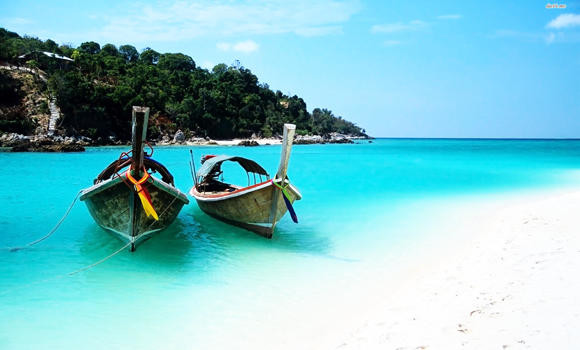
When you think about Zanzibar, you instantly think of turquoise-blue water, shallow sandbars and a perfect getaway. Recently, this island has been much in demand among tourists who are looking for an affordable yet unique vacation as well as investors who are on the lookout for opportunities in the hospitality sector.
Zanzibar is a Tanzanian island by the Indian Ocean and is situated on the Swahili Coast. Swahili is the language this island speaks; it is very close to Arabic for Zanzibar was under the control of the Sultanate Oman in 1698. The name Zanzibar is Arabic in origin, it originated from Zangh Bar, meaning “The Black Coast.”
Zanzibar is divided into two islands: Unguja is the main island of Zanzibar, while Pemba is separated from the Unguja island. Zanzibar is mostly populated by the ethnic Swahili people, Arabs, Bantu as well as some Indians, thanks to the constant merchandise trade between Middle East, India and Africa. According to the CIA World Factbook, more than 99 percent of the Zanzibar population is Muslim. This is a great opportunity for Arabs to enjoy halal tourism in a beautiful island.
A six-hour flight will take you to Zanzibar. Before going there, you would need to visit the Ministry of Health’s public clinic to receive the yellow fever shot. They will provide you with a stamp on the ministry’s yellow passport. This passport is essential for entering Tanzania. When you get your visa upon arrival, you will be asked about your shot and your yellow passport is the proof.
The airport is very small and there are almost no machines, everything is done by hand, even the luggage is handled by men who carry the bags from the airplane all the way to the airport on foot.
When you leave the airport, you cross the main island of Unguja. With that you get a quick peek of Stone Town, the oldest part of Zanzibar city. Stone Town is also known as Mji Mkongwe, Swahili for old town, it is located on the western coast of Unguja island. This town is the center of the spice trade as well as the slave trade back in the 19th century.
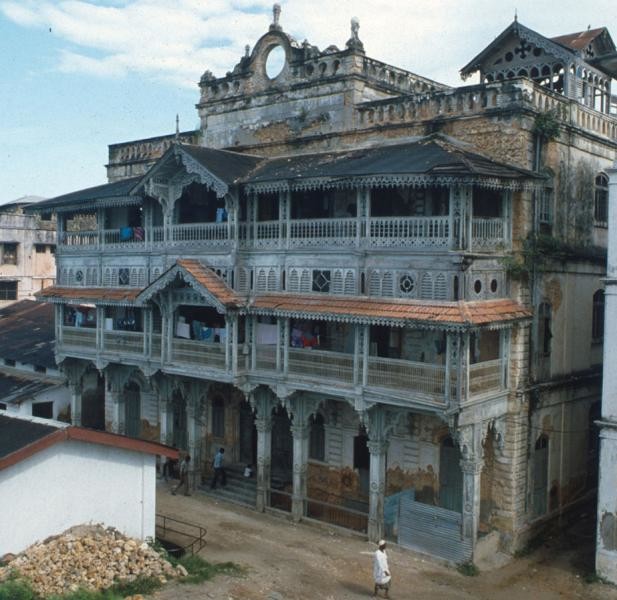
Stone Town has an artistic and historic importance in East Africa; the architecture reflects the diverse influences of the Arab, Persian, British and Indian cultures, but above all the Swahili culture. For this reason, Stone Town was designated as a UNESCO World Heritage Site in 2000.
The one thing you will notice about the architecture here is the wooden artwork on the doors. Back in the days, when a family started building their house, they would always start with the door. It reflects their social position and wealth, the bigger and more elaborately carved his front door, the better his status.
Brass knobs on the shutters decorate the heavy wooden doors. “This trend comes from India, as they were added to protect the houses from elephants who used to crush the doors,” said Saif, a local tour guide. “Since then, Zanzibar never saw elephants wondering around the narrow alleys,” he added.
According to Saif, there are two main types of doors found in Stone Town. The first have square shutters and are made into smaller sections so that the door can fold together, those are the Indian or Gujarati doors. They are typically located along the busy bazaar streets where the Indian traders lived.
The other type are the Arab doors. They are simply spotted, thanks to the Arabic wood engravings, most likely phrases from the Holy Qur’an. The door’s top strip is richly decorated around the frame. The older doors were all square at the top. The semi-circular frames were introduced later, but are still referred to as ‘Arab doors’.
Right in the center of Stone Town is the House of Wonders. “This is a landmark building and is the largest and tallest building of Stone Town and it houses the Museum of History and Culture of Zanzibar and the Swahili Coast,” said Saif. “It was named ‘House of Wonders’ because it was the first building in Zanzibar to have electricity, and also the first building in East Africa to have an elevator,” he added.
Another tour delight is the traditional Hamamni Persian Baths. “This is a public bath that was built in the 1800s and the word Hamamni means the place of the baths,” said Saif. “The building’s compound offered several rooms for hot and cold baths, toilets, shaving areas, and a restaurant,” he added. The baths are not working anymore, but they are open to visitors and are major tourist attractions of Stone Town.
The Darajani market in Stone Town is mainly all about edibles. It is located by the ancient lanes of the town and is one of the central markets in Zanzibar. The market is organized; there are sections of vegetables and fruits, meats, seafood and spices. The biggest fish market auction takes place at the Changuu market, which is open early morning and throughout the day. The vendors around this market do not sell food at all, they mostly sell accessories, clothing, shoes, toys and souvenirs.
Zanzibar has plenty of local options for food, starting with the House of Spices. This house was one of the most distinguished houses of Zanzibar Stone Town, it belonged to an old family of spice traders. Spices from the Islands of Pemba and Zanzibar were collected here, spreading their fragrant aroma over the house and the surrounding narrow streets of Stone Town. Once in the house, they were selected, ground and packed before being exported to Europe and to the US. It is a charming rooftop restaurant serving delicious Mediterranean cuisine. Spices and gifts are sold on the ground floor, where tea and coffee is served.
Another option for an exciting and adventurous lunch is The Rock. It is located in a unique position on a rock in the middle of the Indian Ocean. This restaurant successfully became one of the Island’s icon in a short time. The lunch begins with a short boat drive from the shores to this tree house style inspired restaurant. It has both indoor and outdoor seating, with a beautiful panoramic terrace overviewing the Indian ocean. Sea food is its speciality.
The Rock was originally a fisherman post, and is located in the middle of the sea in front of Michanvi Pingwe beach on the southeast coast of the island.
Prison Island is a major attraction for all and is only a boat’s ride from the old town. “It earns its name from being a former prison for slaves and an isolation station for Zanzibar and the mainland (Tanzania). Now the island gives the opportunity for tourists to explore nature. It is home to giant land tortoises that were imported from Seychelles in the late 19th century,” said Saif. “The giant Aldabran tortoise is over a hundred years old. These endangered species were a gift from the government of Seychelles to Zanzibar,” he added.
An hour’s drive from Stone Town takes you to Meliá Zanzibar, a luxury beach all-inclusive resort located on the northeast coast of the island. The resort overlooks a beach of pearlescent white sand lapped by warm ocean waters, situated at the very end of the property to procure the perfect combination with nature. The resort is ringed by a natural coral reef, making bathing a relaxing and safe experience.
What’s a good resort without a private beach? Meliá Zanzibar offers a heavenly private beach situated at the top of the property. As for water sports lovers, the beach offers a beach volleyball court, kayaks and kite surfing lessons. Don’t leave without catching a quick bite at the Gabi Beach Club, they offer one of the best grill menus you will ever taste.
When it comes to food, Meliá Zanzibar does not fail you. With six restaurants and cafes, you will definitely find the taste that suits you best. The Stone Town inspired restaurant, Spice Market, offers a chilled dining experience that serves an international mix of cuisines with a distinct Arabian and African influence in buffet style. You can have all your meals there on the beautiful terrace sheltered by island trees that allow for alfresco dining. I got the chance to experience their Indian Mediterranean night menu and let me say, it just blew my mind. If you are lucky, you get to attend one of their live entertainment shows.
Aqua is a luxurious restaurant resting on the cliff side overlooking the splendid Indian Ocean. This excellent a la carte menu serves Mediterranean fusion that perfectly combines world cultures with contemporary African flavors. I have tried their lobster; it is superb and highly recommended. This restaurant is perfect for honeymooners as it is romantic and quiet.
My personal favorite is the Jetty Lounge. It is actually one of the landmarks of Meliá Zanzibar. It brings you to the heart of the Indian Ocean. You need to walk on a wooden bridge over the water to reach your destination. It is a good spot for shooting memorable photos. The food is superb.
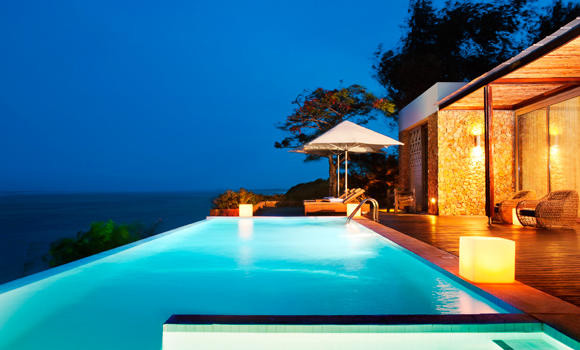
Meliá Zanzibar offers a few accommodation options, that include private villas complete with their own beautiful gardens, breathtaking pools and romantic pavilions overlooking the Indian Ocean. All rooms and suites are decorated in contemporary style and have been designed to maintain complete privacy. They are equipped with large comfortable bathrooms, outdoor tropical rain showers with sky views and a private terrace or balcony, and most of them with a side view of the Indian Ocean.
The Anantara Spa is my favorite place in the resort. It offers a great opportunity to unwind and relax without borders. You get to explore a huge variety of treatments inspired by the raw beauty of the Savannah that takes you on a journey to the majestic mountains of this great continent as well as the exquisite allure of the local nature and wildlife. The products used contain natural elements from Africa. The spa houses six private treatment suits, half of them with steam rooms inside them and a beautiful outdoor swimming pool with a lush sun deck.
The kids club is a great way to keep the little ones occupied with seasonal activities that are designed to stimulate, inspire and excite the young minds while the adults enjoy a day at the spa or exploring the area.
Zanzibar is a major attraction for families in the GCC. It is perfect for anyone who is looking for halal tourism and a culture that is rich. Make sure to bring along your appetite for the food is magnificent and your camera for everything is picture perfect.
—
Email: [email protected]


![]()
![]()
![]()
![]()
![]()
![]()
![]()
![]()
Zanzibar: A haven for halal tourism



Zanzibar: A haven for halal tourism
Latest updates


Recommended


© 2026 SAUDI RESEARCH & PUBLISHING COMPANY, All Rights Reserved And subject to Terms of Use Agreement.