ALGIERS: Apparently modest reform proposals for primary education in Algeria have touched off a firestorm of protest, highlighting deep sensitivities about language and identity half a century after independence from France.
Standard Arabic has been the North African nation’s sole official language since 1962, even though virtually no Algerians have it as their mother tongue and it has to be learnt at school.
A little over a quarter of the population speak dialects of the Berber language, also widely spoken in neighboring Morocco.
Nearly all the rest speak dialects of Arabic that are heavily influenced by French and Spanish as well as Berber.
Education Minister Nouria Benghebrit has proposed that for the first two years of primary school, teachers be allowed to give lessons in dialect to help children master the standard language.
She says that generations of children have had their educations blighted by the shock of being taught exclusively in a language they cannot speak.
There are many countries where the language of education differs from that of the home.
But in few parts of the world is the issue as charged as in Algeria, where political discourse is still dominated by the bloody eight-year war to break away from France and forge an Arab and Islamic nation.
Benghebrit’s proposals have drawn accusations from nationalist and Islamic groups alike that she is dishonoring the memory of the hundreds of thousands of Algerians who lost their lives and “betraying the cause they fought for.”
Islamic lawmakers of the Green Alliance demanded her immediate dismissal. The opposition has rounded on Benghebrit’s French education — she studied sociology in Paris — and accused her of wanting to return Algeria to the colonial era when they say dialect was encouraged in a bid to undermine Arab nationalism.
The Muslim ulema charge that her proposals threaten to sully the language of the Holy Qur’an.
Association of Ulema official Amar Talbi urged “civic groups and cultural associations to defeat this proposal so that we can preserve the purity of the language and protect it from any threat.”
Language policy has proved controversial throughout Algeria’s modern history.
Berber was finally recognized as a national, but not an official, language in 2002, allowing it to be taught as a second language in some Berber areas.
But even that reform came only after decades of protests in the most populous Berber-speaking region, Kabylie, east of Algiers, many of which were bloodily suppressed.
And while French remains the main language of business and scientific education, conservatives have repeatedly tried to reduce its role too.


![]()
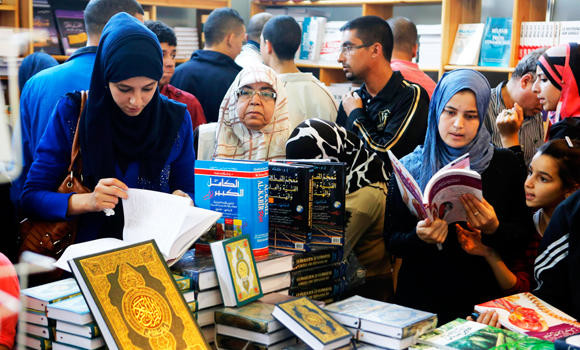
Algeria school language reform sparks controversy
Algeria school language reform sparks controversy
Latest updates




© 2026 SAUDI RESEARCH & PUBLISHING COMPANY, All Rights Reserved And subject to Terms of Use Agreement.