LONDON: Britain’s economy created the largest number of new jobs in nearly a year and unemployment hit its lowest rate since mid-2008, official labor market data showed, the last such report before a closely fought election on May 7.
Prime Minister David Cameron hailed the numbers, which cover the three months to February, as underlining his government’s “jobs miracle.”
The opposition Labour Party stressed the slow pace of Britain’s recovery in living standards during Cameron’s tenure.
The unemployment rate now stands at 5.6 percent, down from 7.9 percent at the time of the last election. But the pace of growth in workers’ pay was largely unchanged at nearly 2 percent, the Office for National Statistics said.
With inflation at zero, the gradual recovery in pay is giving relief to workers who suffered an almost unprecedented loss of spending power during Cameron’s five-year term.
But Matthew Whittaker, chief economist at the Resolution Foundation, which focuses on issues facing low earners, said it was puzzling that pay was not rising more quickly given the plunge in unemployment since 2013.
“It may be that our labor market shifted over the downturn, with far lower levels of unemployment now needed to bring nominal pay growth back toward the levels seen before the crash,” Whittaker said.
The Resolution Foundation said the higher proportion of jobs in lower-skilled occupations was also dragging down pay growth.
The number of people in employment rose by nearly a quarter of a million — the biggest increase since April last year — to a record 31.05 million. The employment rate also jumped to hit an all-time high of 73.4 percent.
The data helped the pound hit its highest level in nearly four weeks against the dollar.
Cameron got a boost when the head of the International Monetary Fund said his government’s plan was working, although the Fund has also questioned the country’s budget forecasts.
“When we look at the comparative growth rates delivered by various countries in Europe, it’s obvious that what’s happening in the UK has actually worked,” Christine Lagarde said on Thursday at meetings of global policymakers in Washington.
On Wednesday, however, the IMF said Britain would have a budget deficit of 0.3 percent of GDP in 2020 compared with the surplus of 0.3 percent expected by the government.
Earnings in the three months to February, including bonuses, rose by an annual 1.7 percent, slower than 1.9 percent in January.
Excluding bonuses, pay growth edged up 1.8 percent. For February alone, pay excluding bonuses, jumped to 2.2 percent, the biggest increase since May 2011.
The ONS attributed some of the increase to new European Union rules for bankers’ pay which requires remuneration to be concentrated more on basic pay than variable bonuses.


![]()
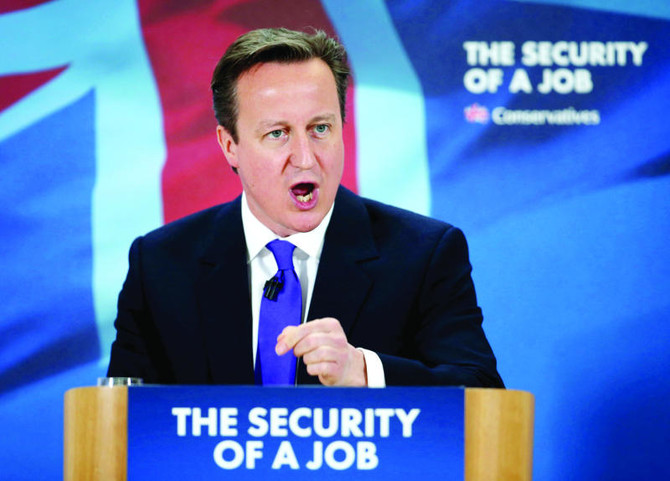
Britain’s unemployment rate declines to multi-year low
Britain’s unemployment rate declines to multi-year low
Latest updates


© 2026 SAUDI RESEARCH & PUBLISHING COMPANY, All Rights Reserved And subject to Terms of Use Agreement.