OLDENBURG: A German nurse was sentenced to life in prison Thursday for murdering two hospital patients but authorities fear a far higher death toll after he admitted killing 30 people in a thrill-seeking life and death game.
The 38-year-old man, identified only as Niels H., has admitted to injecting his patients with lethal drug doses in a bid to try to revive them and shine as a savior before his medical peers.
“The accused is sentenced to life in prison,” said the presiding judge, finding the defendant guilty of two murders and two attempted murders, and noting the “severity” of the crimes.
The former nurse was on trial for causing the patients’ deaths in an intensive care ward in northern Germany around a decade ago, but admitted during the trial that he had played his deadly game on 90 patients, leading to 30 deaths.
Authorities said Monday they would exhume the bodies of more former patients to test them for traces of the lethal doses of heart medicine amid fears H. is one of the worst serial killers in German post-war history.
The sweeping investigation is looking into some 200 fatalities recorded at the hospital where he worked and at his previous places of employment to find out whether the confirmed cases are only the tip of the iceberg.
The defendant has admitted he injected critically ill patients with lethal doses of heart medicine so he could then show off his skills in resuscitating them at the Delmenhorst hospital near the northern city of Bremen.
“Usually the decision to do it was relatively spontaneous,” the handcuffed defendant — who was not fully named under Germany’s strict court reporting rules and shielded his face behind a paper folder — told the chamber last week.
“There was tension there, and an expectation of what would happen next,” said the tall and heavy-set man, who apologized to victims’ relatives for his deadly obsession.
He said he felt euphoric when he managed to bring a patient back to life, and devastated when he failed. Each time he would then vow to himself to end his deadly game, he said, only to strike again soon after.
Defense lawyer Ulrike Baumann had pleaded for a shorter term on lesser charges of manslaughter, arguing that the defendant’s aim was not to take lives.
“Mr H. did not want to kill, he wanted to conquer death,” she said. “There is no doubt about his guilt, but there is doubt about the severity of his guilt.”
The defendant was first caught in 2005 when a colleague saw him inject a patient in Delmenhorst clinic in the northern state of Lower Saxony, where H. had worked for two years.


German suspected serial killer nurse jailed for life
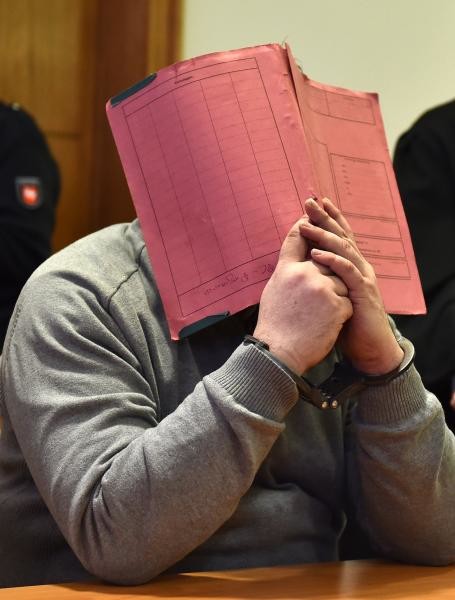
German suspected serial killer nurse jailed for life

Norway launches probe of Middle East diplomat and husband over Epstein links
- Mona Juul resigned from her position as ambassador to Jordan and Iraq
- Juul and her husband Terje Rod-Larsen played key roles in the Israeli-Palestinian negotiations which led to the Oslo Accords
OSLO: Norwegian police said Monday they have launched an “aggravated corruption” investigation against a high-profile diplomat, Mona Juul, and her husband Terje Rod-Larsen, over the couple’s links to late US sex offender Jeffrey Epstein.
The police economic crime unit Okokrim said in statement that the probe began last week and that an Oslo residence was searched on Monday, as well as a residence belonging to a witness.
“We have launched an investigation to determine whether any criminal offenses have been committed. We are facing a comprehensive and, by all accounts lengthy investigation,” Okokrim chief Pal Lonseth, said.
Juul, 66, and Rod-Larsen, 78, played key roles in the secret Israeli-Palestinian negotiations which led to the Oslo Accords of the early 1990s.
Epstein left $10 million in his will to the couple’s two children, according to Norwegian media.
“Among other things, Okokrim will investigate whether she received benefits in connection to her position,” the statement said.
On Sunday, the foreign ministry announced that Juul had resigned from her position as ambassador to Jordan and Iraq.
“Juul’s contact with the convicted abuser Epstein has shown a serious lapse in judgment,” Foreign Minister Espen Barth Eide said in connection to the announcement.
She had already been temporarily suspended last week pending an internal investigation by the ministry into her alleged links to Epstein, who died in 2019 while awaiting trial for sex trafficking.
Norway’s political and royal circles have been thrust into the eye of the Epstein storm, including the CEO of the World Economic Forum Borge Brende.
Former prime minister Thorbjorn Jagland, is also being investigated for “aggravated corruption” over links to Epstein while he was chair of the Norwegian Nobel Committee — which awards the Nobel Peace Prize — and as secretary general of the Council of Europe.
Norway’s Crown Princess Mette-Marit has also come under scrutiny for her relationship with Epstein, which on Friday she said she “deeply regretted.”
On Monday, Norwegian Prime Minister Jonas Gahr Store voiced support for the establishing of an independent commission set up by Parliament, to fully examine the nature of the ties between these figures and Epstein.


