JERUSALEM: Israel’s Cabinet has approved a contentious bill that officially defines Israel as the nation-state of the Jewish people.
The bill still needs to be passed in Parliament to become a law, but Sunday’s vote looks to further inflame tensions with Arab Israelis and Palestinians. It could also shake up Benjamin Netanyahu’s coalition government due to the fierce opposition of two of his more centrist partners.
The bill calls for recognizing Israel’s Jewish character, institutionalizing Jewish law as an inspiration for legislation, and delisting Arabic as an official language. Opponents say the bill undermines Israel’s democratic character, and rights groups have called it racist.
Arabs make up about 20 percent of Israel’s population and strongly oppose the bill.
The Arab League, meanwhile, will hold an extraordinary meeting next week to discuss the situation in the Palestinian territories in the presence of Palestinian President Mahmoud Abbas, an official said Sunday.
The meeting on Nov. 29 comes as annexed Arab east Jerusalem is roiled by months of unrest, which has spread across the occupied West Bank and to Arab communities inside Israel. Arab foreign ministers meeting Saturday will discuss the latest unrest as well as plans by the Palestinians to seek “membership in UN agencies,” Arab League deputy chief Ahmed Ben Helli told reporters.
The Palestinians have said they will submit a draft resolution to the UN Security Council later this month, calling for an end to Israeli occupation of Palestinian territories within two years.
The text, which the Palestinians have been discussing for weeks, is expected to be vetoed by permanent member the United States.
The Palestinians have said they will seek membership of the International Criminal Court, where they could sue Israeli officials over alleged war crimes, if the US wields its veto power.
Ben Helli said the Arab foreign ministers will also discuss Israeli activities in Jerusalem, which he said is “pushing the region to (an) explosion” of violence and compromising peace efforts.
Meanwhile on Sunday, the Mideast Quartet envoy, Tony Blair, met Egyptian Foreign Minister Sameh Shoukri to discuss the latest developments.


‘Jewish state’ bill cleared by ministers
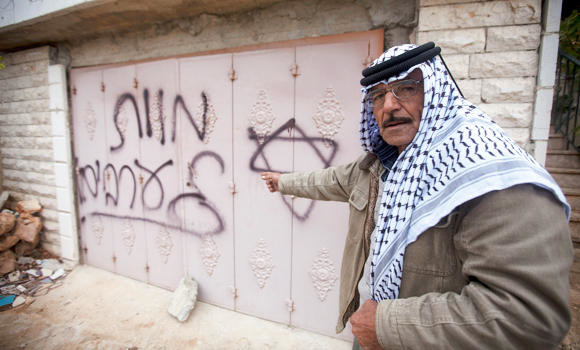
‘Jewish state’ bill cleared by ministers

Lebanese government imposes immediate ban on Hezbollah’s military activities
BERUIT: Lebanon's government said Hezbollah’s overnight attack against Israel were “illegal” and imposed an immediate ban on the group’s military activities, while also demanding its hand over its weapons.
Lebanese Prime Minister Nawaf Salam said only the state could decide whether to go to war and called on the Lebanese military to prevent the firing of projectiles and detain anyone involved.
The move comes after Iran-backed Hezbollah launched rockets at Israel, provoking retaliatory Israeli strikes. The government convened for five hours and 15 minutes in an early morning meeting on Monday before reaching its decision.
The Lebanese cabinet meeting, chaired by President Joseph Aoun, started at 8am with ministers discussing the repercussions Hezbollah's launching of missiles from southern Lebanon into Israel and the Israeli attacks on Lebanon.
Sources initially told Arab News that ministers were “pushing for a decisive response to Hezbollah’s recklessness, regardless of the consequences.”
Lebanese MP Melhem Khalaf said the priority was to “shelter people that are evacuating their homes in relatively safe places. What happened at dawn on Monday has taken us from one stage to another, and we don't know where they've taken us.”
As US-Israeli attacks on Iran continued, Hezbollah said it fired missiles from Lebanon into Israel early Monday in response to the killing of Iranian Supreme Leader Ali Khamenei and “repeated Israeli aggressions.”
There were no reports of injuries or damage, and Israel said it had intercepted one projectile, while several fell in open areas.
Israel retaliated with strikes on Lebanon, killing at least 31 people and wounding 149 others, according to Lebanon's Health Ministry. Around two thirds of the dead were in the south of the country.
Lebanon’s government said it was holding an emergency meeting after Hezbollah’s attack triggered the Israeli airstrikes.
Iran has been firing missiles at Israel and Arab states in a counter-offensive since the joint America-Israeli attack Saturday that killed Khamenei and other top Iranian officials. The war has quickly expanded to proxy forces, including Hezbollah firing out of Lebanon.
MP Bilal Abdullah told Arab News: “All the appeals issued by officials in Lebanon not to embroil us in this destructive war seem to have been in vain. We were supposed to protect Lebanon.
“Whoever launched the missiles and drones from Lebanon has slaughtered Lebanon. Displacing people is a major tragedy. We are in the winter season, and the cold is severe.”