The body of Muhammad Al-Rajhi, a prominent Saudi businessman who died on Tuesday, was buried in Al-Naseem Graveyard in Riyadh after funeral prayers were performed for him at Al-Rajhi Mosque in the capital.
A self-made businessman, Al-Rajhi was a member of the Al-Rajhi Bank’s board of directors and one of the bank’s founders. He established Al-Rajhi Bank, one of the biggest commercial banks in the country, with his brothers Saleh, Abdullah and Sulaiman.
Al-Rajhi was also the founder of Rajhi Steel and chairman of the board of directors of a number of companies and establishments.
He has played a significant role in boosting the Kingdom’s economy and creating more job opportunities for Saudis. His companies employ more than 5,000 people. He was well known for his philanthropic and humanitarian activities.
He began the commercial activity in his early life. He graded in banking, commercial, real estate and industrial business until he became one of the top businessmen locally and internationally. He made his way strongly and earned a large fortune through a long history of hard work, discipline and following up through depending first on Allah and then doing his best to develop his money through legal ways.
Born in Bakeriya on 1/7/1356H before the discovery of oil, Al-Rajhi was not lucky to get good education. However, as a result of his hard work and blessings of God, he was able to become a big businessman. He educated and trained his children and involved them in the management of his business activities.
Al-Rajhi contributed to promoting domestic tourism by establishing a number of hotels including Movenpick hotels in Qassim and Riyadh, Coral International in Alkhobar and Tulip Hotel in Riyadh as well as a large number of furnished apartments.
The late businessman holds influential shares in a large number of companies. He had supported many charitable projects across the country for the welfare of less fortunate people in the society.
Al-Rajhi supported the Kingdom’s food security program by establishing big farms, especially date farms with more than 250,000 date palm trees. He had instituted endowments in the names of his father (Abdul Aziz) and mother including those for the Qur’an memorization schools and assisting young men and women to get married apart from endowments instituted to support the poor.
The Riyadh-based Manafea Holding is one of his companies. It manages and runs hotels, furnished apartments, resorts, commercial centers and offices. The company is financially strong as a result of effective management with a history of diversification and development in several trading activities.
Friends and well-wishers mourned the death of Al-Rajhi and commended his great deeds for the welfare of the community. “He had been a glittering star in the space of charitable work,” said Ibrahim bin Muhammad Al-Ismael. “Although Sheikh Muhammad Al-Rajhi passed away, the impact of his good deeds will remain forever,” he added.
Hamad bin Abdullah Al-Qadi said the death of Muhammad Al-Rajhi was a big loss for the nation. “He was a man of good qualities and had played a big role in the Kingdom’s economic development,” he added.


Muhammad Al-Rajhi played big role in Kingdom’s growth
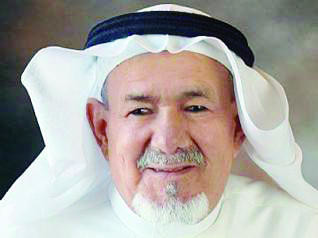
Muhammad Al-Rajhi played big role in Kingdom’s growth

Saudi POS spending jumps 28% in final week of Jan: SAMA
RIYADH: Saudi Arabia’s point-of-sale spending climbed sharply in the final week of January, rising nearly 28 percent from the previous week as consumer outlays increased across almost all sectors.
POS transactions reached SR16 billion ($4.27 billion) in the week ending Jan. 31, up 27.8 percent week on week, according to the Saudi Central Bank. Transaction volumes rose 16.5 percent to 248.8 million, reflecting stronger retail and service activity.
Spending on jewelry saw the biggest uptick at 55.5 percent to SR613.69 million, followed by laundry services which saw a 44.4 percent increase to SR62.83 million.
Expenditure on personal care rose 29.1 percent, while outlays on books and stationery increased 5.1 percent. Hotel spending climbed 7.4 percent to SR377.1 million.
Further gains were recorded across other categories. Spending in pharmacies and medical supplies rose 33.4 percent to SR259.19 million, while medical services increased 13.7 percent to SR515.44 million.

Food and beverage spending surged 38.6 percent to SR2.6 billion, accounting for the largest share of total POS value. Restaurants and cafes followed with a 20.4 percent increase to SR1.81 billion. Apparel and clothing spending rose 35.4 percent to SR1.33 billion, representing the third-largest share during the week.
The Kingdom’s key urban centers mirrored the national surge. Riyadh, which accounted for the largest share of total POS spending, saw a 22 percent rise to SR5.44 billion from SR4.46 billion the previous week. The number of transactions in the capital reached 78.6 million, up 13.8 percent week on week.
In Jeddah, transaction values increased 23.7 percent to SR2.16 billion, while Dammam reported a 22.2 percent rise to SR783.06 million.

POS data, tracked weekly by SAMA, provides an indicator of consumer spending trends and the ongoing growth of digital payments in Saudi Arabia.
The data also highlights the expanding reach of POS infrastructure, extending beyond major retail hubs to smaller cities and service sectors, supporting broader digital inclusion initiatives.
The growth of digital payment technologies aligns with Saudi Arabia’s Vision 2030 objectives, promoting electronic transactions and contributing to the Kingdom’s broader digital economy.


