JOHANNESBURG: South Africa’s commission of inquiry into the killings at the Marikana mines will have the power to summon witnesses, the justice minister announced yesterday.
The details of the investigation came as South Africa’s wave of mining strikes spread to another gold mine.
The commission will investigate the 46 deaths during the Lonmin PLC mine strike. Police killed 34 miners on Aug. 16 in Marikana. Eleven had already died in violence there before the shootings, and a councilor in the African National Congress died Wednesday after being shot by a rubber bullet during a raid in the area, bringing the death toll to 46.
“The primary objective of the commission of inquiry is to investigate the underlying causes of this tragedy and establish the truth that is vital for the restoration of harmony, peace, and justice to all affected by these unfortunate events,” said Justice Minister Jeff Radebe Friday in Pretoria.
The inquiry will look into the roles played by Lonmin, the South African police, the Association of Mineworkers and Construction Union and the National Union of Mineworkers in the violence “in relation to all the events before, during and after the unfortunate incidents in Marikana,” Radebe said. It will also determine whether any of those investigated could have put measures into place to prevent the violence.
The first phase of the four-month inquiry will cost the government more than 20 million rand ($2.4 million), he said. Public hearings will be held at the Marikana Hall starting Oct. 1, and transportation will be provided for families wanting to attend, he said.
Miners for the Lonmin PLC platinum mine returned to work Thursday after a nearly six-week strike, but labor unrest has spread to several gold, platinum and chrome mines, damaging investor confidence in the country that produces 75 percent of world platinum and is the No. 4 chrome producer and in the top 10 of gold producers.
Lonmin’s deal to increase pay to its miners by up to 22 percent has also influenced workers at other mines who are now demanding similar raises.
Strikes spread late Thursday to the Kopanang mine, which employs 5,000 staff, the company’s spokesman Alan Fine said yesterday. He said the strike at the mine about 200 kilometers (125 miles) southwest of Johannesburg began with the night shift, but said the company hasn’t yet received any demands or communications from strikers on what they are demanding.


![]()

S. Africa probes police killings at Marikana

S. Africa probes police killings at Marikana
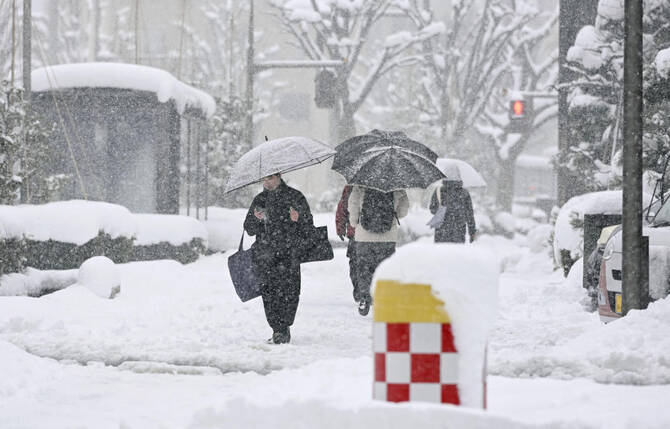
Northern Japan hit by deadly snowfall, as warnings issued on more heavy snow
- The biggest number of snow-related fatalities, at 12 people, was reported in Niigata Prefecture
- Various task forces were set up to respond to the heavy snow in Niigata and nearby regions
TOKYO: Heavy snow battering northern Japan in the last two weeks has been blamed in 35 deaths nationwide so far, including people suffering sudden heart attacks or slipping while shoveling snow, government officials said Wednesday.
As of Wednesday, 15 prefectures have been affected, with the amount of snow piled up in the worst hit areas estimated to have reached 2 meters (6.5 feet).
The biggest number of snow-related fatalities, at 12 people, was reported in Niigata Prefecture, a rice-growing region in northern Japan, including a man in his 50s who was found collapsed on the roof of his home in Uonuma city on Jan. 21.
In Nagaoka city, a man in his 70s was spotted collapsed in front of his home and rushed to the hospital where he was pronounced dead. He is believed to have fallen from the roof while raking snow, according to the Niigata government.
Japan’s chief government spokesperson warned that, although the weather was getting warmer, more danger could lie ahead because snow would start melting, resulting in landslides and slippery surfaces.
“Please do pay close attention to your safety, wearing a helmet or using a lifeline rope, especially when working on clearing snow,” Chief Cabinet Secretary Minoru Kihara told reporters.
Various task forces were set up to respond to the heavy snow in Niigata and nearby regions, which began Jan. 20. Seven snow-related deaths have been reported in Akita Prefecture and five in Yamagata Prefecture.
Injuries nationwide numbered 393, including 126 serious injuries, 42 of them in Niigata. Fourteen homes were damaged, three in Niigata and eight in Aomori Prefecture.
The reason behind the heavy snowfall is unclear. But deaths and accidents related to heavy snow are not uncommon in Japan, with 68 deaths reported over the six winter months the previous year, according to the Fire and Disaster Management Agency.
More heavy snow is forecast for the coming weekend.
As of Wednesday, 15 prefectures have been affected, with the amount of snow piled up in the worst hit areas estimated to have reached 2 meters (6.5 feet).
The biggest number of snow-related fatalities, at 12 people, was reported in Niigata Prefecture, a rice-growing region in northern Japan, including a man in his 50s who was found collapsed on the roof of his home in Uonuma city on Jan. 21.
In Nagaoka city, a man in his 70s was spotted collapsed in front of his home and rushed to the hospital where he was pronounced dead. He is believed to have fallen from the roof while raking snow, according to the Niigata government.
Japan’s chief government spokesperson warned that, although the weather was getting warmer, more danger could lie ahead because snow would start melting, resulting in landslides and slippery surfaces.
“Please do pay close attention to your safety, wearing a helmet or using a lifeline rope, especially when working on clearing snow,” Chief Cabinet Secretary Minoru Kihara told reporters.
Various task forces were set up to respond to the heavy snow in Niigata and nearby regions, which began Jan. 20. Seven snow-related deaths have been reported in Akita Prefecture and five in Yamagata Prefecture.
Injuries nationwide numbered 393, including 126 serious injuries, 42 of them in Niigata. Fourteen homes were damaged, three in Niigata and eight in Aomori Prefecture.
The reason behind the heavy snowfall is unclear. But deaths and accidents related to heavy snow are not uncommon in Japan, with 68 deaths reported over the six winter months the previous year, according to the Fire and Disaster Management Agency.
More heavy snow is forecast for the coming weekend.
Latest updates


Recommended


© 2026 SAUDI RESEARCH & PUBLISHING COMPANY, All Rights Reserved And subject to Terms of Use Agreement.