- Government seeks to break recurring boom-bust cycles driven by import dependence
- Finance minister launches Rs3 billion risk-sharing facility to support smaller exporters
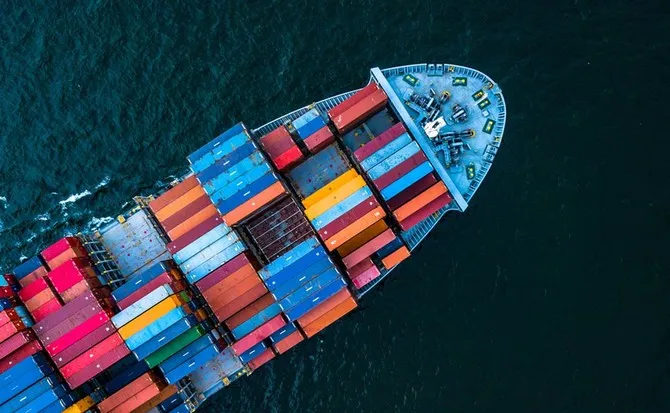
KARACHI: Pakistan needs to significantly expand and diversify its roughly $30 billion goods export base to sustain economic growth and avoid recurring balance-of-payments pressures, Finance Minister Muhammad Aurangzeb said on Monday, as the government unveiled new measures to support exporters.
Pakistan has repeatedly struggled to sustain periods of faster economic growth as rising imports put pressure on its external account. The government says it wants to break that cycle by shifting toward an economic model increasingly driven by exports and private investment.
Aurangzeb expressed concern about Pakistan’s good exports while addressing an event where state-owned Export-Import Bank of Pakistan, or Pak EXIM, signed two agreements aimed at expanding export financing and risk protection, including a roughly Rs3 billion ($10.6 million) facility for small and medium-sized exporters.
“Incremental growth around the existing $30 billion base would not be sufficient to meet Pakistan’s ambitions,” he said, according to a finance ministry statement, emphasizing the need to improve not only the volume of exports but also their quality through diversification into new markets, segments, products and services.
Pakistan’s economy grew by around 3.7 percent in the fiscal year that ended in June, while the fiscal deficit declined to 2.6 percent of GDP, its lowest level in 22 years, according to the finance ministry.
Aurangzeb said the country now had an opportunity to move away from recurring boom-and-bust cycles driven largely by import dependence and the balance-of-payments pressures that emerged whenever economic growth accelerated.
He noted the government is seeking to use the fiscal and external space created through recent stabilization to increase private investment, productive capacity and exports while reducing the economy’s vulnerability to external financing pressures.
Pakistan’s information technology exports have emerged as a growing source of foreign exchange, reaching around $4.6 billion in the last fiscal year, according to the finance ministry.
Under one of the agreements announced on Monday, the Export Development Fund and Pak EXIM established an approximately Rs3 billion SME Risk Pool aimed at giving smaller exporters greater access to insurance against the risk of overseas buyers failing to pay.
The government says the arrangement should give smaller businesses greater protection and confidence to pursue new customers and export destinations.
Pak EXIM separately signed a reinsurance agreement with the Islamic Corporation for the Insurance of Investment and Export Credit, or ICIEC, a member of the Islamic Development Bank Group.
The agreement is intended to increase Pak EXIM’s capacity to provide trade and export credit insurance against commercial and political risks associated with international trade.
“The ICIEC reinsurance partnership would significantly strengthen Pak EXIM’s underwriting capacity, while the EDF SME Risk Pool would complement it by expanding SMEs’ access to insurance against non-payment risks and enabling them to pursue new markets with greater confidence,” Pak EXIM President and CEO Shahbaz Hussain Syed said.
Aurangzeb said exporters were continuing to receive financing at 4.5 percent despite a recent movement in Pakistan’s policy rate amid inflationary pressures.
He also pointed to measures in the government’s fiscal 2026-27 budget, including the removal of an advance tax on exports, reductions in the super tax and efforts to improve energy competitiveness.
The finance minister said years of discussion about the need for export-led growth now needed to translate into implementation, with exporters, commercial banks, Pak EXIM, the Export Development Fund, the central bank and the government working together.
He said the real measure of the new agreements would be whether they resulted in greater financing capacity and risk protection, as well as new exporters, markets and additional exports.