- Saudi investors hold government, private-sector talks on power, petroleum, privatization and industry
- Islamabad, Riyadh have increasingly sought to shift economic relationship from financial support toward investment
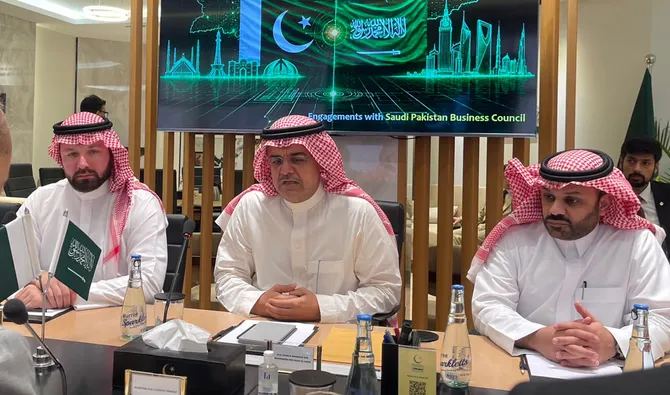
KARACHI: A high-level Saudi business delegation held talks with Pakistani officials and companies on investment opportunities in energy, infrastructure, privatization and industry, Islamabad said on Wednesday, as the longtime allies seek to deepen commercial ties.
Saudi Arabia has historically been a major source of financial support for Pakistan, providing loans, deposits and oil on deferred payments during periods of economic difficulty, but the two countries have increasingly sought to shift their relationship toward investment, trade and commercial partnerships. In October 2024, Saudi and Pakistani businesses announced 34 agreements and memorandums of understanding worth $2.8 billion following a visit to Islamabad by Saudi Investment Minister Khalid Al-Falih.
“The engagements covered both Government-to-Government (G2G) and Business-to-Business (B2B) investment frameworks, with discussions focused on priority sectors offering significant opportunities for collaboration and investment,” Pakistan’s Special Investment Facilitation Council (SIFC) said in a statement as a Saudi business delegation led by Prince Mansour bin Mohammad Al Saud, chairman of the Saudi-Pakistan Joint Business Council, visited the SIFC for talks on investment and business opportunities.
The SIFC was established in 2023 as a civil-military body to facilitate foreign investment, particularly from Gulf countries, by providing investors with a single platform to navigate regulatory and bureaucratic processes.
The SIFC said it coordinated meetings between the Saudi delegation and senior government officials and other stakeholders in the power, petroleum, privatization, industries, communications and highways sectors, as well as leading Pakistani private-sector companies.
The council said the visit was aimed at translating longstanding economic ties between Pakistan and Saudi Arabia into “tangible, sustainable and mutually beneficial investment outcomes.”
The latest engagement builds on a series of Saudi investment initiatives in Pakistan over the past two years.
During Al-Falih’s October 2024 visit to Islamabad with a delegation of Saudi investors and entrepreneurs, businesses from the two countries initially signed 27 agreements and MoUs worth $2.2 billion. Later that month, Al-Falih announced in Riyadh that the number had increased to 34 and their projected value to $2.8 billion.
By December that year, Pakistan said seven of the 34 MoUs had been converted into formal agreements worth $560 million. The projects covered areas including agriculture, energy, technology and other sectors.
Saudi Arabia has also pledged to expedite a separate $5 billion investment package for Pakistan, part of Islamabad’s broader effort to attract foreign capital rather than rely primarily on external borrowing to support its economy.
The investment drive has continued since then. During a visit by a Saudi delegation led by Prince Mansour last year, Pakistani officials and companies presented around 40 projects worth more than $28 billion across energy, mining and minerals, information technology, agriculture, connectivity, tourism, industry and privatization, according to documents seen by Arab News at the time.
Saudi Arabia is one of Pakistan’s most important economic partners and hosts more than 2.5 million Pakistanis, whose remittances make the Kingdom a critical source of foreign exchange for the South Asian country.