Let us not forget multilateral institutions


https://arab.news/c3j5s
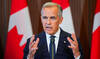
Canadian Prime Minister Mark Carney and Finnish President Alexander Stubb recently laid out a road map for middle-power action in The Economist, having recognized the importance of “actively taking on the world as it is, not passively waiting for a world we wish to be.”
Their joint commentary is a summer sequel to Carney’s viral speech at Davos in January and Stubb’s December Foreign Affairs article on “how to build a new global order before it’s too late.” Carney’s declaration of a “rupture” in the international order, and public denouncement of the US administration’s lawlessness, was a shot heard round the world. To emphasize the breadth of that rupture, Carney and Stubb now warn that their countries — which border the US and Russia, respectively — no longer have “the luxury of relying on old orders of geography.” Both are “striking closer relations with powers like India and, while avoiding strategic dependencies, China, as well as with countries of the Global South.”
They are calling on middle powers to steer a course between the multilateralism of the past 80 years and the more recent multipolarity. On this path of “plurilateralism,” countries that share interests can create “ad hoc coalitions that work, issue by issue.” Unlike formal institutions, these dynamic, purpose-built groups will shift as their mission evolves. Countries like Canada and Finland roundly rejected US President George W. Bush’s pivot to a “coalition of the willing” in November 2002 to circumvent opposition in the UN to his proposed invasion of Iraq. But times have changed.
Overall, their vision of a plurilateral order is sensible. It rejects a new Cold War with Russia and China on one side and the “West” on the other; on the contrary, Carney and Stubb identify a triangular configuration of a Global West, a Global East and a Global South. This framework would enable countries of different sizes to take the initiative and create new cooperative structures that can make progress on security, development and sustainability. It might be piecemeal, messy, and often ineffective, but is not the same true of the UN’s response to the wars in Ukraine, Gaza, and Sudan?
The principal problem with this approach is the fine line between plurilateralism and chaos. The insistence on seeing the world in terms of poles of power — unipolar, bipolar, multipolar — is an artifact of 20th-century international relations theory, which lacked the empirical and analytical tools to handle the complexity of a networked world. The grandfathers of that theory were writing in an age of 50 states (many of them empires), rather than almost 200, and when power rested mainly on population and territory size, military strength, and industrial capacity.
As Indian Foreign Minister Subrahmanyam Jaishankar explained in 2023, multi-alignment is “the approach of engaging all major centers of power” simultaneously and advancing all ties “without seeking exclusivity.” Many of the countries in the regions that Carney and Stubb identify are already pursuing bilateral and “minilateral” relationships within and across those regions, outlining a strategy of multi-alignment for countries firmly cemented in the Global West.
The current state of global affairs becomes exponentially more complex when we drop Carney and Stubb’s resolute statism and instead recognize that international politics is not only a matter for national governments. For example, the author and consultant Don Tapscott has collaborated with the Martin Prosperity Institute at the University of Toronto to identify and categorize more than 500 global solutions networks, comprising state and nonstate actors, focused on achieving shared prosperity, climate stability, health solutions, financial inclusion, and other goals.
The insistence on seeing the world in terms of poles of power is an artifact of 20th-century international relations theory.
Anne-Marie Slaughter
The World Economic Forum has been hosting and building these kinds of groups for decades; the UN Sustainable Development Goals Actions Platform lists thousands of similar initiatives. Bloomberg Philanthropies supports mayors around the world working together and with other sub-state officials such as governors and provincial premiers.
The result of all this problem-focused cooperation is the “dense web of connections” that Carney and Stubb envision, and which I have named an “armadillo order.” Yet this web is perhaps so dense as to be unmanageable. The dilemma is how to ensure that a middle-power order is, in fact, an order.
Carney and Stubb would presumably point to the principles underpinning their theory of values-based realism: freedom, human rights, sustainability, and solidarity. But the best way to ensure that these values actually guide effective and legitimate action is to work as much as possible with existing multilateral institutions, beginning with the easily maligned UN.
Today’s middle-power leaders pay lip service to multilateralism and its potential return after future “reform.” But to prevent the existing institutions of international cooperation — such as the UN, World Bank, International Monetary Fund, World Trade Organization and many others — from becoming 20th-century ruins, middle powers should try to build coalitions of the willing within or at least adjacent to them. With their combined power, they could accomplish specific policy goals and pursue radical institutional change, including weighted majority voting, recognition of and constrained agency for nongovernmental actors, and genuine enforcement mechanisms that back international law with force.
For example, WTO rules, which still govern 72 percent of world trade, require decision-making by consensus, a requirement that long blocked the adoption of rules governing e-commerce. In 2019, Australia, Japan and Singapore convened negotiations among a subset of 86 WTO members through a process called a “Joint Statement Initiative.” Notwithstanding US opposition, 66 WTO members have signed the resulting plurilateral agreement, which is “WTO adjacent.” Creative international lawyering can find similar workarounds in the UN General Assembly and other global and regional institutions.
It is always easier to do things ad hoc. But if the middle powers representing the majority of the world’s territory and people cannot create effective multilateral institutions that last, who can?
• Anne-Marie Slaughter, a former director of policy planning in the US State Department, is CEO of the think tank New America, professor emerita of Politics and International Affairs at Princeton University, and the author of “Renewal: From Crisis to Transformation in Our Lives, Work, and Politics” (Princeton University Press, 2021).
©Project Syndicate