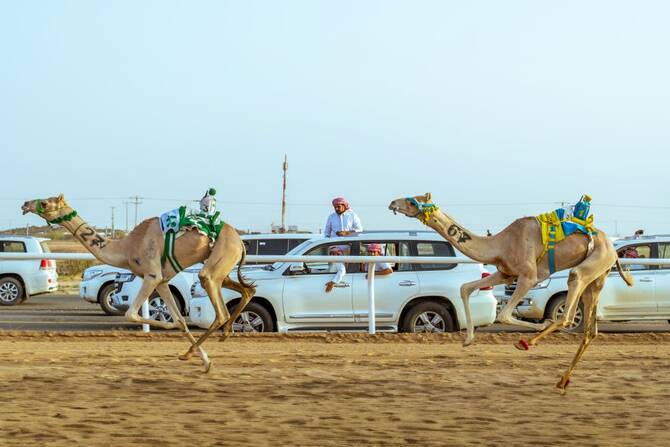

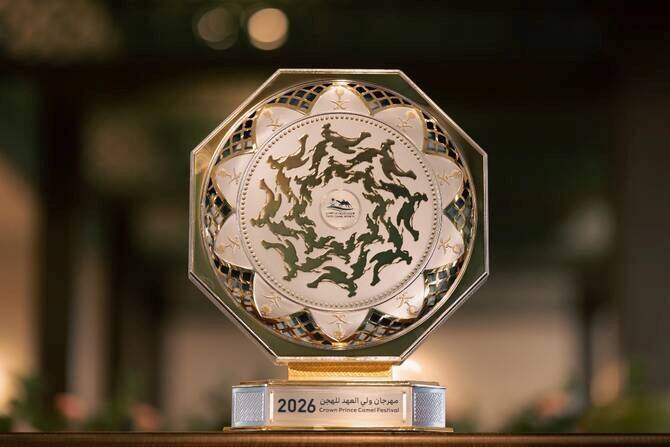

RIYADH: Saudi Arabia is using a new SR500,000 ($133,300) camel racing prize to deepen investment in domestic breeding, attract new owners, and strengthen the economic foundations of a sport that sits at the intersection of the Kingdom’s cultural heritage and Vision 2030 ambitions.
The Saudi Camel Racing Federation has introduced the Crown Prince Camel Festival Cup, an exclusive competition for Saudi participants that will reward the owner who accumulates the highest number of points throughout the 2026–2027 season.
The cup will debut at the eighth Crown Prince Camel Festival, beginning Sept. 3 at the Taif Camel Racing Track.
While the prize is designed to raise the stakes for existing owners, the federation sees the competition as a potential catalyst for bringing new investors into camel racing and encouraging greater investment in Saudi-bred camels.
“The introduction of this cup is aimed at supporting Saudi camel owners and breeders by giving them an opportunity to compete against one another at a major event such as the Crown Prince Camel Festival,” Saudi Camel Racing Federation Executive Director Mahmoud bin Suleiman Al-Balawi told Arab News.
The move comes as Saudi Arabia seeks to develop its cultural and sporting sectors into structured industries capable of generating economic opportunities alongside preserving national heritage.
“The federation has always sought to offer the best prizes to Saudi owners across various competitions and events,” Al-Balawi said. “Introducing such a prize serves as an incentive for participants and creates an opportunity for investors and new owners to take part in the competition for this cup.”
A points system prioritizing season-long performance
The season-long format means the competition is not dependent on a single winning performance. Owners accumulate points across designated races, increasing the financial incentive for sustained investment in high-performing camels and breeding programs.
Winners of public races and Saudi-bred races will receive 25 points, while second place earns 20, third 15, fourth 10 and fifth five points. In other races, only the winner receives points, with 10 awarded.
For Saudi breeders, the emphasis on Saudi-bred races creates greater incentives to develop competitive domestic bloodlines and improve the quality of locally produced camels. The objective is to establish a robust domestic pipeline of owners, breeders, and racing stock capable of competing at major events in Saudi Arabia and abroad.
Al-Balawi said the initiative, introduced by the federation’s board under the leadership of Prince Fahd bin Jalawi bin Abdulaziz bin Musaed, chairman of the Saudi Camel Racing Federation, directly supports Saudi owners and national camel production.
“The main objective is to motivate participants to achieve local accomplishments that will significantly contribute to preparing them to compete successfully in numerous international championships,” he told Arab News.
That approach places breeding at the center of the sport’s long-term development, creating commercial opportunities for businesses and individuals involved in training, care, transportation and related services.
Integrity, rules and future expansion
The federation has also introduced strict regulations to protect the integrity of the competition as the sector professionalizes.
Points will only be confirmed after each festival once doping test results have been finalized. Points earned by a camel will transfer to a new owner if the animal is sold or transferred during the season. However, owners will be disqualified if their camels are found to have used prohibited substances, electric shock devices or other unauthorized methods that alter physical condition.
If owners finish the season tied on points, the number of championship titles — known as “symbols” — will determine the winner. If they remain level, the fastest recorded race time will decide the title.
“We have a distinguished team working in competition management that is committed to applying all rules and regulations to ensure fair competition for everyone,” Al-Balawi said, adding that the points system was developed following an extensive review drawing on the federation’s experience organizing major competitions.
The investment push forms part of Saudi Arabia’s wider effort to turn traditional activities into sustainable economic sectors under Vision 2030, combining sport, heritage, breeding and tourism.
Looking ahead, the federation plans to introduce more initiatives, including a King Salman Camel Festival Cup scheduled for January.
“Our work to launch new initiatives that promote the growth of camel racing and support the objectives of Saudi Vision 2030 is ongoing,” Al-Balawi said. “We will continue working to meet the aspirations of camel owners, trainers and riders, while providing all the means for success that contribute to the continued development of camel racing and the preservation of our rich national heritage.”
By putting Saudi owners and breeders at the center of a season-long competition, the new cup represents more than a financial reward. The long-term test will be whether these initiatives can translate growing prize pools into a self-sustaining commercial industry that supports both cultural identity and economic diversification.