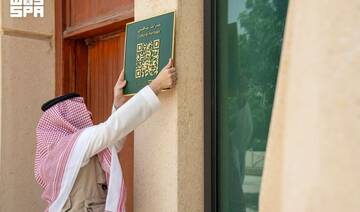

RIYADH: Saudi Arabia’s Heritage Commission has registered 9,586 urban heritage sites, raising the number of documented locations across the Kingdom to 59,586, the Saudi Press Agency reported on Monday.
The commission completed the registrations in two consecutive phases — adding 3,000 sites in the first and 6,586 in the second — as part of its national survey and documentation program.
Asir recorded the largest share with 4,363 new sites, followed by Al-Baha with 2,547 and Makkah with 1,755. Together, the three regions accounted for 8,665 sites, representing more than 90 percent of the latest additions.
The remaining share was distributed across other regions, with Najran recording 673 sites and Riyadh 169, alongside smaller additions in Madinah, Hail, the Eastern Province, Qassim, Tabuk and the Northern Borders.
The National Urban Heritage Register identifies and documents buildings and locations of architectural, historical and cultural importance, providing a foundation for their long-term conservation and management.
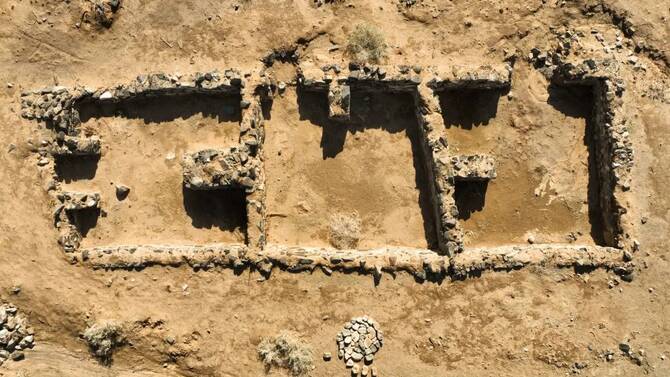
Alongside the registration figures, the commission highlighted several recent archaeological breakthroughs across the Kingdom.
In Al-Dawadmi in the Riyadh region, the High Najd Project documented more than 100 archaeological sites featuring rock inscriptions, human and animal figures, stone circles and cairns.
Excavations at the nearby Hillit site uncovered evidence of ancient mining activity, including specialized tools, slag deposits and geological traces consistent with early gold extraction. Findings suggest the area was part of one of the oldest known gold mining zones in the Arabian Peninsula, potentially dating back to pre-Islamic eras.
In the Al-Mahd governorate of the Madinah region, two seasons of archaeological surveys recorded 1,774 discoveries across 173 newly documented sites. These included 1,259 rock-art panels, 461 Islamic inscriptions, ancient caravan routes, stone structures and historical wells — reflecting the region’s longstanding role as a vital transit corridor for trade and pilgrimage.
Meanwhile, excavations at the Dhariyah archaeological site in Qassim uncovered 100 Abbasid-era gold coins alongside silver artifacts and precious stones. The settlement served as an important station along the Basra Hajj route during the Abbasid period, particularly between the 8th and 13th centuries.
The Heritage Commission called on citizens and residents to report unregistered urban heritage sites, as well as any activities that could compromise their integrity, through its online reporting service, official X account, or in person at regional branches.