
LONDON: The World Bank on Friday approved a $100 million grant to help the Syrian Arab Republic build a modern, secure and digitally enabled financial sector.
The grant, from the International Development Association, will finance the Syria Financial Sector Modernization Project, which aims to make transactions safer, faster and more transparent while broadening access to financial services, the bank said.
“A modern financial system is essential for Syria’s economic recovery and future development,” Dahlia Khalifa, the World Bank’s division director for the Middle East Department, said in a statement.
“The Syria Financial Sector Modernization Project will help make payments safer and more efficient, strengthen financial integrity, and establish essential foundations enabling the financial sector to better serve households and businesses, including through expanded access to financial services necessary to support private sector-led growth and job creation.”
Syria’s financial sector remains heavily reliant on use of cash, with limited financial intermediation (the process through which third-party institutions channel capital from savers to borrowers) and outdated digital-payments infrastructure, the World Bank said. These shortcomings increase transaction costs and restrict access to financing and international trade channels.
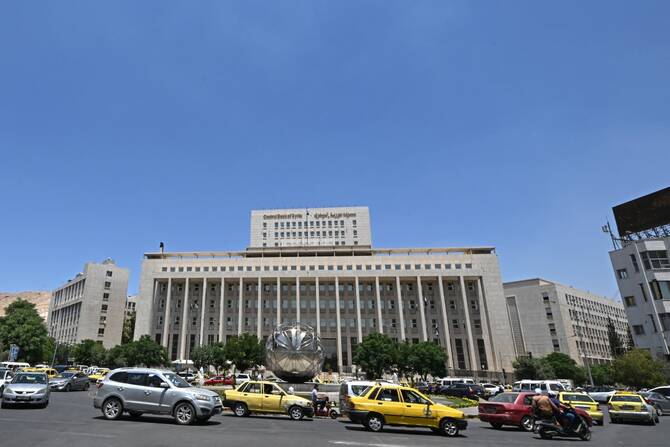
To address the gaps, the project will modernize the core financial infrastructure in the country, support rehabilitation of its banking sector and build capacity at the Central Bank of Syria. It also will seek to strengthen mechanisms for financial supervision, stability and integrity.
The initiative aims to provide support for at least 15 million electronic transactions annually, and help 500,000 individuals and businesses gain access to digital payments, including 150,000 women.
Independent asset-quality reviews are expected to encompass the entire banking system in Syria, laying the groundwork for future reforms, the World Bank said. This effort will be paired with stronger, risk-based, prudential supervision, and reviews focused on the prevention of money laundering and efforts to counter the financing of terrorism.
Together, the measures are designed to strengthen the role of the financial sector in supporting economic growth, trade and investment, while widening access to financing and other financial services.
Approval of the grant comes as Syria’s interim government deepens its engagement with the World Bank. Qutaiba Kadish, director of international cooperation at the Syrian Foreign Ministry, recently met Khalifa to discuss ongoing cooperation. And Syria’s finance minister, Mohammed Yisr Barnieh, previously said the World Bank had endorsed the country’s economic reform plans for 2026.
Since the fall of the country’s longtime president, Bashar Assad, and his regime in December 2024 in the face of an opposition offensive, the relationship between the World Bank and Syria, under its new authorities, has shifted from a long-term suspension to active reengagement centered on recovery and the restoration of core state institutions and infrastructure.
The World Bank halted its operations in Syria when the civil war began in 2011, although it continued its economic monitoring of the country and began publishing the Syria Economic Monitor in 2022.
In May 2025, Saudi Arabia and Qatar cleared Syria’s arrears owed to the World Bank’s International Development Association, restoring the country’s eligibility for financing from the bank after a 14-year suspension.
The following month, the bank approved a $146 million International Development Association grant for the Syria Emergency Electricity Project, marking the organization’s first project in Syria for nearly four decades. The project aims to provide more reliable, affordable electricity supplies as a prerequisite for the provision of essential services and wider economic recovery efforts.